
House finch
Carpodacus mexicanus
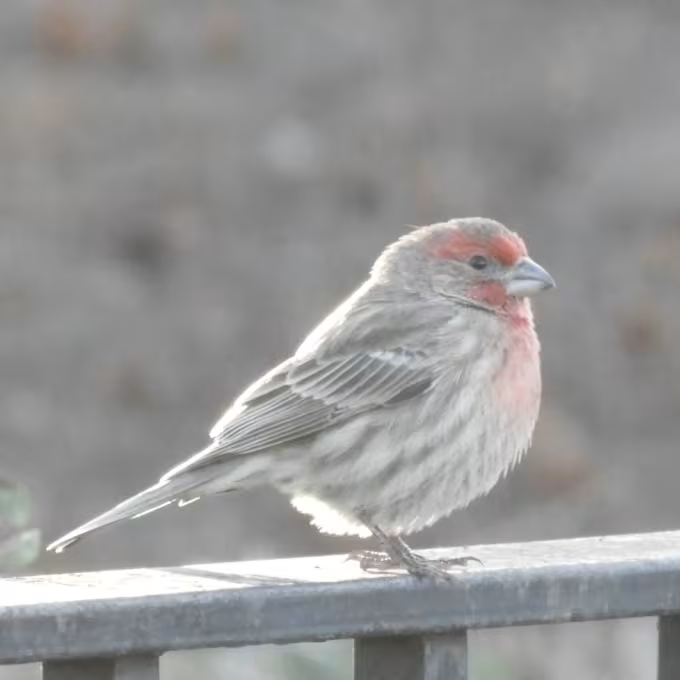
Description
How to identify
The House Finch (Carpodacus mexicanus) is a small bird belonging to the Fringillidae family within the Passeriformes order. Males are easily recognized by their reddish-orange plumage on the breast and head, whereas females display a mottled brown appearance that aids in camouflage.
These birds are equipped with a stout, conical beak designed for crushing seeds. While they are a common sight in urban areas, their agricultural impact is significant due to their feeding habits and preference for nutrient-dense plant parts.
What it damages
The primary agricultural damage is caused during the late winter and early spring when the birds descend upon orchards to consume the flower buds of fruit trees. An active flock can strip an entire tree of its fruit-bearing potential in a very short amount of time.
Beyond buds, these finches attack emerging shoots, flowers, and developing fruits. Berry crops, such as strawberries, raspberries, and grapes, are particularly vulnerable, as the birds pierce the skin of the fruit, causing rot and rendering the yield unsalable.
When it appears
The threat is most acute in late winter and early spring, specifically the period between the late dormant stage and the onset of bloom. During this window, natural food supplies like wild seeds are at their lowest point, making fruit buds the primary source of food.
Summer activity involves scavenging for ripening produce. As soft fruits mature, the flock may return to harvest berries and grapes, continuing their damage cycle until the end of the harvest season.
Signs of infestation
Signs of infestation include an accumulation of bud scales and debris directly under the canopy of infested trees. Empty branches that should be budding are a clear visual indicator that birds have been feeding in the area.
Direct observation is also effective; House Finches often gather in groups and are generally unafraid of humans, making them visible while they perch on branches and feed on the buds of your orchard or garden crops.
Control measures
Integrated pest management strategies are crucial for protecting orchards. Visual deterrents, such as reflective tape, motion-activated sprinklers, and predatory bird decoys, are commonly deployed to discourage the birds from settling in the area.
- Utilizing bird-proof netting to cover individual fruit trees or entire rows.
- Deploying sonic and ultrasonic bird repelling devices.
- Maintaining clean orchard practices to reduce attraction.
- Rotating the placement of decoys to prevent the birds from becoming habituated to the deterrents.
Taxonomy
- Latin name
- Carpodacus mexicanus
- Family
- Fringillidae
- EPPO code
- CARDMF
Discussion
No discussions yet — be the first.