
Common rosefinch
Carpodacus erythrinus
Description
How to identify
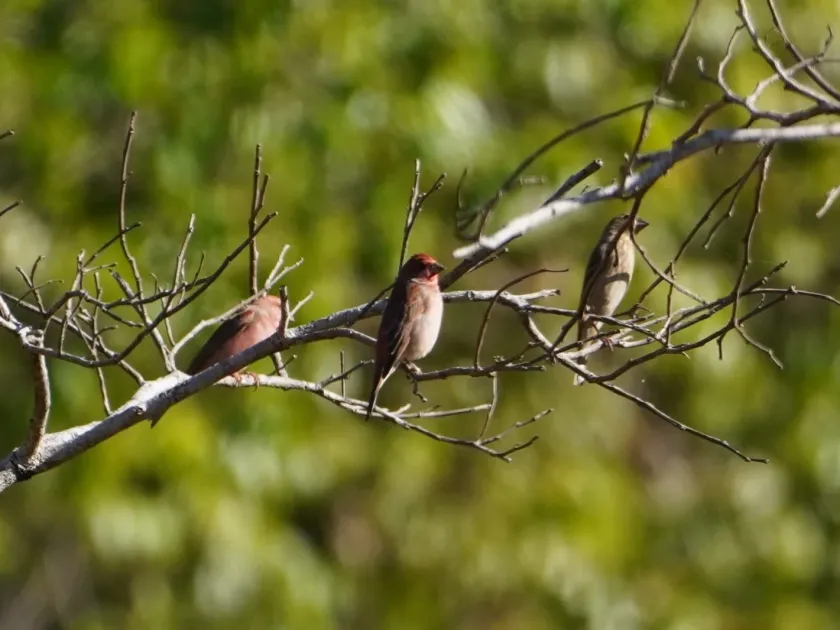
The common rosefinch (Carpodacus erythrinus) is a member of the Fringillidae family. It is a small songbird characterized by a stout, conical beak that is perfectly evolved for cracking seeds and grains.
Adult males are easily recognized by their vibrant, deep rose-red plumage on the head, chest, and rump. In contrast, females and immature birds exhibit a more muted, brownish-grey appearance with streaks.
These birds are highly mobile and social, often gathering in flocks that can move across agricultural fields with surprising speed and agility, making them difficult to manage in large-scale farming.
Their natural habitats include bushy areas, forest edges, and riverine thickets, which serve as base camps for their daily foraging trips into neighboring cultivated fields.
Due to their adaptability, rosefinches have become frequent visitors to agricultural landscapes, where they capitalize on the abundance of food provided by various cereal and legume crops.
What it damages
Common rosefinches cause agricultural damage primarily by consuming seeds and young sprouts. Their diet in agricultural settings is highly focused on grains and pulses during their most vulnerable growth stages.
Crops most susceptible to these birds include wheat, barley, oats, peas, and lentils. Rosefinches feed on these crops from the moment of planting until the grains reach full maturity.
During the spring, the birds often peck out newly sown seeds from the soil, causing significant gaps in the crop stands and often requiring farmers to perform costly reseeding operations.
As the crops reach the milk-wax maturity phase in summer, the damage becomes more pronounced. Rosefinches extract grains directly from the heads or pods, significantly reducing yield and overall harvest quality.
Furthermore, the physical presence of bird flocks can lead to mechanical damage, such as broken stems and flattened patches, which creates secondary risks of fungal diseases and makes mechanical harvesting much harder.
When it appears
The activity patterns of the common rosefinch in agro-ecosystems are closely tied to the seasonal growth cycles of crops and the bird's own breeding and migration schedules.
In spring, bird activity is concentrated on newly seeded fields, where they search for exposed or shallowly buried seeds, posing a threat to early-sown cereals.
The period of greatest economic loss occurs during the summer months, specifically when crops enter the sensitive ripening phases, drawing large numbers of birds to the fields.
As autumn approaches and crops are harvested, the rosefinches shift their foraging habits toward stubble fields and areas with wild grasses, reducing their pressure on active agricultural operations.
Effective management requires monitoring bird activity precisely during these peak vulnerability windows, allowing for timely deployment of protective measures before mass damage occurs.
Signs of infestation
One of the primary signs of a rosefinch infestation is the presence of patchy, depleted areas within a field, often appearing as distinct spots or strips along the field edges.
Close inspection of the plants in these areas reveals hollowed-out seeds or empty husks left behind on the stalks, indicating that the birds have been feeding on the produce.
The accumulation of bird droppings on leaves and the ground beneath the plants, along with signs of trampled soil, provides clear evidence of a significant avian presence.
Observations of the birds resting on nearby fences, power lines, or tall trees in early mornings or late afternoons are reliable indicators of their foraging intentions in the vicinity.
A sudden decrease in crop density shortly after germination is a major red flag that should prompt a thorough scouting of the field to confirm the presence of the pest.
Control measures
Protecting crops from common rosefinch damage involves a strategic combination of non-lethal deterrents, agronomic practices, and persistent monitoring to discourage the birds from settling.
Acoustic deterrents, such as devices that emit distress calls or predator sounds, are highly effective when used in rotation to prevent the birds from habituating to the noise.
Visual deterrents, including reflective tapes, scarecrows, or models of predatory birds, can significantly reduce the appeal of the field if they are moved periodically.
Proper agronomic practices, such as ensuring deep and uniform seed placement during sowing, make it much more difficult for the birds to reach the seeds in the early spring.
- Conduct regular monitoring throughout the ripening phase.
- Utilize propane cannons for immediate bird dispersal.
- Maintain weed-free field boundaries to reduce the surrounding food supply.
Taxonomy
- Latin name
- Carpodacus erythrinus
- Family
- Fringillidae
- EPPO code
- CARDER
Discussion
No discussions yet — be the first.