
Rosefinch
Carpodacus
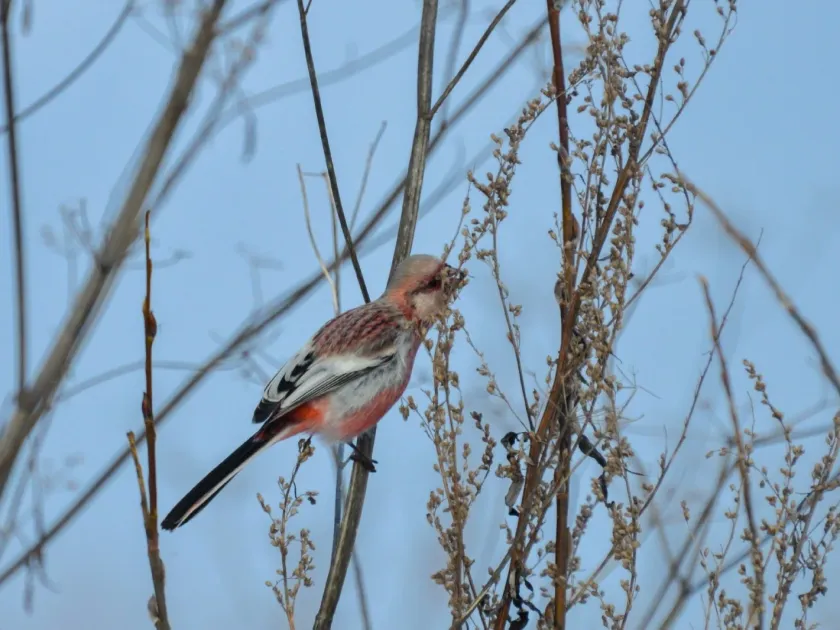
Description
How to identify
The Rosefinch (genus Carpodacus) belongs to the Fringillidae family. While these birds are often admired for their appearance, they are classified as pests in agricultural environments due to their habit of feeding on ripening crops.
These birds are characterized by a sturdy, conical beak specifically adapted for hulling seeds. Males typically exhibit vibrant red or rose-colored plumage, while females are more cryptically colored in shades of brown and gray, allowing them to remain inconspicuous.
Rosefinches are highly social birds that often form large flocks, especially during the post-breeding season. This flock behavior allows them to efficiently locate food sources in large agricultural fields.
Their life cycle involves nesting in trees and shrubbery near field margins. After the breeding season, they expand their foraging range significantly to include cultivated areas, often leading to conflicts with farmers.
The population density and their movement patterns are heavily influenced by the availability of natural forage. In years where wild seed crops are scarce, these birds shift their pressure towards agricultural land.
What it damages
The primary damage caused by Rosefinches involves the consumption of ripening cereal grains, legumes, and sunflower seeds. By feeding on the crops at the milk or dough stage, they directly reduce the total harvest volume.
Legume crops, such as lentils and peas, are particularly vulnerable. The birds are adept at piercing pods and extracting seeds, which causes not only yield loss but also damage to the remaining plant tissues.
Beyond feeding, the mechanical damage caused by flocks landing on crops is substantial. The weight of the birds can break stalks and stems, causing lodging and making the field difficult to harvest mechanically.
In sunflower fields, birds extract seeds from the heads, leaving large damaged areas. These open wounds make the plants susceptible to fungal infections and rot, which further degrades the quality of the harvested produce.
Damage often starts at the field edges but can quickly spread across the entire area if the flock becomes established. This leads to patchy destruction that complicates farming operations and planning.
When it appears
The period of greatest economic impact coincides with the grain-ripening phase of crops, which typically occurs from mid-summer through early autumn. This is when the birds are most active and require significant energy for development.
During the summer months, the fledging of young birds adds to the population pressure. Large juvenile cohorts, guided by adults, forage intensively on available cereal fields.
Late autumn migration or local movements can extend the period of risk. Fields that have not yet been harvested are particularly attractive to flocks seeking high-energy food sources before winter.
Daily foraging activity peaks during early morning and late afternoon hours. During these times, the birds move between nesting habitats and feeding grounds, causing continuous disturbance to the crops.
Environmental factors such as drought significantly exacerbate the issue. When natural food supplies in meadows and forests dry up prematurely, Rosefinches transition to agricultural crops much earlier in the season.
Signs of infestation
Signs of infestation are usually marked by the sudden flushing of bird flocks from the field as someone approaches. A noticeable increase in noise and activity near field margins is a primary indicator.
Physical damage on the plants is distinct: hollowed-out pods, scattered seed hulls on the ground, and pecked sunflower heads. These visible signs of foraging confirm the presence of pest activity.
Areas of flattened or broken vegetation at the edges of the field indicate where the birds have spent time resting or feeding. Droppings are frequently found in these areas, providing further evidence of a large flock's presence.
The appearance of damaged ears or pods, where the top portion has been completely stripped of seeds, is a classic sign of bird foraging behavior compared to insect damage which is usually more localized.
Secondary infections, such as mold or rot appearing on pecked areas shortly after the birds have fed, are common signs that the damage has occurred over several days and is creating a secondary health issue for the plant.
Control measures
Effective control of Rosefinches relies on an integrated pest management approach that focuses on deterrence rather than lethal control, which is often regulated or ineffective on a large scale.
- Acoustic deterrents such as broadcast distress calls or raptor sounds.
- Visual deterrents including reflective tapes, scarecrows, and predator silhouettes.
- Gas cannons that produce loud, intermittent bangs to discourage birds from landing.
- Harvesting crops as soon as they reach maturity to minimize exposure time.
Agrotechnical strategies include managing field margins to discourage nesting and maintaining weed control to reduce supplemental food sources near the crops.
In high-value crops like seed production plots, the use of protective netting is the most effective method, providing a physical barrier that birds cannot penetrate, regardless of the flock size.
Consistent monitoring and the rotation of deterrence methods are crucial. Birds are intelligent and can quickly become habituated to a single type of stimulus; therefore, switching techniques is essential for ongoing success.
Taxonomy
- Latin name
- Carpodacus
- Family
- Fringillidae
- EPPO code
- CARDSP
Discussion
No discussions yet — be the first.