
American goldfinch
Carduelis tristis
Description
How to identify
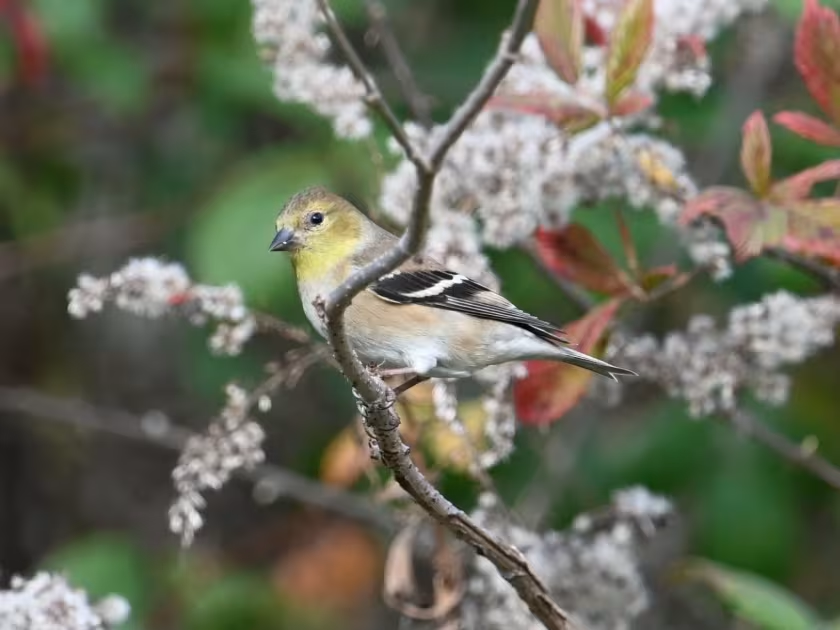
The American goldfinch (Carduelis tristis) is a small passerine bird in the finch family. Known for its vivid yellow plumage in males, it is a common species across North America.
These birds possess a specialized conical beak designed specifically for extracting seeds from plant heads. This adaptation makes them highly efficient at foraging in fields during late summer.
The life cycle and behavior of the goldfinch are linked to the seed development of various plants. They are social birds that often forage in flocks, increasing the potential impact on agricultural sites.
Identifying this pest involves observing flock behavior, as they often congregate on sunflowers or weed-infested edges of fields in search of high-energy seeds.
Understanding their migratory and foraging patterns is essential for farmers, as peak feeding activity aligns with the critical maturation phase of many seed crops.
What it damages
The American goldfinch primarily causes damage by feeding on seeds. Sunflowers are particularly vulnerable, as birds can destroy multiple seeds within a single head, reducing yield.
Cereal crops at the milk stage are also susceptible. Goldfinches may pick at the grains, leading to direct loss of potential harvest volume and potential damage to seed quality.
Vegetable gardens and seed production plots can face significant pressure from goldfinches, as they target the seed heads of crops like lettuce, kale, and others left for harvest.
Damage is not limited to seed loss; the weight of the flock landing on delicate stems can lead to breakage, further hindering the development of the plant.
While an individual bird consumes a small amount, a large flock can cause noticeable depletion of seed stocks in a short duration, impacting overall farm profitability.
Control measures
Effective control measures include the use of visual deterrents like reflective tape or owl decoys, which disrupt the birds' sense of security while foraging in the field.
Acoustic deterrents that broadcast distress calls or predator sounds are highly effective at discouraging goldfinch flocks from settling on large fields.
Maintaining clean field borders by removing weeds such as thistles helps eliminate the primary attractants that initially draw the birds into the vicinity of the crops.
Proactive monitoring is critical; implementing deterrent strategies before the seeds reach maturity helps create a negative association with the field for the birds.
In high-value areas, netting or screen barriers provide physical protection, ensuring that the target crop remains completely inaccessible to the birds until harvest time.
Taxonomy
- Latin name
- Carduelis tristis
- Family
- Fringillidae
- EPPO code
- CRDLTR
Discussion
No discussions yet — be the first.