
Eurasian siskin
Carduelis spinus
Description
How to identify
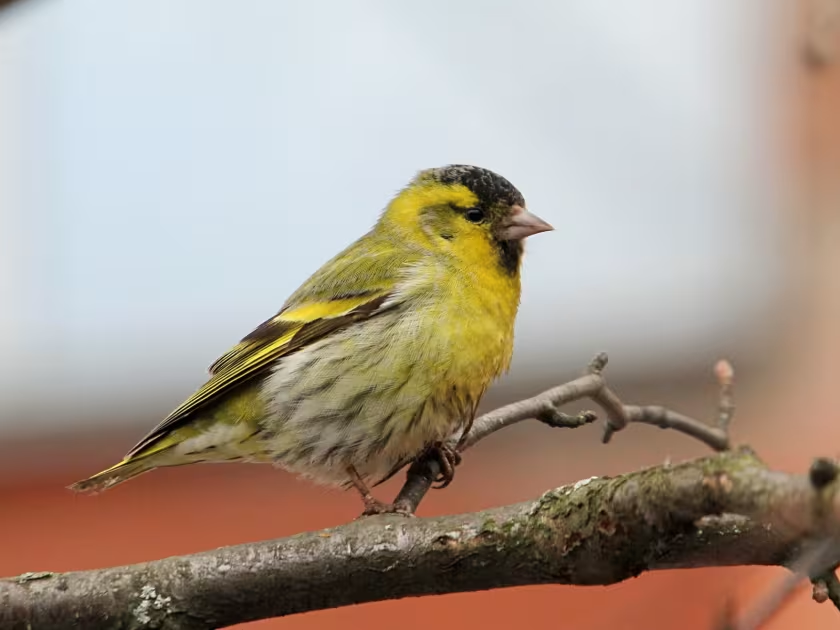
The Eurasian siskin (Carduelis spinus) is a small, highly active passerine bird belonging to the finch family. It is easily identified by its vibrant yellow-green plumage and striking black and yellow wing bars.
The bird features a distinct black crown in males, and its conical beak is specifically adapted for extracting seeds from various plants, including agricultural crops like sunflowers and flax.
Measuring about 12 centimeters in length and weighing up to 15 grams, these birds are social creatures that often gather in large, highly mobile flocks when searching for food sources during the late summer and autumn.
Their biological behavior is characterized by constant movement, making them opportunistic feeders that can rapidly descend upon agricultural fields to exploit ripe seeds, often causing localized damage.
While they nest in coniferous forests, their post-breeding dispersal often leads them to farm fields, where they find an abundant food supply at the precise time when crops are nearing maturity.
What it damages
The Eurasian siskin primarily causes damage to crops such as sunflowers, hemp, flax, and certain oilseed grains. They feed on seeds in the milk or dough stage, significantly impacting crop yield and quality.
The damage is particularly severe in seed production plots, where even minor consumption or physical disruption of the flower head can ruin the genetic purity and marketability of the seeds.
Beyond the direct consumption of seeds, the weight of a flock landing on a plant can cause stems to bend, break, or shatter, resulting in further seed loss and making mechanical harvesting more difficult.
Damage intensity tends to increase during dry seasons when natural wild food sources are scarce, pushing flocks to settle in irrigated fields where cultivated crops provide a convenient and dense nutrient source.
These birds often start feeding along the edges of fields near tree lines or hedges, gradually working their way deeper into the crop as they exhaust the available food in the periphery.
When it appears
The risk of Eurasian siskin infestation is highest from late summer to early autumn. This coincides with the end of their breeding season when the birds assemble into larger flocks for seasonal foraging.
During the ripening phase of sunflower heads, the siskin becomes a major agricultural nuisance. The soft, energy-rich seeds provide the necessary calories for the birds' upcoming migratory preparations.
Their presence on agricultural land is often episodic and unpredictable, with flocks arriving suddenly and causing substantial damage within a few days, necessitating proactive monitoring.
Peak feeding activity occurs during the early morning and late afternoon hours. During these times, the flocks are highly visible and vocal, which serves as a key indicator for field scouts to assess the level of pressure.
Since the Eurasian siskin is a migratory species in many regions, the threat to crops is seasonal and completely subsides once the harvest is completed or the birds move to warmer southern climates for winter.
Signs of infestation
Evidence of Eurasian siskin presence includes partially empty sunflower heads where seeds have been neatly extracted, usually with visible puncture marks from the birds' conical beaks.
Large accumulations of bird droppings on leaves, soil, and the ground beneath the plants are clear indicators that a flock has been roosting or feeding in that specific area for a sustained period.
A high level of noise, including constant chirping and the sound of wings flapping as the flock takes flight, signals their presence and serves as an immediate warning to farmers.
- Empty seed husks scattered on the ground around the plants.
- Bent, broken, or lodged stalks in areas where the birds landed.
- Localized loss of seed density within the crop canopy.
Monitoring the borders of fields, especially those near wooded areas, often reveals the first signs of infestation as the birds prefer to keep close to protective cover while foraging.
Control measures
Effective management focuses on non-lethal, bird-friendly deterrents. Since the Eurasian siskin is a protected species in many jurisdictions, lethal control is generally prohibited and unnecessary.
Acoustic deterrents, including the playback of raptor distress calls or predator sounds, can effectively discourage flocks from lingering in the crop area during the critical maturation window.
Visual deterrents such as holographic streamers, reflective tape, or life-sized predator decoys (e.g., owl or hawk models) can create an environment of unease that encourages the birds to forage elsewhere.
Agricultural practices such as ensuring uniform crop maturity and harvesting as early as possible can reduce the period of exposure, effectively limiting the window of opportunity for the birds.
For high-value seed crops, physical exclusion using protective netting is the most reliable method to ensure total prevention of bird damage, providing complete yield protection during the sensitive ripening phase.
Taxonomy
- Latin name
- Carduelis spinus
- Family
- Fringillidae
- EPPO code
- CRDLSI
Discussion
No discussions yet — be the first.