
Domestic goat
Capra
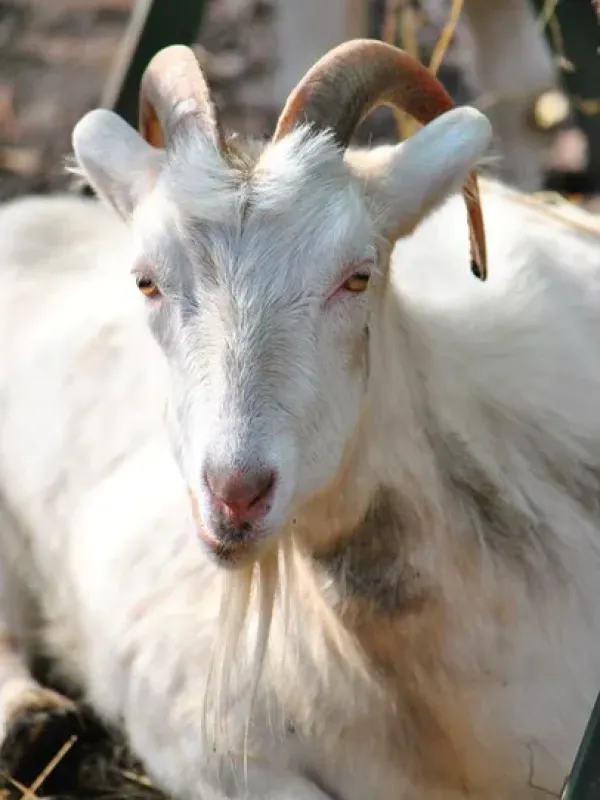
Description
How to identify
The domestic goat (Capra hircus) is a cloven-hoofed ruminant of the Bovidae family, order Artiodactyla. From an agronomic perspective, it acts as a highly destructive herbivore that differs significantly from cattle in its feeding habits.
Unlike grazing animals that prefer grass, goats are natural browsers. They are physically adapted to feed on leaves, twigs, bark, and buds of woody plants, making them a significant threat to horticulture.
Goats possess remarkable agility and can stand on their hind legs to reach vegetation at heights of up to two meters. This allows them to cause damage that other farm animals cannot inflict.
Their digestive system is designed to process highly fibrous material, including bark, which they strip with their specialized lower incisors, causing severe mechanical injury to the phloem and cambium of trees.
In terms of behavior, goats are highly curious and persistent. They are known for finding vulnerabilities in fences and exploiting them to access gardens, nurseries, and young forest plantations.
What it damages
Goats cause substantial damage to fruit trees, ornamental plants, and berry bushes. The most critical damage occurs when they strip the bark from the trunks of young saplings, often leading to total tree mortality.
In addition to woody plants, they pose a major threat to vegetable gardens. Goats readily consume succulent crops like beans, brassicas, and potatoes, destroying entire harvests in a single session.
Vineyards are particularly susceptible to goat damage. The animals eat the buds in early spring and the young shoots later in the season, which disrupts the vine's structure and reduces fruit yield.
Forestry operations suffer when goats consume the leader shoots of seedlings, causing the trees to grow with multiple, stunted stems, which ruins their value as timber or reforestation material.
- Debarking: Stripping bark from the main stem and branches.
- Browsing: Consuming terminal and lateral buds of saplings.
- Trampling: Compacting the soil and damaging the roots of young crops.
- Defoliation: Removing the photosynthetic tissue, weakening the plant.
- Root damage: Digging and chewing at the base of trees.
When it appears
Goat damage is year-round but varies in intensity. In early spring, the consumption of swollen buds and fresh growth is the primary threat to the upcoming harvest and ornamental development.
During the summer, as natural pastures dry out, goats frequently breach fences to enter orchards and gardens where they can find succulent greenery and fruit.
Autumn marks a period when goats may start stripping bark to compensate for the reduction in quality of available forage, putting perennial woody plants at high risk.
Winter is a critical period for damage to fruit trees. With limited ground cover, goats resort to feeding on the bark of accessible trunks and branches, which often leads to lethal outcomes for trees.
The risk of damage is highest when the animals are poorly contained and food resources are restricted by seasonal fluctuations in growth or climatic conditions.
Signs of infestation
The presence of goats is indicated by ragged, uneven bark removal patterns on tree trunks, often extending up to a height reachable by an adult goat on its hind legs.
Distinctive hoof prints, which are cloven and have a specific shape, are frequently found around the base of damaged plants and along the perimeter of the field.
Small, pellet-like droppings are a reliable sign that goats have been grazing in the area and that they are likely to return if conditions are not improved.
Broken or severely bent branches, resulting from the weight and height of the animal reaching for food, are clear markers of goat browsing rather than smaller pests.
Areas of completely bare, compacted soil where all ground vegetation has been stripped are symptomatic of prolonged grazing pressure from a goat herd.
Control measures
The primary control measure is the installation of robust physical barriers. Fencing should be at least 1.8 meters high and designed to prevent both jumping and crawling underneath.
For individual trees, protective tubes, wire mesh, or thorny brush can be placed around the trunks to prevent access to the bark by browsing goats.
Electric fencing (electric shepherds) is highly effective at deterring goats from entering protected agricultural areas, as they quickly learn to associate the fence with a negative stimulus.
Proper pasture management and the use of trained guard dogs are essential practices for livestock owners to ensure their animals do not roam into restricted zones.
Strategic planting of defensive barriers, such as prickly hedges or dense, unpalatable vegetation, can discourage goats from approaching the boundaries of high-value crops.
Taxonomy
- Latin name
- Capra
- Family
- Bovidae
- EPPO code
- CAPASP
Discussion
No discussions yet — be the first.