
Dark soldier beetle
Cantharis obscura
Description
How to identify
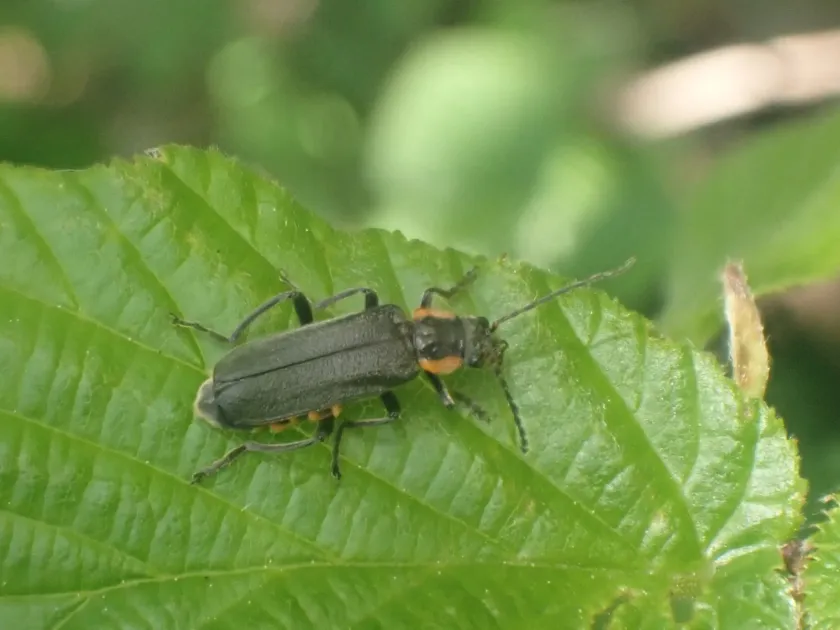
The dark soldier beetle (Cantharis obscura) is a member of the Cantharidae family within the Coleoptera order. Adult beetles typically measure 10–15 mm in length and are recognized by their characteristic soft, leathery wing covers.
The coloration of the adult is primarily dark or black, often exhibiting a subtle metallic sheen. The pronotum usually features distinct markings or reddish-brown edges, which are key diagnostic features for field identification.
Larvae are dark in color, covered in fine setae, giving them a velvety appearance. They live primarily in the soil or under debris, where they stay protected from environmental changes and predators during their development.
Adult beetles are proficient fliers, actively moving across fields during the daytime. Their presence is most notable on flowering plants, where they feed on pollen and floral parts.
The life cycle involves complete metamorphosis, including egg, larva, pupa, and adult stages. Larvae typically hibernate in the soil, emerging as activity increases with the warming of spring temperatures.
What it damages
While often categorized as beneficial predators, Cantharis obscura can shift to phytophagous habits during population outbreaks, causing physical damage to various agricultural crops.
The primary concern is the damage to flowers and flower buds. By feeding on pollen, anthers, and petals, the beetles can reduce the pollination success and fruit set of vegetables, cereals, and industrial crops.
Larval feeding can impact the root system of young plants, causing physiological stress, stunted growth, and increased susceptibility to soil-borne pathogens.
When the beetle density is high, the collective feeding activity can lead to significant yield losses, particularly in crops that rely on successful blooming for productivity.
The intensity of damage is highly correlated with environmental factors; moist conditions that favour larval survival often precede high adult population numbers in the subsequent season.
When it appears
Adult beetles typically appear in late spring, usually May or early June, coinciding with the peak flowering periods of many agricultural and garden plant species.
June and July represent the peak activity period for adult beetles, as they mate and deposit eggs in the soil. This is the critical window for monitoring and management programs.
Larval development continues throughout the warmer months, with the larvae actively foraging within the upper soil layers or organic matter layers near host plants.
Seasonal weather patterns, such as temperature fluctuations, can influence the timing of emergence. Warm springs generally lead to earlier and more synchronized emergence of adults.
As temperatures decline in autumn, larvae move deeper into the soil profile to overwinter, ensuring their survival until the following agricultural season begins.
Signs of infestation
A primary indicator of infestation is the observable presence of beetles on the blossoms of crops, often feeding in groups on the reproductive parts of the flowers.
Damaged flower buds that fail to open or appear shriveled are common visual signs of adult feeding activity during the flowering phase of plant development.
The presence of chewed, ragged petals and missing stamens indicates active grazing by the beetles, which directly interferes with the reproductive success of the plant.
During heavy rains, larvae may move toward the soil surface, becoming visible in the root zones or within vegetation debris, which is a sign of high larval density in the area.
Overall plant weakness, chlorosis, and reduced vigor, especially in seedlings, can often be linked to hidden damage caused by larval feeding on the roots and root necks.
Control measures
Effective management requires an integrated approach that focuses on reducing the survival of overwintering larvae and protecting crops during critical periods.
- Deep autumn plowing to expose larvae to harsh weather and predators.
- Aggressive weed control along field margins to remove alternative food sources.
- Crop rotation to disrupt the life cycle of the beetles in the fields.
- Use of targeted insecticides during flowering only if economic thresholds are exceeded.
When chemical control is necessary, applications must be timed to minimize impact on non-target beneficial insects, particularly pollinators, following strict safety protocols.
Regular scouting and pheromone or visual traps are essential tools for agronomic teams to detect population spikes early and make informed decisions on potential control actions.
Taxonomy
- Latin name
- Cantharis obscura
- Order
- Coleoptera (beetles)
- Family
- Cantharidae
- EPPO code
- CANTOB
Discussion
No discussions yet — be the first.