
Light Emerald
Campaea margaritaria
Description
How to identify
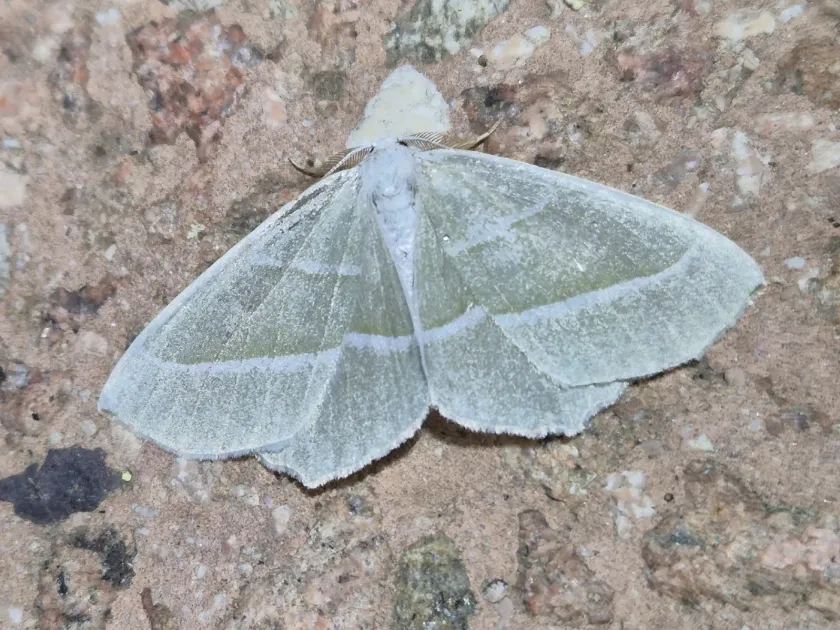
The Light Emerald (Campaea margaritaria) is a species of moth belonging to the Geometridae family. These insects are known for their pale green to pearlescent wing coloration.
Adult moths typically have a wingspan ranging from 40 to 50 mm. The wings feature two distinct transverse lines, though the green pigment may fade to a pale white as the moth ages.
The larvae, known as inchworms, are characteristically thin and move in a looping motion. Their body coloration is highly variable, often mimicking the green or brownish twigs of their host plants.
The life cycle involves complete metamorphosis, including egg, larva, pupa, and adult stages. The larvae are the primary stage that overwinters, usually found in leaf litter or soil.
They are widely distributed across various temperate regions, often inhabiting woodlands, hedgerows, and occasionally encroaching into managed orchard environments.
What it damages
This pest primarily attacks various deciduous trees and shrubs. In agricultural settings, it is known to feed on fruit-bearing trees including apple and pear varieties.
Larvae consume leaf tissue, which can lead to significant foliage loss. In cases of high infestation, they are capable of stripping a tree of its canopy, causing severe stress.
The primary economic impact is the reduction of photosynthetic efficiency, which directly hinders tree growth, fruit development, and overall plant vigor.
Young larvae are particularly destructive in the spring, coinciding with the early stages of leaf development, which makes the host plants highly susceptible to damage.
Continued defoliation over several seasons can severely weaken orchard trees, increasing their susceptibility to secondary infections and winter damage.
Signs of infestation
The most common sign of infestation is irregular, ragged-edged leaves or leaves that have been skeletonized, where only the veins remain after heavy feeding.
Frass (larval excrement) found on lower leaves or around the base of the tree is a clear indicator that caterpillars are active in the upper canopy.
Larvae can often be seen resting on twigs during the day, where their shape and color make them appear like small, dry branches, providing excellent camouflage.
In late larval stages, caterpillars may tie leaves together with silk webbing to create a protective environment for pupation, which becomes visible upon inspection.
Observing adult moths near artificial light sources at night can serve as an early warning sign that egg-laying is occurring in the vicinity of your garden.
Control measures
Cultural control methods such as maintaining orchard hygiene, including the removal and disposal of leaf litter, help reduce the number of overwintering larvae.
Biological control agents, particularly microbial insecticides, are highly effective against young caterpillars while remaining safe for beneficial pollinator populations.
Chemical intervention should be reserved for periods of high infestation, using targeted insecticides applied during the early growth stages of the leaves.
Promoting a healthy ecosystem by encouraging bird populations and predatory insects can naturally regulate the Light Emerald population within a garden setting.
- Monitor tree canopies periodically during the spring season.
- Clear away debris and leaf litter to eliminate overwintering sites.
- Install pheromone or light traps to manage and track adult population levels.
Taxonomy
- Latin name
- Campaea margaritaria
- Order
- Lepidoptera (butterflies)
- Family
- Geometridae
- EPPO code
- CMPAMA
Discussion
No discussions yet — be the first.