
Light Emerald
Campaea
Description
How to identify
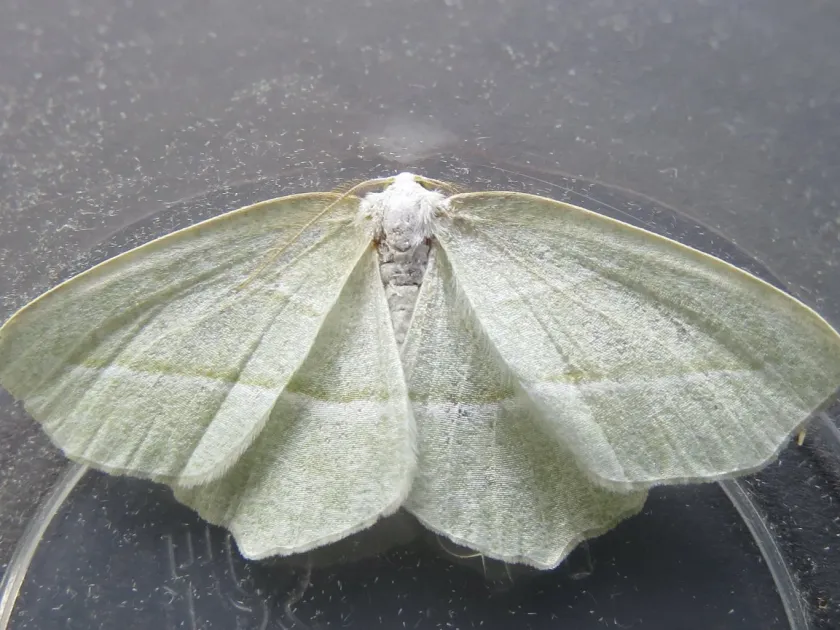
The Light Emerald (Campaea margaritata) is a moth belonging to the Geometridae family. Adult moths have a wingspan of approximately 45–50 mm and are distinguished by their pale, emerald-green coloration.
The wings feature two distinct, thin white lines that run across both pairs. As the moth ages, this bright green color often fades to a more yellowish or dull hue, providing excellent camouflage against leaves.
The larvae, known as loopers or inchworms, have a distinct way of moving by drawing their hind legs up to their thoracic legs. Their bodies are slender and often mimic the texture and color of the twigs they inhabit.
Pupation occurs in a loose, silk-spun cocoon typically attached to leaves or nestled within bark crevices. The pupa itself is often well-protected by the surrounding debris and silk fibers.
This species is widely distributed across Europe and parts of Asia, thriving in deciduous woodlands, parks, and gardens where host plants are readily available for larval development.
##damage##The caterpillars of the Light Emerald are polyphagous, meaning they feed on a variety of broad-leaved trees and shrubs. They primarily consume the foliage, causing visible structural damage to the leaves.
In orchards, these caterpillars are known to feed on apple, pear, plum, and cherry trees. They also utilize various forest trees such as oak, beech, birch, and hazel as primary food sources.
Early-stage larvae tend to skeletonize the leaves, eating the soft tissues while leaving the veins intact. This reduces the photosynthetic efficiency of the plant, potentially weakening the host tree over time.
Older caterpillars are capable of consuming entire leaves, including the midribs. In cases of high infestation, they may also damage developing buds and young, succulent shoots, hindering the seasonal growth of the tree.
Severe defoliation weakens the tree's overall vigor, making it more susceptible to drought, fungal diseases, and secondary infestations by other wood-boring or sap-sucking insects.
##season##The Light Emerald typically completes two generations per year. The first generation of adults emerges in late spring or early summer, usually from May to June.
The second generation of adults appears in late summer, commonly throughout August. Females lay eggs in small clusters, primarily on the underside of leaves of suitable host plants.
The species overwinters as young larvae. These caterpillars seek shelter in crevices within the bark of trees or among the leaf litter on the ground to survive the winter temperatures.
Feeding resumes in early spring as soon as buds begin to burst. The larvae consume the tender, emerging foliage, which is critical for the early development of the tree canopy.
Environmental factors such as temperature and humidity significantly influence the duration of each lifecycle stage. Warmer springs can lead to earlier emergence and a more pronounced feeding period.
##signs##The most noticeable sign of infestation is irregular, ragged-edged holes in the leaves. In some cases, entire sections of leaves may be missing, leaving only the primary veins behind.
Careful observation during the day may reveal the caterpillars, which often remain motionless, stretched out at an angle from a twig to look like a small branch or petiole.
The presence of fine, silken webbing between leaves or around twigs is another indicator that larvae are present and actively feeding in the upper canopy.
Small, dark, granular droppings (frass) found on the leaves below the feeding site or at the base of the tree trunk are clear evidence of caterpillar activity.
If the tree appears prematurely thin or if branches show signs of stunted growth due to foliage loss, it is often a sign of an established population of Light Emerald larvae.
##control##Biological control using Bacillus thuringiensis sprays is highly effective against these caterpillars and is considered a safe choice for integrated pest management programs.
If the infestation level is high, chemical control using targeted insecticides during the larval growth stage can be necessary. Always follow local agricultural guidelines for product selection.
Cultural practices, such as pruning back overcrowded branches to improve airflow and clearing debris from the tree base, help reduce suitable overwintering sites for the larvae.
Encouraging natural predators, such as insectivorous birds and parasitic wasps, can significantly keep the population of Light Emerald larvae at a manageable level without chemicals.
- Monitor tree canopy regularly during May and August.
- Use sticky bands on trunks to trap migrating larvae during transition periods.
- Ensure overall tree health to help plants withstand minor defoliation events.
Taxonomy
- Latin name
- Campaea
- Order
- Lepidoptera (butterflies)
- Family
- Geometridae
- EPPO code
- CMPASP
Discussion
No discussions yet — be the first.