
Blood-vein
Calothysanis amata
Description
How to identify
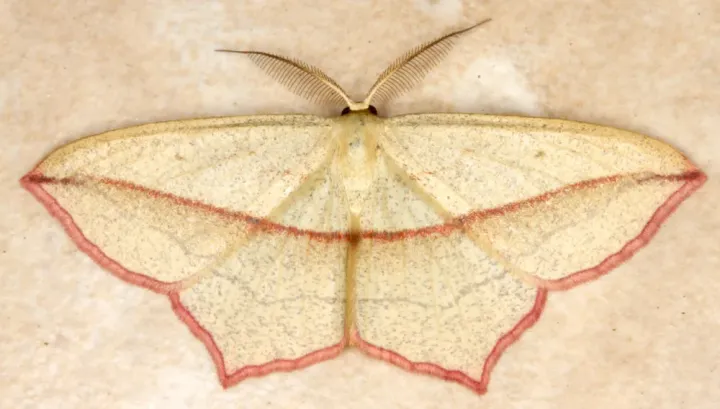
The Blood-vein moth (Calothysanis amata) is a species of moth belonging to the family Geometridae. These insects are easily recognized by their distinct wing pattern, typically featuring reddish-brown or ochre-yellow colors with dark transverse lines.
The adult moth usually has a wingspan ranging from 30 to 40 millimeters. The larvae (caterpillars) are generally gray-brown or greenish, often camouflaged to match the stems and leaves of their host plants.
The life cycle encompasses four stages: egg, larva, pupa, and imago. They typically overwinter as larvae, hidden in the soil or within plant debris, allowing them to withstand cold temperatures.
This species is widespread across Europe and parts of Asia. For agronomists, it is considered a pest due to its potential to damage both wild and cultivated leafy vegetable crops.
The adults are primarily nocturnal or crepuscular. During the day, they remain stationary under leaves, often folding their wings to blend perfectly into the environment, making them difficult to spot.
What it damages
The larvae of the Blood-vein moth primarily feed on plants in the Polygonaceae family, with a particular preference for sorrel (Rumex) and rhubarb (Rheum).
In both small garden settings and commercial vegetable production, high populations of larvae can cause significant damage to foliage, directly reducing the harvest volume.
Larvae consume leaf tissue greedily, often creating large, irregular holes or skeletonizing the leaves, which makes the affected crops non-marketable for human consumption.
The damage creates entry points for various fungal and bacterial pathogens, leading to secondary infections that cause leaves to rot prematurely.
Severe infestations can lead to total crop failure, particularly when young plants are attacked during their most critical stages of leaf development.
When it appears
The first generation of adult moths usually appears in late spring or early summer, typically around May and June. Depending on the local climate, multiple generations may occur in a single season.
Larval activity peaks during the warmest months when host plants like sorrel and rhubarb are growing most vigorously, providing an abundance of food.
Pupation typically takes place at the end of summer or in early autumn, at which point the pupae enter a state of dormancy to survive the winter months.
Environmental conditions play a crucial role in population dynamics; dry and hot summers can accelerate development, potentially leading to explosive population growth.
Effective monitoring should begin in late spring by using light traps to track the influx of adult moths and predict the timing of larval emergence.
Signs of infestation
The most common sign of infestation is the presence of irregular holes in the leaf blades, which increase in size as the larvae continue to mature.
Evidence of larval waste (frass) on the ground or in the leaf axils is a clear indicator that the caterpillars are active on the plant, even if they are not immediately visible.
A thorough inspection of the undersides of the leaves usually reveals clusters of young larvae, which slowly disperse across the plant as they feed.
Leaf curling or the presence of silk threads binding parts of the leaf together may indicate that the caterpillars are using these spots as daytime resting shelters.
Observing adult moths fluttering near the host plants during twilight is a strong warning that egg-laying is occurring and preventive measures should be taken.
Control measures
Deep cultivation of the soil in late autumn is a highly effective cultural practice, as it disrupts the overwintering pupae and reduces the next season's population.
Maintaining a proper crop rotation and strictly managing wild Polygonaceae weeds in the field margins helps to eliminate alternative host plants and potential reservoirs.
In smaller-scale vegetable plots, manual removal of caterpillars during the morning or evening hours is a simple and effective non-chemical control method.
For larger outbreaks, biological insecticides containing specific bacteria are recommended to manage larval populations without negatively impacting beneficial garden insects.
- Application of systemic insecticides during severe pest outbreaks.
- Ensuring adequate irrigation to promote vigorous plant growth and resilience.
- Deployment of light traps to monitor and reduce adult moth numbers.
- Removing and destroying infested plant material promptly after harvesting.
Taxonomy
- Latin name
- Calothysanis amata
- Order
- Lepidoptera (butterflies)
- Family
- Geometridae
- EPPO code
- CLTHAR
Discussion
No discussions yet — be the first.