
Tea looper
Buzura suppremaria
Description
How to identify
The tea looper, scientifically known as Buzura suppremaria, belongs to the Geometridae family within the order Lepidoptera. The adults are relatively large moths with a wingspan of up to 60 mm, characterized by cryptic coloration that mimics tree bark to provide camouflage during the day.
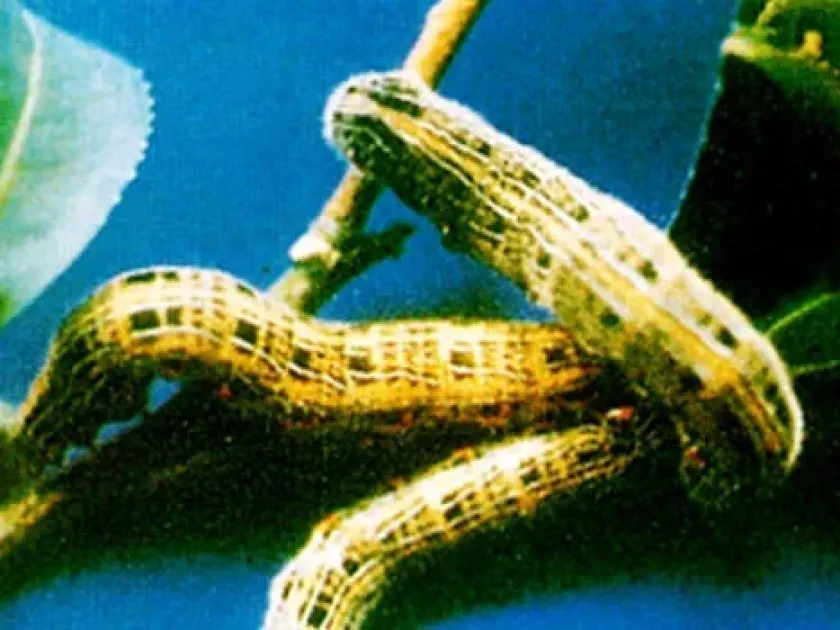
The larvae, or caterpillars, progress through several instars, varying in color from light green to dark brown. This variation allows them to blend in seamlessly with tea stems and leaves. Their movement is distinct, characterized by a looping gait, which gives the family its common name.
Pupae are typically dark and shiny, usually residing in the soil or leaf litter beneath the tea bushes. This subterranean stage protects them from weather fluctuations and predators, making them difficult to detect during standard field scouting.
Adult moths are nocturnal, spending their daylight hours resting motionless on the underside of leaves or branches. Their flat, triangular wing position when at rest is a key behavioral feature for identification in the field.
The life cycle involves complete metamorphosis, and in tropical climates, the species can exhibit multiple generations per year, leading to potential population explosions if left uncontrolled.
What it damages
The tea bush, Camellia sinensis, is the primary host for the tea looper. During mass outbreaks, larvae can cause severe defoliation, consuming both young, tender leaves and mature foliage, which directly impacts the plant's photosynthetic capacity.
In addition to tea, the pest utilizes various surrounding shrubs and trees as alternative hosts, ensuring their presence in the vicinity throughout the growing season even when primary crops are not available.
The damage causes substantial reduction in vegetative mass, leading to significant yield losses. Weakened tea bushes become susceptible to secondary pathogens and environmental stress, ultimately reducing the plantation's overall productivity and lifespan.
Heavy infestations can result in the complete stripping of leaves, leaving only woody petioles and stems. This stage of damage causes extreme physiological stress to the plants, potentially stopping growth and lowering the quality of the harvested tea leaves.
Economic damage is often significant because the cosmetic appearance and chemical quality of the leaves are ruined, rendering the crop unmarketable for processing into high-grade tea products.
When it appears
Activity of the tea looper is highly dependent on ambient temperature and humidity. Moths typically emerge for mating and egg-laying during warmer periods, which coincide with the onset of the primary growing season for tea.
The larval stage is most active during the peak vegetative flush of tea plants. This timing is critical, as it overlaps with the harvest season, creating a direct conflict between the pest and agricultural operations.
Multiple generations can occur within a single year, necessitating vigilant monitoring throughout the growing season to ensure that population levels do not cross economic thresholds.
The winter months are typically passed in the pupal stage within the soil. This dormancy allows the pest to survive harsh conditions and emerge rapidly once temperatures become suitable for their development.
Predictive monitoring using light traps for adult moths allows agronomists to forecast larval emergence, enabling the scheduling of preventative measures before the caterpillars cause widespread damage.
Signs of infestation
The most prominent sign of an infestation is irregular defoliation. Early-stage larvae create small holes in the leaf blades, while older caterpillars consume the entire leaf margin, leading to ragged edges on the foliage.
The presence of frass (small, dark, granular droppings) on the leaf surfaces or at the base of the tea bushes is a definitive indicator of an active caterpillar population, even if the pests themselves are hidden by their camouflage.
During twilight or early morning, one might observe movement of caterpillars on the stems. In extreme cases, high population densities will lead to visible mass migration as the larvae move to find new, unconsumed leaves.
Wilted or deformed shoots may appear as the plant struggles to compensate for the loss of tissue and disruption of its vascular system due to constant feeding pressure.
The discovery of silk webbing, which larvae occasionally use to bind leaves together for shelter or protection, serves as a clear visual signal that the tea looper has colonized a specific section of the plantation.
Control measures
An integrated pest management (IPM) approach is essential, focusing on biological and cultural controls to minimize environmental impact and ensure food safety for tea consumers.
Biological control using Bacillus thuringiensis based formulations is highly effective against early-instar larvae and is considered a preferred method as it leaves no harmful residues on the harvested leaves.
Cultural methods, such as regular weeding and tillage between rows, disrupt the pupal stage in the soil, significantly reducing the number of moths emerging for the next generation.
When chemical intervention is required, selective insecticides should be applied with strict adherence to pre-harvest intervals to ensure the final product meets international safety and quality standards.
- Deployment of pheromone traps for population monitoring.
- Preservation and encouragement of natural enemies (predators and parasitoids).
- Hand-picking larvae on small-scale organic farms.
- Strict adherence to quarantine and nursery hygiene practices.
Taxonomy
- Latin name
- Buzura suppremaria
- Order
- Lepidoptera (butterflies)
- Family
- Geometridae
- EPPO code
- BUZUSU
Discussion
No discussions yet — be the first.