
Bulinus africanus
Bulinus africanus
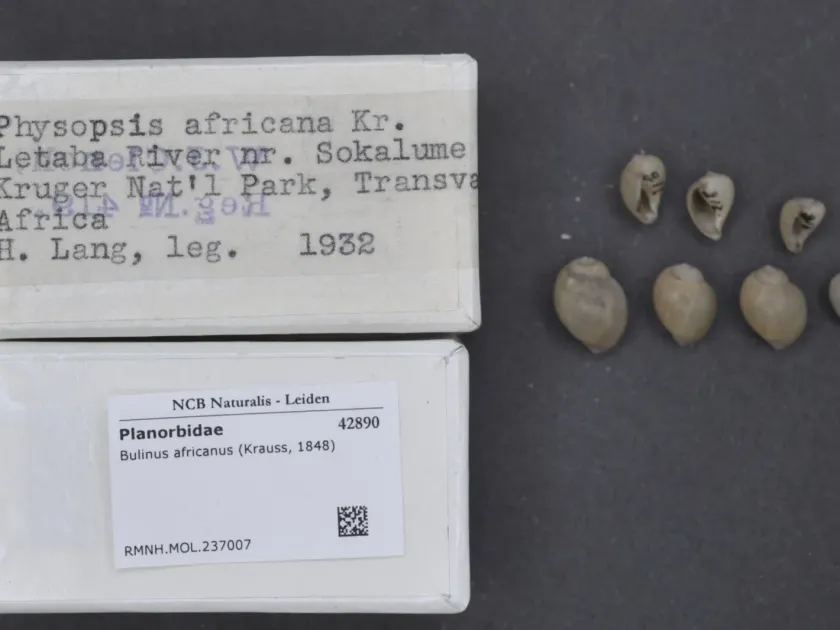
Description
How to identify
Bulinus africanus is a species of freshwater air-breathing snail belonging to the family Planorbidae. A key diagnostic feature of this species is its sinistral (left-handed) shell, which has a distinct conical shape.
Adult snails typically measure between 10 and 20 millimeters in height. Their coloration ranges from light gray to dark brown, providing effective camouflage against the muddy bottoms of ponds and marshes where they reside.
They prefer standing or slow-moving water bodies, including irrigation ditches and flooded agricultural fields in tropical regions. Their ability to tolerate various environmental conditions makes them highly resilient.
As hermaphrodites, these snails possess high reproductive potential, allowing populations to proliferate rapidly under favorable conditions, which often poses a challenge for agricultural management.
Beyond being an agricultural pest, Bulinus africanus is of significant medical importance as it serves as an intermediate host for schistosomes, which cause serious diseases in humans.
What it damages
In an agricultural context, Bulinus africanus primarily damages crops grown in flooded or waterlogged soils, such as rice. The snails graze on tender seedlings, often leading to total loss of the young crop.
Damage is inflicted through the use of their radula, which scrapes the epidermis of leaves and stems. This mechanical injury weakens the plants, making them susceptible to secondary fungal infections.
High population densities can cause devastating effects on rice paddy plantations, particularly during the early stages of plant development, leading to significant yield reductions.
The presence of large populations of these snails in irrigation water can degrade water quality, indirectly affecting the overall vitality and growth rates of agricultural crops.
Infestation symptoms are most prominent on plant parts submerged in water or those in direct contact with wet soil, as these areas are the primary feeding grounds for the snails.
When it appears
The activity of Bulinus africanus is highly dependent on water temperature and moisture availability. Their primary activity period coincides with the rainy season and active irrigation periods for crops.
Optimal temperatures for growth and reproduction range from 20 to 28 degrees Celsius. When temperatures drop below 15 degrees, activity levels decline significantly, and they may enter a dormant state.
During prolonged dry spells, these snails can survive by burrowing deep into bottom sediments, where moisture is retained. This behavior allows them to persist through drought and reappear rapidly once water returns.
The life cycle is relatively fast, allowing for quick population recovery after unfavorable events, which necessitates consistent monitoring throughout the crop growing season.
The greatest risk to crops occurs during the germination and early growth phases, as seedlings are most vulnerable to grazing at this stage of their development.
Signs of infestation
The primary sign of an infestation is the presence of distinct grazing marks on leaves, which often appear as small holes or perforations caused by the snail's rasping radula.
The presence of adult snails in irrigation channels or on moist soil surfaces during early morning or evening hours serves as a clear indicator of a significant infestation level.
Mucus trails left on the surface of plant stems, leaves, or soil near the base of the plant are reliable signs of high snail activity in the immediate vicinity.
Sudden wilting or death of healthy-looking seedlings, particularly those with damage at the base, often points to nighttime grazing activity by these pests.
Uneven crop stands and the presence of bare patches in flooded fields frequently indicate areas where the snail population has actively consumed the young plants.
Control measures
Integrated management is essential, focusing primarily on agricultural practices such as maintaining drainage systems and clearing vegetation from irrigation channels to eliminate breeding sites.
Biological control, including the encouragement of natural predators in the environment, is a sustainable method to manage snail populations without chemical inputs.
- Mechanical removal of vegetation and sediment from canals.
- Water level management to make habitat conditions unfavorable for snails.
- Targeted use of molluscicides (copper-based) only when necessary and strictly regulated.
- Using agricultural techniques to accelerate plant growth through the most vulnerable seedling phase.
Chemical intervention requires careful consideration due to potential toxicity to non-target aquatic organisms and the overall health of the ecosystem.
A combination of regular population monitoring and proactive cultural practices provides the most effective defense against Bulinus africanus, ensuring crop safety and vitality.
Taxonomy
- Latin name
- Bulinus africanus
- Order
- Molluscs
- Family
- Planorbidae
- EPPO code
- BULIAF
Discussion
No discussions yet — be the first.