
Elm leaf miner moth
Bucculatrix ulmella
Description
How to identify
The elm leaf miner moth Bucculatrix ulmella belongs to the Bucculatricidae family within the Lepidoptera order. These are tiny insects, with an adult wingspan typically ranging between 7 and 9 mm.
Adult moths are generally cryptic and well-camouflaged, making them difficult to spot on the bark of elm trees. The insect undergoes complete metamorphosis, passing through egg, larva, pupa, and adult stages.
The larval stage is particularly distinctive, as the insect exhibits a shift in behavior: initially mining inside the leaf tissues and later feeding openly on the leaf surface.
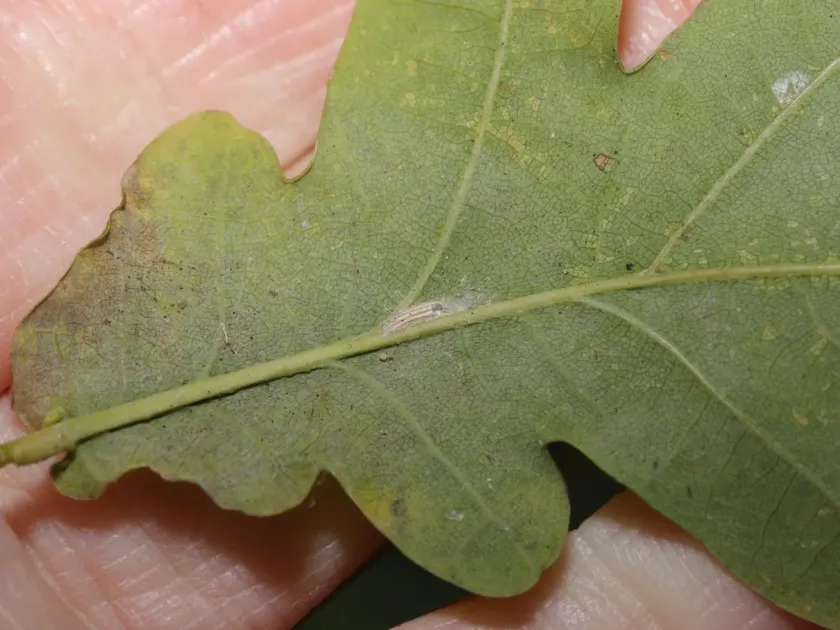
Pupation occurs in small, white, spindle-shaped cocoons. These are often secured to the underside of leaves or hidden within the crevices of the tree bark for protection during their development.
The life cycle is closely synchronized with the phenology of the elm tree, ensuring that larvae emerge precisely when fresh, succulent leaves are available for development.
What it damages
Bucculatrix ulmella specifically targets elm species, leading to physiological stress. Damage is primarily caused by larval feeding, which disrupts the photosynthetic capacity of the foliage.
Young larvae start by creating thin, serpentine mines within the leaf tissue. These mines impair the leaf's ability to process nutrients and energy, leading to localized necrotic spots.
As larvae mature, they emerge from their mines to skeletonize the leaves. This intensive feeding often results in the loss of large portions of the leaf surface, significantly weakening the tree's health.
Severe infestations can lead to premature leaf drop, which hinders the tree's ability to store energy reserves for the following season, especially in urban environments where trees are already stressed.
Repeated yearly defoliation significantly reduces the aesthetic and structural value of elm trees, making them susceptible to secondary attacks from other wood-boring insects or pathogens.
Signs of infestation
The earliest sign of an infestation is the appearance of tiny, winding mines on the elm leaves. Examining leaves against the light makes these tunnels easy to detect during the early growth stages.
Progressive feeding damage appears as skeletonized leaf patches or small holes. These areas eventually turn yellow or brown, leading to a generalized discoloration of the tree canopy.
Small, white, silken cocoons found on the undersides of leaves provide definitive proof of the pest's presence and indicate the transition between generations.
The accumulation of larval frass on the leaves or the presence of fine silk threads used by the larvae for movement are secondary indicators of an ongoing active infestation.
Widespread premature yellowing or sparse canopy density by mid-summer is a critical warning sign that the infestation level has reached a point requiring management intervention.
Control measures
Effective management of the elm leaf miner moth involves a combination of monitoring, cultural practices, and, when necessary, targeted insecticide applications during critical life stages.
Cultural control is vital: raking and destroying fallen leaves during the autumn significantly reduces the population of overwintering pupae, breaking the cycle for the next season.
Biological control, using Bacillus thuringiensis sprays, provides a targeted approach that minimizes impact on non-target beneficial insects in the surrounding ecosystem.
Promoting tree health through proper irrigation and soil management improves the natural resilience of elms, helping them withstand and recover from pest-related damage.
- Monitor adult populations using specific pheromone traps.
- Apply systemic insecticides during the peak period of larval emergence.
- Encourage local populations of birds and predatory insects that feed on larvae.
Taxonomy
- Latin name
- Bucculatrix ulmella
- Order
- Lepidoptera (butterflies)
- Family
- Bucculatricidae
- EPPO code
- BUCCUL
Discussion
No discussions yet — be the first.