
Birch leafminer
Bucculatrix canadensisella
Description
How to identify
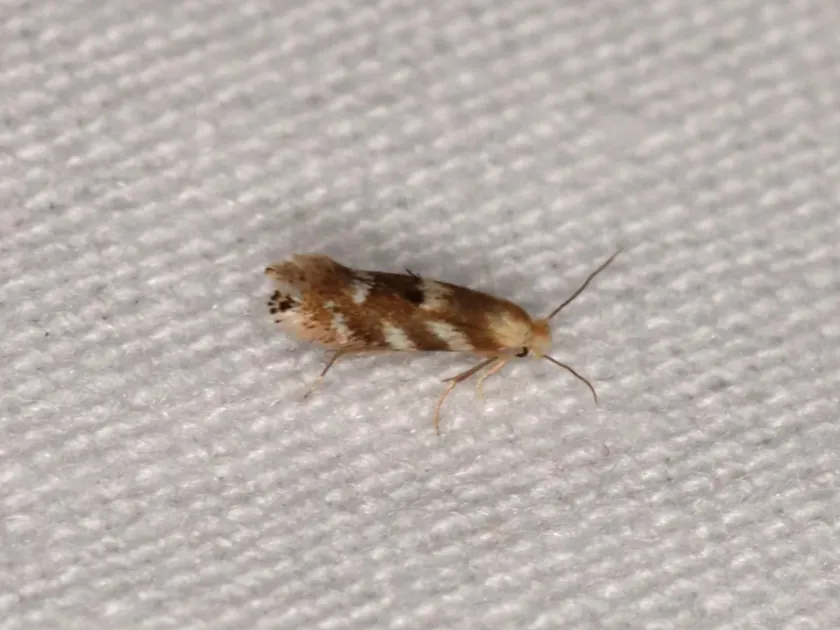
The birch leafminer (Bucculatrix canadensisella) is a small moth belonging to the family Bucculatricidae, order Lepidoptera. The adult moth has a wingspan of approximately 7–10 mm and features brownish-gray wings with distinct white markings.
The life cycle follows a complete metamorphosis, including egg, larva (caterpillar), pupa, and adult stages. The larvae transition from internal leaf miners to external leaf skeletonizers as they mature.
The pupal stage is protected within a characteristic spindle-shaped, ribbed white cocoon. These cocoons are typically found on the undersides of leaves, twigs, or in bark crevices during late summer and autumn.
This species is highly specific to the genus Betula, making it a primary pest for various birch species, including paper, gray, and white birch.
The synchronization of the moth's life cycle with the phenology of birch trees ensures that larvae have immediate access to fresh foliage for development.
What it damages
The primary damage is caused to the foliage of birch trees. Larvae create mines within the leaf tissue, disrupting the tree's ability to perform photosynthesis efficiently.
Heavy infestations result in a scorched appearance of the tree crown, as leaves turn brown and drop prematurely by late August or early September.
Continuous annual defoliation stresses the tree, leading to reduced growth rates, twig dieback, and increased susceptibility to secondary pests like wood borers.
While the birch leafminer rarely kills a healthy, mature tree in a single season, cumulative damage over consecutive years can significantly weaken the overall vitality of a stand.
In ornamental landscapes and parks, the aesthetic impact of skeletonized and browning foliage is significant, often necessitating intervention to preserve the appearance of the trees.
When it appears
Adult moths emerge in mid-summer, typically peaking in July, when they begin laying eggs on the undersides of birch leaves.
Larval development, including both the mining phase and the surface feeding phase, occurs from late July through August, when temperatures are ideal for rapid growth.
Pupation takes place in late summer, with larvae spinning cocoons in late August or early September. The species overwinters in the pupal stage.
Visual symptoms of damage are most apparent in late August, when the progression of mining and skeletonizing turns the canopy into a mosaic of brown, withered tissue.
Weather patterns, particularly warm summers followed by early autumns, can influence the timing of emergence and the survival rates of the overwintering pupae.
Signs of infestation
Small, winding or irregular blotch mines are the first indicators of larval activity within the leaf blade. These mines contain small amounts of dark excrement.
Skeletonized leaves are a hallmark of the later larval stages. As the caterpillar grows, it eats away all the green tissue, leaving only the veins behind.
White, ribbed, spindle-shaped cocoons attached to leaves or twigs are definitive proof of the birch leafminer's presence in an area.
Premature leaf drop in late summer is a major indicator of a severe infestation that requires assessment and potential management action.
A thorough inspection of the canopy, especially the lower branches, often reveals the localized clusters of cocoons or current mining activity.
Control measures
Systemic insecticides applied to the soil or trunk can effectively control the larvae as they feed on treated leaf tissues, providing long-lasting protection.
Cultural practices, such as raking and destroying fallen leaves in the autumn, can help reduce the number of overwintering pupae near the base of the trees.
Biological control using microbial insecticides, specifically those containing Bacillus thuringiensis, is an effective and environmentally friendly option for managing infestations.
Monitoring adult moth populations with pheromone traps helps in timing insecticide applications to ensure maximum impact during the egg-laying or early larval period.
- Application of specialized horticultural oils during the adult egg-laying phase.
- Maintaining tree health through proper watering and fertilization to mitigate stress.
- Pruning and removing heavily infested branches in smaller residential landscapes.
Taxonomy
- Latin name
- Bucculatrix canadensisella
- Order
- Lepidoptera (butterflies)
- Family
- Bucculatricidae
- EPPO code
- BUCCCA
Discussion
No discussions yet — be the first.