
Bucculatrix
Bucculatrix
Description
How to identify
Bucculatrix is a genus of tiny moths belonging to the family Bucculatricidae. These insects are characterized by their very small size and narrow wings, which are typically fringed with fine hairs, making them difficult to detect in the field.
The life cycle of the moth consists of four stages: egg, larva, pupa, and adult. The larval stage is the one responsible for causing damage to various plant species by feeding on their foliage.
A distinctive biological feature of this genus is the construction of a unique, white, ribbed cocoon for pupation. These cocoons are often found attached to the underside of leaves or on small branches, serving as a critical diagnostic feature for field identification.
The number of generations per year varies significantly depending on the local climate and temperature, which dictates the severity of the infestation throughout the growing season.
Overwintering typically occurs in the pupal stage within these sturdy cocoons, often hidden in bark crevices or among leaf litter, allowing the insect to survive harsh winter conditions successfully.
What it damages
Bucculatrix species target a wide range of host plants, including pome fruits like apples and pears, as well as various deciduous trees such as oaks and diverse shrubs.
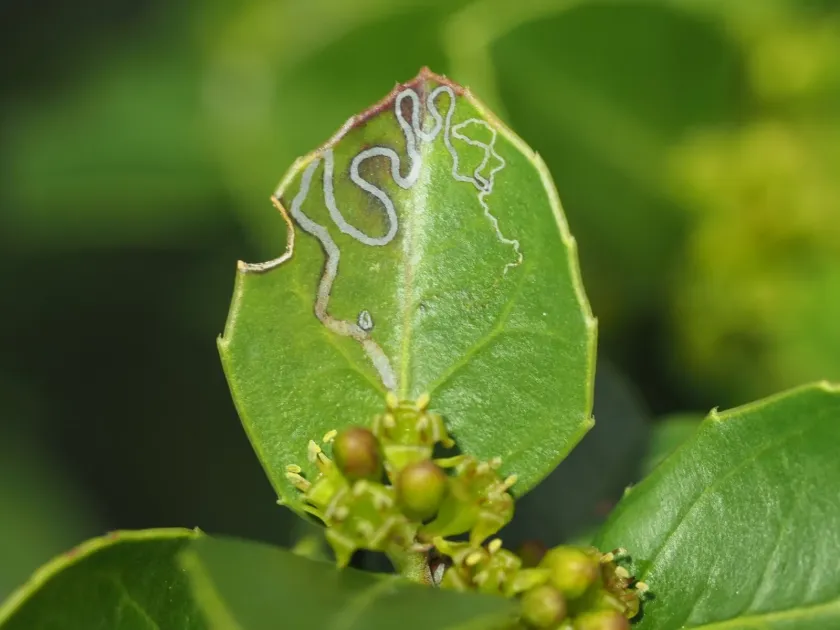
The damage begins in the early larval stages when the caterpillars mine into the leaf tissue, creating winding tunnels. This feeding habit disrupts the plant's photosynthesis and weakens the affected leaves.
As the larvae grow, they emerge from the mines to feed openly on the leaf surface. They skeletonize the leaves by consuming the parenchyma tissue while leaving the epidermal layers intact, resulting in characteristic translucent spots.
High population densities can lead to premature leaf drop, which significantly stresses the tree. This impact reduces the plant's ability to store energy for the next season and can lower fruit quality.
In nursery settings, heavy infestation can severely stunt the growth of young saplings, causing significant economic losses for growers who must then invest in corrective plant protection measures.
Signs of infestation
Early symptoms include the appearance of delicate, winding mine lines on the leaves, which are best observed when held up against light to see the damage clearly.
Progressive feeding damage presents as numerous small patches where the green tissue has been consumed, giving the leaf a patchy or "windowed" appearance.
The presence of white, spindle-shaped, ridged cocoons on the foliage, twigs, or bark is a definitive sign that the population is established in the orchard or garden.
Widespread leaf yellowing, drying, and premature shedding in late summer often indicate severe infestation levels that have compromised the health of the plant canopy.
Observers may also notice fine webbing on the branches, as some larvae use silk threads to navigate or drop from the leaves, leaving behind subtle but visible evidence of their activity.
Control measures
Sanitation is a primary control strategy. Removing and destroying fallen leaf litter significantly reduces the overwintering population of pupae, effectively decreasing the risk of infestation next year.
Maintaining clean orchard hygiene, including scraping off loose bark from older tree trunks, eliminates potential pupation sites and limits the insect's ability to propagate.
Biological control using microbial insecticides based on specific bacteria is highly effective against the larval stages while remaining safe for beneficial insects and the environment.
Chemical intervention should be reserved for periods of high larval activity, utilizing systemic or contact-acting insecticides to manage populations before they reach economic damage thresholds.
- Monitor population spikes with pheromone traps.
- Encourage local populations of parasitic wasps and predators.
- Apply treatments during the egg-hatching and early larval development phases.
Taxonomy
- Latin name
- Bucculatrix
- Order
- Lepidoptera (butterflies)
- Family
- Bucculatricidae
- EPPO code
- BUCCSP
Discussion
No discussions yet — be the first.