
Chrysanthemum leaf miner moth
Bucculatrix chrysanthemella
Description
How to identify
The chrysanthemum leaf miner moth (Bucculatrix chrysanthemella) belongs to the family Bucculatricidae of the order Lepidoptera. It is a tiny insect, and the adult moths have narrow wings with a characteristic fringed edge, which is typical for this family.
The life cycle of this pest includes egg, larva (caterpillar), pupa, and adult stages. The female lays minute eggs on the leaf surface, from which larvae emerge and begin their life by tunneling narrow mines inside the leaf tissue.
During its development, the caterpillar goes through several instars, increasing in size and changing its feeding habits. At the final stage of development, the larva leaves the mine to find a place to pupate, which often occurs in white ribbed cocoons on the underside of the leaf.
Adult moths are primarily nocturnal or crepuscular, making them difficult to detect during early stages of infestation. They have high fecundity, allowing the population to increase rapidly under favorable temperature conditions.
Systematically, this species is adapted to specific host plants, making it a dangerous specialized pest capable of causing significant damage both in open fields and in greenhouse conditions.
What it damages
The primary host plant for this species is the chrysanthemum (Chrysanthemum), including both garden and pot varieties. The pest can affect not only cultivated species but also wild plants within the Asteraceae family.
The larvae feed inside the leaf tissue, consuming the parenchyma between the epidermal layers. This leads to a disruption of photosynthesis, weakening the plant and causing a loss of aesthetic value, which is critical for ornamental horticulture.
Heavy infestation leads to premature yellowing and leaf drop, which exhausts the plant and reduces flowering quality. On young shoots, mass infestation can cause deformation and stunted growth of the plant.
The pest's damage also includes creating entry points for various pathogenic microorganisms. Damaged leaf tissues become vulnerable to secondary fungal and bacterial infections.
In greenhouse conditions, without proper control, the pest can produce several generations per year, leading to a complete loss of the commercial and aesthetic value of the floral crops in a very short period of time.
Signs of infestation
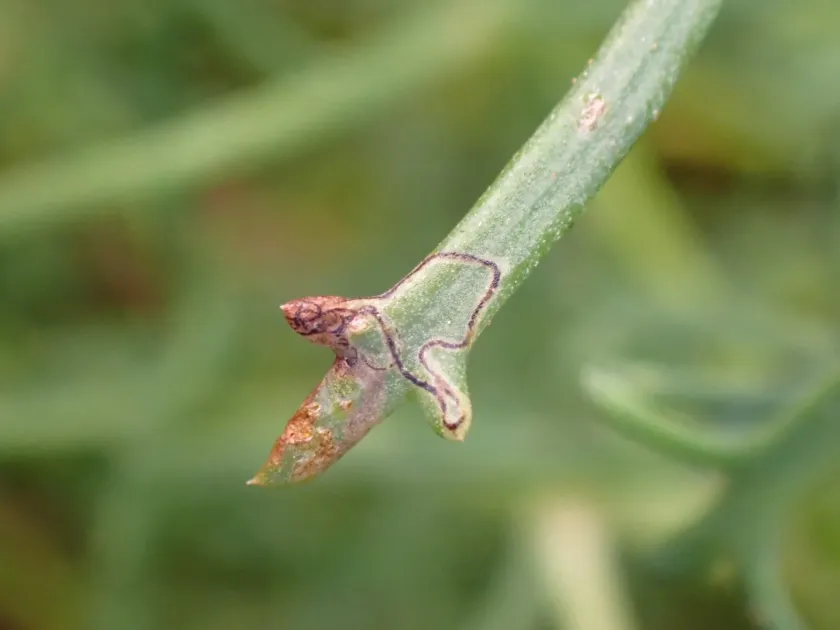
The first and most noticeable sign is the presence of thin, winding, light-colored lines on the leaf surface, known as mines. Initially, they are very narrow, but as the larva grows, they become wider and may take on a spiral or erratic shape.
Upon closer inspection of the underside of the leaf, one can find small white cocoons with a characteristic ribbed structure. This is a reliable sign that the pest's development cycle is nearing completion and a new generation will soon emerge.
Damaged areas of the leaf eventually dry out and turn brown, creating a "scorched" effect. In cases of severe infestation, the leaf looks chlorotic, curled, and dies off quickly, losing its natural shape and color.
In the places where the larva exits the mine, small holes may remain on the leaf surface, through which pathogens can enter later, further deteriorating the condition of the plant's aerial parts.
- Presence of silvery winding lines on the leaves.
- Presence of white ribbed cocoons on the underside of the leaf.
- Appearance of necrotic zones and premature leaf fall.
- Deformation of young shoots under severe infestation.
Control measures
The most important step in control is prevention, which includes strict quarantine procedures when bringing in new planting material. It is necessary to inspect plants regularly for early signs of leaf mining.
Agrotechnical methods include the timely removal and destruction of heavily infested leaves and plant debris, where pupae may be located. Maintaining an optimal microclimate in greenhouses by avoiding excessive humidity is crucial.
Chemical control measures should be aimed at killing larvae before they pupate. Systemic insecticides are used, which are capable of penetrating the leaf tissue and acting on the pest located inside the mine.
Biological control involves the use of entomophages, such as parasitic Hymenoptera, which limit the moth population in natural conditions. This is a promising approach for greenhouse environments.
It is necessary to rotate preparations with different mechanisms of action to prevent the development of resistance in the pest. Monitoring with yellow sticky traps helps track adult flight and adjust the timing of treatments.
Taxonomy
- Latin name
- Bucculatrix chrysanthemella
- Order
- Lepidoptera (butterflies)
- Family
- Bucculatricidae
- EPPO code
- BUCCCH
Discussion
No discussions yet — be the first.