
Oak leafminer
Bucculatrix albertiella
Description
How to identify
The oak leafminer (Bucculatrix albertiella) is a small moth species belonging to the family Bucculatricidae. Adult moths are quite inconspicuous, with a wingspan of only 6-8 mm and a mottled pattern that allows them to blend in perfectly with the bark of host trees.
The life cycle of this insect involves distinct stages: egg, larva, pupa, and adult. The larval stage is the most critical for identification, as it spends most of its life feeding within the leaf tissues, hidden from predators and external environmental factors.
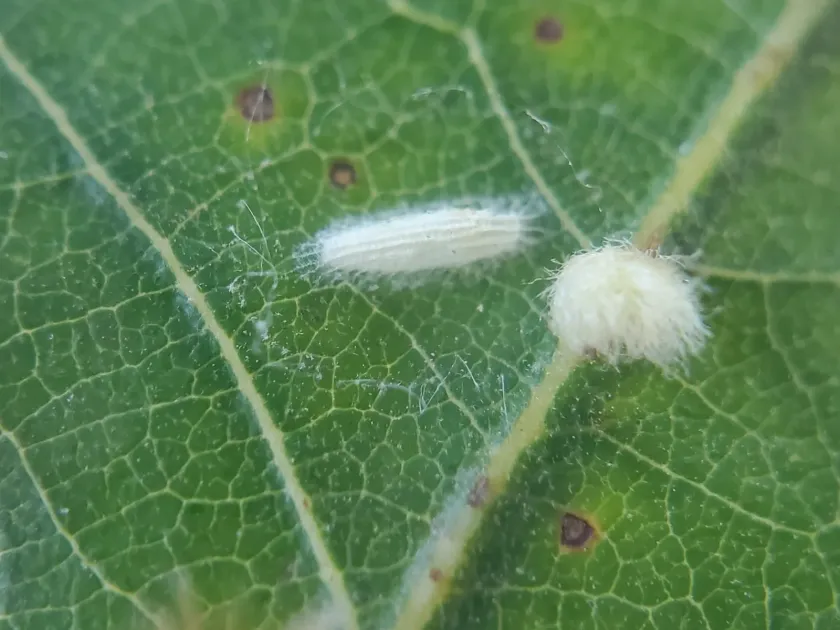
Pupation occurs in small, distinctive white cocoons. These are often found attached to the bark of branches or the underside of leaves, acting as a site for the insect to survive through dormant periods or cold temperatures.
Depending on the climatic zone, this species can produce one or two generations per year. The timing of their emergence is tightly synchronized with the budding of oak trees, ensuring that young larvae have immediate access to fresh leaves.
They are primarily found in temperate forest ecosystems where various species of oak provide the necessary host conditions for continuous population growth and survival during the winter months.
What it damages
The primary hosts of this moth are oak species. Larvae cause damage by mining between the upper and lower epidermis of the leaf, consuming the mesophyll tissues, which are essential for the photosynthetic process of the tree.
Initial feeding results in narrow, serpentine tunnels that later expand into irregular blotches. This feeding pattern significantly reduces the tree's ability to produce energy, leading to decreased growth rates and overall health decline.
Severe infestations often result in premature leaf drop, which leaves the tree vulnerable to other pathogens and environmental stresses. In some cases, repeated heavy infestations over several consecutive years can cause crown dieback.
In forest plantations, the oak leafminer can cause significant economic damage by affecting wood accumulation. The reduction in leaf surface area directly impacts the tree's metabolic processes and structural development.
Ornamental oak trees in urban landscapes suffer from aesthetic degradation, as the foliage appears patchy, yellowed, and prematurely dried. This can lead to increased management costs for property owners and city arborists.
Signs of infestation
The most reliable sign of an oak leafminer infestation is the presence of visible mines on the leaves. These tunnels are often associated with dark, frass-filled tracks that clearly mark the path the larva has taken while feeding.
Tiny white cocoons on the underside of leaves or on twigs are a definitive indicator of the pest's life cycle progression. Their presence confirms an established colony on the tree and warrants a closer inspection of the crown.
The overall appearance of the tree crown changes during heavy outbreaks. Affected areas of the canopy appear scorched or pale due to the extensive tissue destruction within the leaves, creating a noticeable contrast with healthy foliage.
Leaves affected by the larvae may curl or become brittle, eventually falling off before the end of the natural growing season. This premature defoliation is a key symptom that foresters use to detect outbreaks from a distance.
Monitoring the flight of adult moths using pheromone traps can provide early warning. Capturing males in these traps allows for precise timing of interventions, which is critical for effective management of the population.
Control measures
Effective management begins with sanitation practices, specifically the removal and destruction of fallen leaves where pupae may be overwintering. This simple step can significantly reduce the potential population for the following spring.
Biological control agents, such as specialized sprays containing Bacillus thuringiensis, are highly effective against larval stages while remaining safe for beneficial insects like ladybugs and predatory wasps.
Chemical control involving systemic insecticides is reserved for high-value trees or areas where damage levels have reached a critical threshold. Applying these treatments requires careful timing during the egg-hatching period to be most successful.
- Regular monitoring of tree health and leaf condition throughout the season.
- Enhancing biodiversity in the area to encourage natural predators such as birds and parasitic wasps.
- Targeted application of insecticides to the crown when population density exceeds economic thresholds.
Integrated Pest Management (IPM) is the most sustainable approach, combining regular monitoring, cultural practices, and selective interventions to keep the oak leafminer population below levels that would cause significant damage to the host trees.
Taxonomy
- Latin name
- Bucculatrix albertiella
- Order
- Lepidoptera (butterflies)
- Family
- Bucculatricidae
- EPPO code
- BUCCAL
Discussion
No discussions yet — be the first.