
Cotton leaf perforator
Bucculatrix thurberiella
Description
How to identify
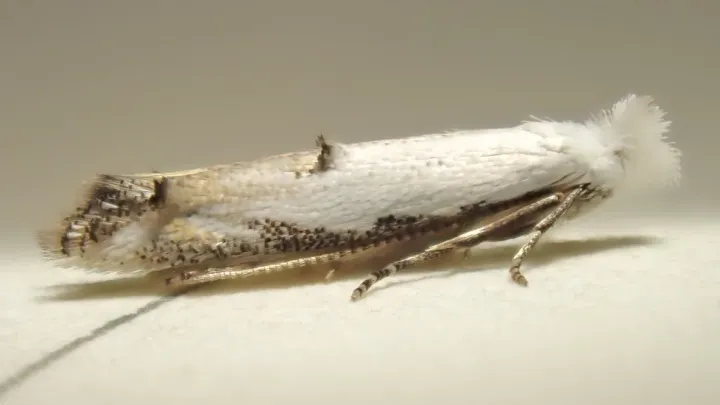
The cotton leaf perforator (Bucculatrix thurberiella) is a small moth belonging to the Bucculatricidae family. Adult moths have a wingspan of approximately 7 to 8 mm.
The adult is characterized by a greyish-white appearance with distinct dark markings on the forewings. The larvae transition through several instars, varying in color as they develop.
The insect is known for creating unique, white, ribbed cocoons which are commonly attached to the underside of cotton leaves or on plant stems.
Its lifecycle consists of egg, larva, pupa, and adult stages. In warm climates, it can complete multiple generations within a single growing season, leading to rapid population growth.
Proper identification is crucial, as the early-stage mines are tiny and can be easily overlooked by farmers during routine field inspections.
What it damages
The primary host of this pest is cotton (Gossypium). Larvae feed on the leaf tissue, causing physiological stress to the plant by interrupting photosynthesis.
Severe infestations lead to extensive defoliation, which negatively impacts the plant's ability to produce bolls and ultimately reduces the final lint yield.
Damage caused by this pest is not only quantitative but also qualitative, as the loss of canopy protection can expose bolls to sunburn and other stresses.
The feeding activity creates wounds that may serve as entry points for secondary pathogens, increasing the risk of diseases in the cotton crop.
Given the rapid reproductive rate, uncontrolled populations can cause significant economic losses in cotton-producing regions within a short period.
Signs of infestation
The earliest sign of infestation is the appearance of winding, thread-like mines on the leaf surface, created by the larvae feeding inside the leaf tissue.
As the larvae mature and exit the mines, they feed externally on the leaves, creating small, irregular holes that result in a skeletonized or perforated leaf appearance.
The presence of white, spindle-shaped cocoons on the underside of leaves or on stems is a definitive indicator of the pest's presence and activity.
Visible chlorosis or yellowing of the leaves, followed by premature dropping, indicates that the infestation has reached a critical level requiring attention.
- Sinuous, thread-like leaf mines.
- Skeletonized leaves with numerous irregular holes.
- White, ribbed cocoons attached to plant parts.
- Premature leaf drop and stunted plant development.
Control measures
Cultural control practices, such as deep plowing after harvest, are effective in burying and destroying pupae that overwinter in soil or crop residues.
Management of weed hosts, particularly those in the Malvaceae family, is essential to minimize breeding sites surrounding the cotton fields.
Chemical control is often necessary during peak activity, utilizing selective insecticides that target larvae while minimizing impact on beneficial predatory insects.
Biological control plays a significant role; parasitoid wasps and other natural enemies can help suppress the population of the cotton leaf perforator.
Integrated Pest Management (IPM) programs emphasize regular scouting and the use of pheromone traps to make informed decisions regarding insecticide applications.
Taxonomy
- Latin name
- Bucculatrix thurberiella
- Order
- Lepidoptera (butterflies)
- Family
- Bucculatricidae
- EPPO code
- BUCCTH
Discussion
No discussions yet — be the first.