
Apple leafminer
Bucculatrix pomifoliella
Description
How to identify
The apple leafminer (Bucculatrix pomifoliella) is a member of the Bucculatricidae family. These tiny moths have a wingspan of approximately 7 to 8 mm. Adults are typically grayish or brownish in color with darker markings, making them well-camouflaged against the bark of fruit trees.
What it damages
This pest primarily infests apple trees but is also known to damage related species like pears, quinces, and hawthorns. The larvae act as leafminers, feeding on the inner tissues of the leaves, which disrupts photosynthesis and leads to premature defoliation in severe cases.
When it appears
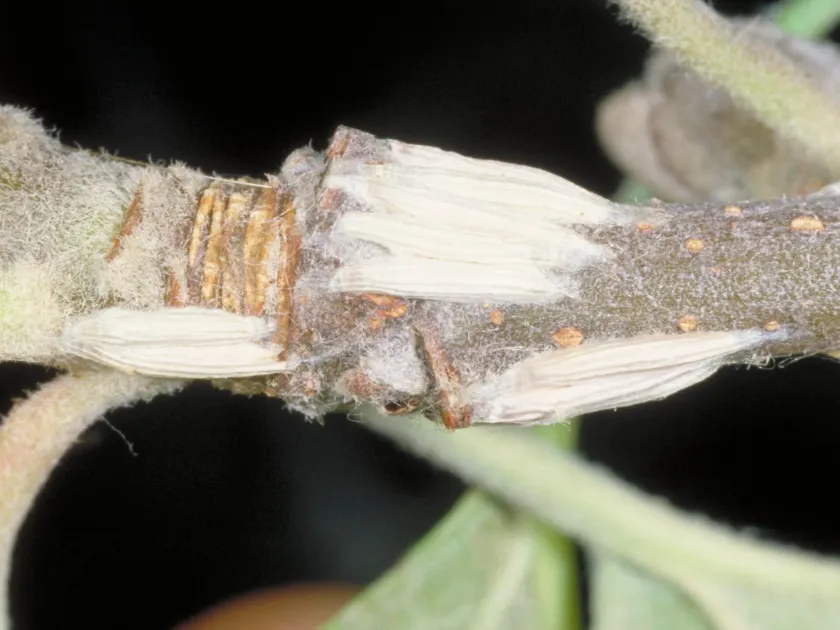
The life cycle typically consists of one or two generations per year depending on the climate. The insects overwinter as pupae within small, white, ribbed cocoons tucked away in bark crevices. Adult moths generally emerge in late spring just as the tree leaves begin to unfold.
Signs of infestation
The first signs of infestation are slender, winding tracks or mines visible on the leaf surface. As the larvae mature, these mines broaden into irregular, blotchy patches. Heavy infestations cause the leaves to curl, brown, and drop early, which weakens the overall vigor of the tree.
Control measures
Effective management includes sanitation practices, such as removing and destroying fallen leaves and debris under the trees to reduce overwintering sites. During the growing season, applications of systemic insecticides or pheromone traps can be used to monitor and manage moth populations.
Taxonomy
- Latin name
- Bucculatrix pomifoliella
- Order
- Lepidoptera (butterflies)
- Family
- Bucculatricidae
- EPPO code
- BUCCPO
Discussion
No discussions yet — be the first.