
Bucculatrix ivella
Bucculatrix ivella
Description
How to identify
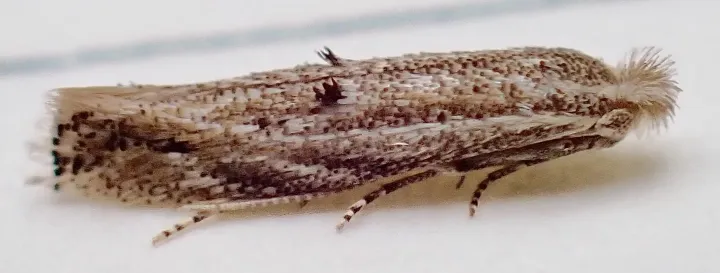
Bucculatrix ivella is a species of moth belonging to the family Bucculatricidae. These small insects are known as leaf miners, and they specialize in feeding on specific host plants, primarily oaks.
The life cycle of the moth consists of four stages: egg, larva, pupa, and adult. Each stage is perfectly synchronized with the seasonal development of the host tree.
Adult moths are characterized by their narrow wings and delicate appearance. They are mostly nocturnal, hiding in foliage or bark crevices during the daylight hours.
The larvae are small caterpillars that transition through several instars. Their feeding behavior changes significantly as they mature, moving from internal leaf mining to external grazing.
Pupation occurs inside a distinct, white, ribbed cocoon, which the larva attaches to the undersides of leaves or protected areas of the tree bark.
What it damages
The primary hosts for Bucculatrix ivella are oak species (Quercus). The larvae feed specifically on the leaf tissue, which impairs the tree's photosynthetic capability.
In the early larval stages, the insect mines the interior of the leaf, creating irregular tunnels that weaken the structure of the leaf blade.
Later, the caterpillars consume the epidermis of the leaf, creating semi-transparent spots. Heavy infestations can lead to substantial defoliation of the canopy.
Continuous damage throughout the growing season stresses the trees, making them susceptible to secondary infections, fungal diseases, and environmental stressors.
While an individual leaf may recover, a large-scale outbreak can severely stunt the growth of young trees and degrade the health of older forest stands.
Signs of infestation
The most visible sign is the presence of winding, translucent tunnels on the leaves, which are the result of early larval feeding inside the leaf tissue.
Another clear symptom is the skeletonization of the leaf surface, where the caterpillars have eaten the green tissue, leaving behind thin, papery patches.
The presence of white, ribbed cocoons attached to leaves or twigs is a definitive indicator of the pest's presence in the immediate vicinity.
Affected leaves tend to yellow prematurely and develop necrotic brown patches, eventually curling or dying completely before the normal autumnal leaf drop.
Small deposits of frass (caterpillar excrement) on the leaves or the ground beneath the canopy are common signs that a population of these larvae is active.
Control measures
Biological control using Bacillus thuringiensis sprays has proven effective, as these agents target the larvae specifically while sparing beneficial insects.
Sanitation practices, including the raking and removal of infested leaf litter, can significantly reduce the number of overwintering pupae in the area.
In managed forest or nursery settings, systemic insecticides may be used during the peak emergence of larvae to minimize damage to the canopy foliage.
Monitoring the moth population with pheromone traps allows arborists to predict the timing of larval activity and apply control measures with high precision.
Maintaining high tree vigor through proper silvicultural practices ensures that oaks can tolerate or recover from minor infestations more effectively.
Taxonomy
- Latin name
- Bucculatrix ivella
- Order
- Lepidoptera (butterflies)
- Family
- Bucculatricidae
- EPPO code
- BUCCIV
Discussion
No discussions yet — be the first.