
Bryocoropsis laticollis
Bryocoropsis laticollis
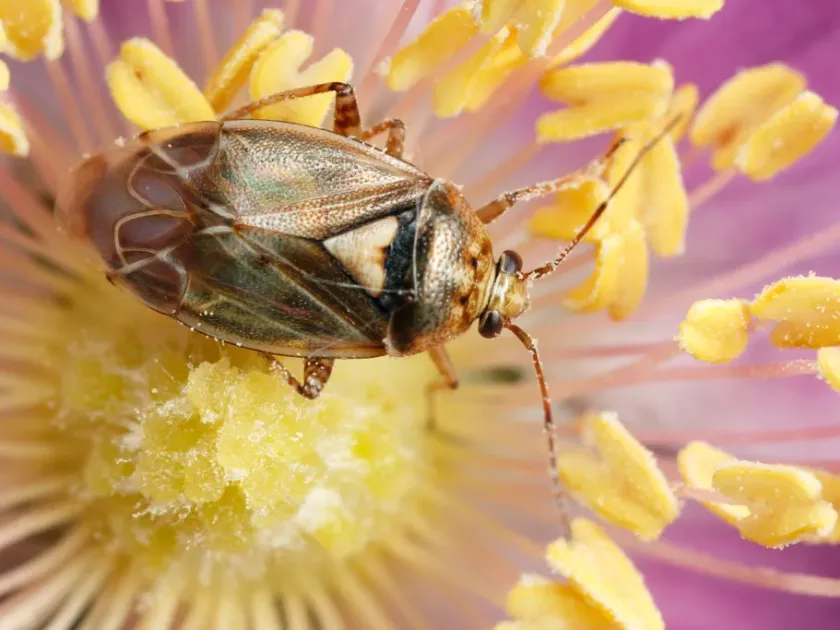
Description
How to identify
Bryocoropsis laticollis is a species of mirid bug (family Miridae) that serves as a significant pest in tropical agroecosystems. These insects are well-adapted to life on host trees.
The adult insect is characterized by a widened pronotum, which is its most distinct morphological feature. They typically possess a dark-colored body that provides excellent camouflage against tree bark.
The life cycle involves nymphal stages that resemble the adults but are wingless and smaller. Throughout their development, they feed exclusively on the sap of their host plants.
These bugs are known for their secretive nature, often hiding in the crevices of the cocoa tree canopy or within the dense fruit clusters, making them hard to spot.
Understanding their taxonomy and morphology is essential for accurate identification in the field, as they belong to a diverse group of plant-feeding insects.
What it damages
The primary target of Bryocoropsis laticollis is the cocoa tree (Theobroma cacao). The damage is caused by both adults and nymphs piercing the plant tissues.
They feed on the sap of developing cocoa pods and young shoots. These feeding punctures cause localized cell death and disrupt the normal physiological development of the fruit.
Secondary infections are a major concern, as the feeding sites provide entry points for pathogenic fungi and bacteria, leading to pod rot and total loss of the beans.
Damage to the vegetative parts results in stunted growth and deformed leaves. This significantly reduces the overall vigor of the cocoa tree and decreases its long-term yield potential.
In cases of severe infestation, the cumulative damage can lead to a significant drop in production, affecting the economic viability of the cocoa plantation.
Signs of infestation
Early symptoms include small dark punctures on the surface of young cocoa pods. Over time, these spots develop into necrotic, sunken lesions that may darken further.
Leaves on infested trees often show signs of chlorosis, curling, and abnormal development. Terminal buds may die back, giving the branch a scorched appearance.
Presence of the pest can be confirmed by inspecting the junctions between leaves and stems or the undersides of pods, where nymphs tend to aggregate.
The accumulation of honeydew on the pods and leaves is a frequent indicator of infestation, often drawing the attention of ants that feed on these sugary secretions.
Regular monitoring often reveals the presence of cast skins (exuviae) left behind by nymphs during their molting process, signaling an active infestation in the area.
Control measures
Effective management begins with sanitary pruning to remove infested plant parts, which physically reduces the bug population within the tree canopy.
The use of systemic insecticides is recommended during peak infestation periods, though application must be carefully timed to protect non-target pollinators.
Improving orchard ventilation through proper spacing and shade management can create an environment less conducive to bug survival and reproduction.
Biological control, focusing on the preservation of natural predators and parasitoids, provides a sustainable pathway for long-term population suppression.
- Implement regular orchard scouting programs.
- Destroy damaged pods to prevent the spread of fungal pathogens.
- Maintain optimal tree health through balanced nutrition.
Taxonomy
- Latin name
- Bryocoropsis laticollis
- Order
- Hemiptera (bugs, aphids, leafhoppers)
- Family
- Lygaeidae
- EPPO code
- BRYPLA
Discussion
No discussions yet — be the first.