
Puton's plant bug
Brentiscerus putoni
Description
How to identify
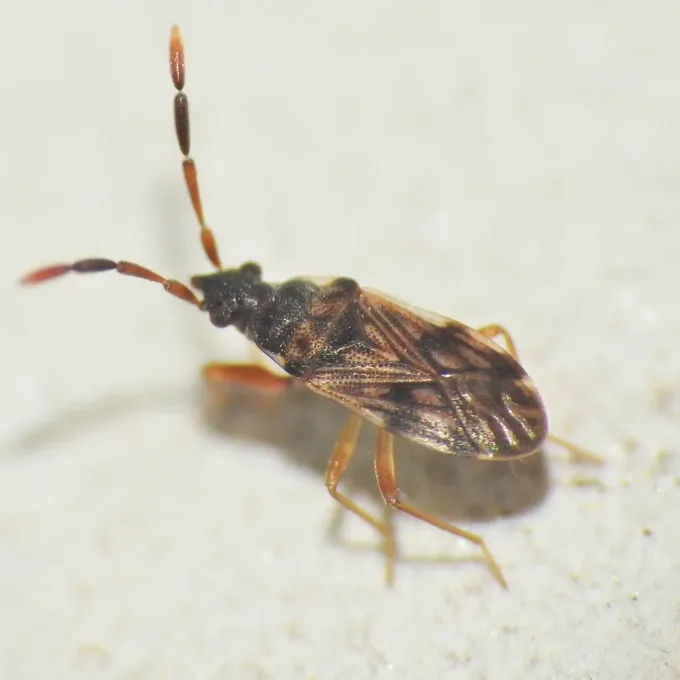
Puton's plant bug (Brentiscerus putoni) belongs to the family Miridae, which is part of the order Hemiptera. These insects typically have a body length ranging from 5 to 7 mm, requiring careful observation during regular field scouting missions to detect their presence early in the season.
The adult bugs exhibit a coloration varying from light brown to grayish-tan, which provides effective camouflage against the foliage of host plants. Their bodies are covered in fine, short hairs, and a distinct pattern on the pronotum serves as a reliable diagnostic feature for accurate identification in an agricultural setting.
Nymphs, or the immature stages of the bug, are extremely small and semi-transparent upon hatching, making them difficult to spot without a magnifying tool. As they progress through several molting stages, they gradually develop the characteristic pigmentation of the adults while remaining flightless.
The life cycle of the bug is highly dependent on regional climatic conditions. Typically, the species overwinters as adults within plant debris or in the top layers of the soil, emerging as soon as temperatures rise in the spring to search for early vegetation to feed on.
Development occurs through incomplete metamorphosis, meaning there is no pupal stage in their life cycle. Nymphs hatch from eggs laid within plant tissues and resemble smaller versions of the adults, steadily growing in size until they reach the final stage of maturity.
What it damages
This pest affects a diverse range of crops, primarily vegetables and certain ornamental plants. Both adults and nymphs cause damage by using their piercing-sucking mouthparts to feed on the plant's cellular sap, leading to a loss of vigor and nutritional deficiency in the host.
Young leaves, flower buds, and developing stems are the most susceptible to attack. Once fed upon, the site of the puncture often develops a necrotic spot, which can cause significant deformation of the leaves and stunt the overall growth of the plant.
Damage to the growth points is particularly destructive, as it disrupts the development of new shoots, which is a critical phase for young seedlings. This often results in reduced harvest yields and a decline in the aesthetic or commercial quality of the harvested produce.
The intensity of the damage is directly proportional to the size of the pest population within the field. During peak outbreak years, these bugs can cause widespread damage, necessitating immediate intervention to prevent total crop loss or severe impact on plant development.
Beyond direct mechanical injury, Puton's plant bug can act as a vector for various plant pathogens. By wounding the plant tissue during feeding, they facilitate the entry of fungal spores or bacteria, which can exacerbate the health issues of the affected crop.
When it appears
The active period for Puton's plant bug begins once the soil warms up after winter. Initially, the overwintered adults concentrate on weeds and wild plants, which provide essential nourishment until the primary crops are ready for colonization later in the season.
Several generations can be produced within a single season, with population numbers peaking during the warmer summer months. Their feeding activity is most pronounced during late spring and summer, which are the optimal times for their reproduction and growth.
Migration of adults onto vegetable crops usually aligns with the flowering and fruit-setting stages. It is during these phases that scouts should be most vigilant, as the bugs targeting reproductive organs pose the greatest risk to the final yield.
As temperatures begin to drop and daylight hours shorten in the autumn, the bugs initiate their movement toward suitable overwintering sites. Understanding these seasonal migration patterns allows farmers and agronomists to time their pest management strategies more effectively.
Climatic factors such as excessive rainfall or sudden frosts can significantly impact population densities. However, the species is generally resilient and can adapt to varied environmental conditions, ensuring that a significant portion of the population survives to the next growing season.
Signs of infestation
Infestation can be identified by observing specific damage patterns on the foliage of host plants. The primary indicator is the development of pale or yellowish spots on leaves, which may dry out or eventually fall away, leaving small holes in the leaf surface.
The curling and twisting of young shoots are strong indications that bugs are feeding on the most active growth areas. If the infestation is severe, one may observe widespread bud drop, which is a clear signal that the plant's ability to produce fruit has been compromised.
Inspecting the underside of the leaves is the most effective way to locate both adults and nymphs. Utilizing sweep nets in the foliage is a standard and reliable method for quantifying the insect population density before deciding on the need for protective measures.
- Development of necrotic spots on the leaves.
- Deformation and twisting of new shoot growth.
- Presence of tiny puncture marks on stems and petioles.
- Direct sighting of bugs hiding in the leaf axils.
- Premature drop of buds and young fruit.
It is crucial to differentiate between damage caused by plant bugs and symptoms of fungal diseases or nutrient deficiencies. The absence of fungal mycelium on the spotted areas, coupled with the presence of insects, confirms an entomological cause for the plant damage.
Control measures
The foundation of effective management is rigorous field sanitation, specifically the control of weeds around the field perimeter. Removing these alternative hosts early in the season significantly limits the bug's ability to establish a large population near your crops.
Implementing a proper crop rotation scheme is essential to disrupt the bug's life cycle. By moving host crops away from previous year sites, the pressure from overwintering populations can be significantly reduced over several seasons.
Chemical control involving systemic insecticides is recommended when population thresholds are exceeded. Applications are most effective during the early stages of nymph development, as they are most vulnerable to chemical exposure before they reach maturity.
Biological control strategies include the preservation and promotion of natural predators, such as predatory bugs or parasitic wasps, which help to suppress pest numbers naturally. Maintaining a healthy ecosystem with diverse insect life is key to long-term pest regulation.
Deep autumn plowing can destroy potential overwintering sites, significantly reducing the number of bugs that survive until the spring. A combination of cultural practices, biological monitoring, and timely chemical application is the most reliable way to protect crops from Puton's plant bug.
Taxonomy
- Latin name
- Brentiscerus putoni
- Order
- Hemiptera (bugs, aphids, leafhoppers)
- Family
- Lygaeidae
- EPPO code
- BRETPU
Discussion
No discussions yet — be the first.