
Brassolis
Brassolis
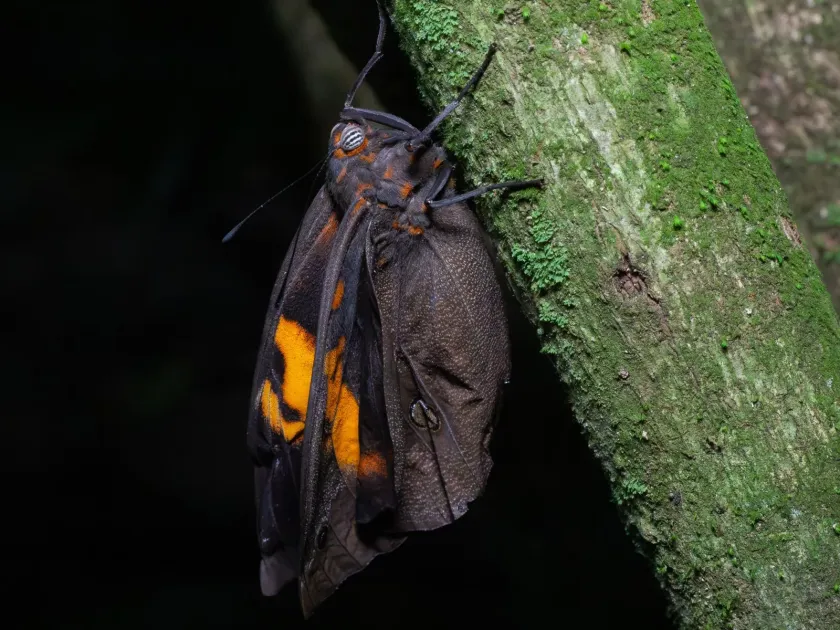
Description
How to identify
Brassolis is a genus of butterflies within the Nymphalidae family, specifically the Morphinae subfamily. These butterflies are relatively large and typically feature dark-colored wings, often accented with orange or yellow bands that help them blend into the foliage.
The larvae, or caterpillars, are known for their social behavior, living in large groups. They possess distinct morphological features such as longitudinal stripes and characteristic head protrusions that help in their identification.
A defining trait of Brassolis is the construction of large silk nests used as communal shelters during the day. These structures are usually built near the base of palm fronds or in the crotches of trees.
The life cycle undergoes complete metamorphosis, including egg, larval, pupal, and adult stages. Females lay eggs in clusters, which facilitates the rapid establishment of large colonies on a single host plant.
Pupae are often camouflaged to resemble dry leaves or tree bark, making them highly effective at avoiding predation by birds and other insectivorous animals in their natural habitats.
What it damages
The primary hosts for Brassolis species are various palm varieties, including coconut palms (Cocos nucifera) and oil palms (Elaeis guineensis), which are crucial commercial crops.
Caterpillars feed on the leaf blades, starting from the edges and progressing until only the tough, central veins remain. This process is known as skeletonization of the leaf.
Heavy infestations lead to massive defoliation of the palm crown. This reduces the total photosynthetic area, causing severe physiological stress and a significant decline in the tree's health and fruit yield.
In ornamental nurseries, the damage is particularly detrimental as it destroys the aesthetic value of the plants, rendering them unsuitable for sale or landscaping purposes.
Sustained attacks over several seasons can severely weaken the palm trees, making them susceptible to secondary infections and opportunistic fungal pathogens that thrive on damaged tissue.
Signs of infestation
The presence of large, dense silk nests attached to the trunk or at the base of the palm leaves is the most prominent indicator of an active Brassolis infestation.
Dark, granular frass (excrement) accumulating on the ground beneath the palms is a clear sign that a large colony of caterpillars is actively feeding in the canopy above.
Visual inspection of the leaves reveals ragged edges or complete leaf segments missing. The damage is often uniform across several leaves due to the collective feeding behavior of the caterpillars.
Active movement of caterpillars along the tree trunk at night, as they travel from their nests to feeding sites, confirms the presence of a colony.
Premature yellowing and wilting of the fronds, unrelated to water stress or nutrient deficiency, often suggest that the foliage has been heavily compromised by this pest.
Control measures
Manual removal and destruction of the silk nests are considered highly effective, especially when infestations are detected early and localized to a few trees.
Chemical control involving insecticides with contact or stomach action is most successful when applied during evening hours, as caterpillars are nocturnal and emerge to feed after dark.
Biological control using Bacillus thuringiensis (Bt) based formulations is an eco-friendly approach that effectively targets the larvae while preserving beneficial insect populations.
Implementing an integrated pest management (IPM) program that includes regular monitoring and the use of pheromone traps can help detect the presence of Brassolis before it reaches economic injury levels.
- Routine visual monitoring of palm plantations.
- Sanitation of the area under palm trees to track activity.
- Enhancing natural biological control through conservation of native predators.
Taxonomy
- Latin name
- Brassolis
- Order
- Lepidoptera (butterflies)
- Family
- Nymphalidae
- EPPO code
- BRSSSP
Discussion
No discussions yet — be the first.