
Canada goose
Branta canadensis
Description
How to identify
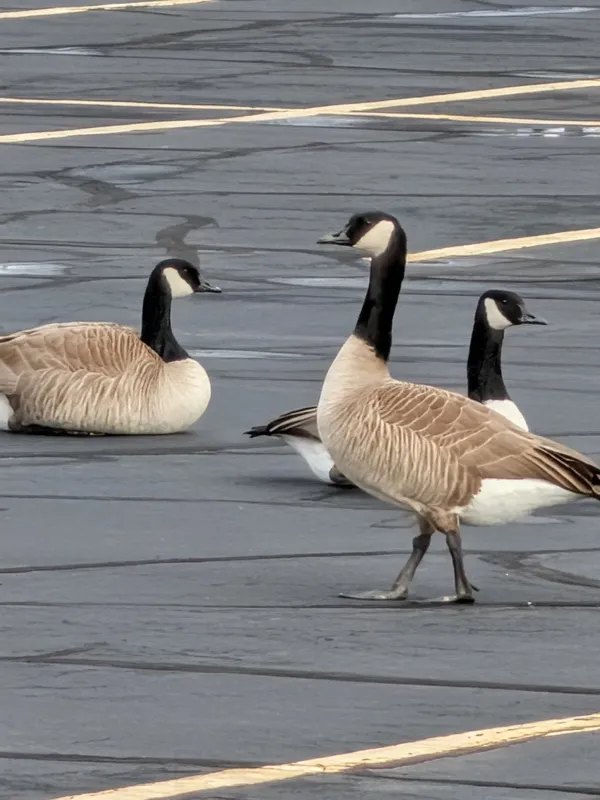
The Canada goose (Branta canadensis) is a large waterfowl species belonging to the Anatidae family. It is easily identified by its black head and neck, accented by a distinct white chin strap.
These birds are highly social and form large flocks that can range from a few dozen to several hundred individuals, creating massive grazing pressure on agricultural fields.
Their biological success is due to their adaptability, as they thrive in landscapes modified by humans, especially those providing easy access to both water and abundant forage.
The species exhibits strong site fidelity, meaning they will repeatedly return to the same feeding grounds, making them a persistent challenge for land managers.
While they are considered an iconic wild species, their concentrated presence in agricultural settings leads to classification as a significant nuisance and agricultural pest.
What it damages
Canada geese primarily target winter cereals, such as wheat and rye, grazing on tender shoots and preventing the crop from reaching its full yield potential.
Legume crops like soybeans and alfalfa are also at high risk, particularly during their early emergence stages, where grazing can kill the plant entirely.
Physical damage occurs not just through feeding, but also through trampling; the heavy weight of the birds compacts the soil and damages the root systems of young crops.
Fecal contamination is a major issue, as large amounts of droppings can lower the forage quality and potentially spread pathogens within the field environment.
In addition to standing crops, they often raid harvested fields, consuming leftover grains and interfering with soil management practices like tilling and seeding.
When it appears
The danger begins in the fall when newly planted winter grains provide a nutritious and accessible food source for migrating or resident goose populations.
Winter months may see continued grazing in areas with mild climates, where geese find little to stop them from feeding on whatever green cover is available.
Spring is perhaps the most critical period, as the geese consume young shoots during the essential growing and tillering phases, causing permanent yield loss.
Seasonal migrations mean that fields in the flight paths of these birds are subjected to periodic surges in goose pressure, requiring vigilant monitoring.
Daily activity is most intense during dawn and dusk, when the flocks move between resting areas and foraging grounds to satisfy their high metabolic needs.
Signs of infestation
The most obvious sign of Canada goose activity is the presence of large flocks congregating in open fields, which are highly visible from a distance.
Visual inspections reveal sections of the field that appear mowed; plants are cropped close to the ground with a characteristic clean, angled break at the leaf tips.
The ground will often be littered with droppings and scattered feathers, serving as clear evidence of a high-density goose presence in the area.
Compacted soil and deep, webbed footprints in the dirt, particularly near field entrances or low-lying wet areas, are tell-tale signs of their grazing patterns.
The vocalization of a feeding flock is distinct and can often be heard before the birds themselves are spotted, acting as an auditory indicator of a potential infestation.
Control measures
Acoustic deterrents, such as propane cannons or pyrotechnics, are commonly used, but they must be rotated frequently to prevent the birds from habituating to the noise.
Visual deterrents including hawk silhouettes, scarecrows, and reflective materials can provide temporary relief, especially when moved regularly around the field.
Cultural practices, such as planting less attractive crop varieties or adjusting planting dates, can help crops pass their most vulnerable stage before heavy migration occurs.
Creating lure crops—dedicated areas planted specifically for geese away from commercial fields—can successfully divert the birds and reduce grazing pressure on primary crops.
In some regions, integrated pest management programs involving legal harassment or regulated culling may be necessary to manage populations that have become too large for passive deterrents to handle.
Taxonomy
- Latin name
- Branta canadensis
- Family
- Anatidae
- EPPO code
- BRNTCA
Discussion
No discussions yet — be the first.