
Brent goose
Branta bernicla
Description
How to identify
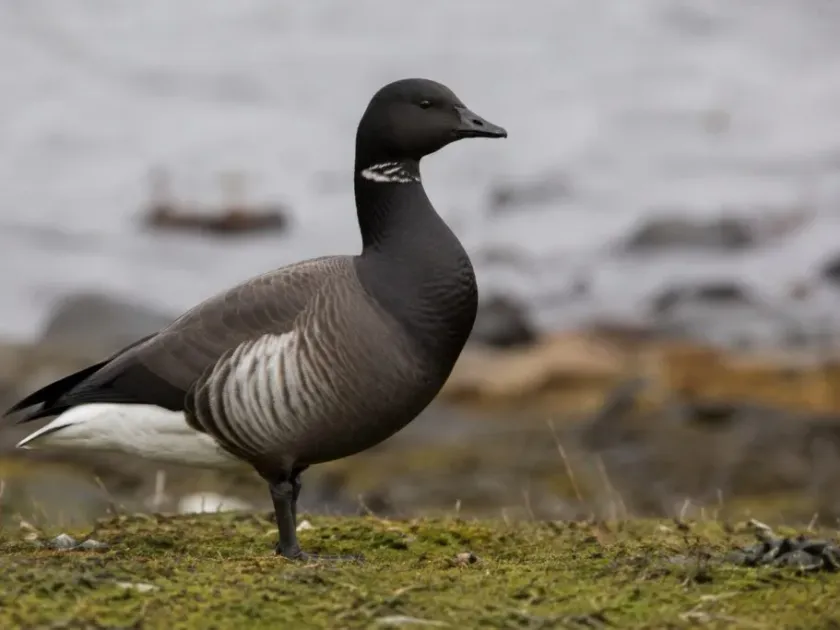
The Brent goose Branta bernicla is a small goose species belonging to the Anatidae family, known for its frequent occurrence in coastal and agricultural areas during migration.
The bird has a distinctive dark appearance, with black head, neck, and chest, complemented by a subtle white neck patch that serves as a key identification mark.
These birds are highly gregarious, often forming large flocks that can exert significant pressure on agricultural resources when they land on cultivated land.
They are primarily herbivorous, feeding on short grasses, young shoots, and cereal crops, utilizing their specialized beaks for efficient grazing.
Their size is relatively small compared to other geese, but their communal feeding behavior makes them a significant challenge for modern farming operations.
What it damages
The primary concern for farmers is the consumption of winter cereal crops, including wheat and barley, especially during their early growth stages in the spring.
Brent geese pull the seedlings out of the ground or graze them down to the root, which prevents the plants from regenerating and leads to crop thinning.
In addition to direct grazing, the weight of the flock and their trampling behavior can cause severe soil compaction and damage to the root structure of the crop.
Severe infestations can result in substantial yield losses, sometimes requiring farmers to re-sow affected patches if the damage is widespread.
The presence of high numbers of birds can also introduce contaminants onto the fields through their droppings, which can impact the sanitary status of the crops.
When it appears
The risk of crop damage is highly seasonal, aligning with the migratory patterns of the Brent goose during spring and autumn stopovers.
Spring is the most critical period, as the geese arrive exactly when winter crops are initiating their growth, providing a high-quality nutritional source.
Autumn grazing can also affect young winter crop establishment, potentially causing delays in plant development and overall stand density.
The length of their stay depends on weather conditions and the availability of alternative natural foraging areas near the coast.
High activity levels are typically observed during dawn and dusk as the birds move between resting sites and their chosen feeding grounds.
Signs of infestation
Signs of infestation include large, bare patches in fields where the crop has been grazed or completely removed.
- Characteristic cropped or 'mown' appearance of the vegetation.
- Presence of extensive bird droppings scattered throughout the feeding area.
- Webbed foot impressions visible in soft or muddy field soil.
- Disturbed soil patches where the geese have been pulling up shoots by the roots.
- Alert behavior and frequent vocalization when the flock is approached by machinery or humans.
Control measures
Gas-powered cannons or acoustic scarers are effective tools to disperse flocks by creating noise that disrupts their feeding activities.
Visual deterrents, such as raptor kites, reflective tapes, and scarecrows, can be placed throughout the fields to keep the geese away.
Regular monitoring and patrolling of fields, especially during peak migration weeks, help prevent the geese from becoming habituated to the area.
Sustainable agricultural practices often include the designation of sacrificial 'lure fields' to keep the population away from primary high-value crops.
It is essential to balance crop protection with wildlife conservation regulations, opting for non-lethal deterrent methods to manage the flocks humanely.
Taxonomy
- Latin name
- Branta bernicla
- Family
- Anatidae
- EPPO code
- BRNTBE
Discussion
No discussions yet — be the first.