
Giant African cricket
Brachytrupes membranaceus
Description
How to identify
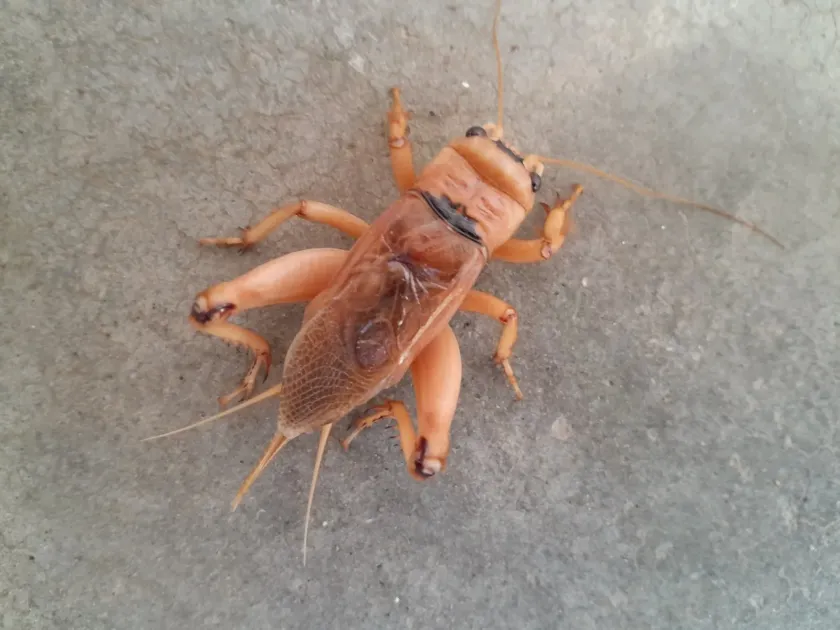
The Giant African cricket (Brachytrupes membranaceus) belongs to the Gryllidae family. It is recognized as one of the largest cricket species in Africa, with adults growing up to 60 mm in length.
The insect possesses strong mandibles and robust digging legs designed to excavate deep burrow systems. Its coloration is typically brownish, providing camouflage against the soil surface where it spends most of its life.
These crickets are primarily nocturnal. During the day, they remain safely hidden within their deep burrows, often reaching a depth of one meter, which provides protection from extreme temperatures and predators.
The lifecycle follows a hemimetabolous development process. Nymphs closely resemble adults but are wingless, and they share the same habitat requirements and burrowing habits as their parents.
They are highly specialized for life in sandy or light, friable soils. The ease of excavating such substrates makes agricultural fields with these soil types particularly prone to infestation.
What it damages
The Giant African cricket is a serious polyphagous pest. It feeds on various crops, including tomatoes, peppers, corn, beans, and young seedlings of many different cultivated plants.
The most severe damage occurs when the crickets gnaw through the stalks of young plants at ground level. This causes the plant to fall over and perish, often leading to total crop failure in seedling beds.
Beyond cutting stems, they feed on roots and underground tubers. These feeding sites can become entry points for pathogens, leading to secondary rot and further degrading the quality of the harvested produce.
Infestation is usually identified by the presence of small, rounded entry holes surrounded by piles of loose, excavated soil, as well as clusters of severed plants in the vicinity.
In high densities, this pest can clear large swathes of seedlings in a single night, representing a significant threat to small-scale farmers and commercial vegetable growers.
Control measures
Control strategies for Brachytrupes membranaceus focus on disrupting their habitat and using targeted baiting techniques due to their elusive underground lifestyle.
Deep mechanical tillage of the soil is highly recommended before planting. This process destroys the burrow structures, exposes the insects to predators, and forces them to leave the treated area.
The application of poisoned baits is considered the most effective chemical control method. Baits made from bran or cereals mixed with appropriate insecticides are placed near the burrow entrances.
Biological control using entomopathogenic fungi or specialized soil-dwelling nematodes offers an environmentally friendly alternative to traditional pesticides for suppressing population levels.
Regular monitoring of fields at dusk and dawn is essential for early detection. Prompt intervention at the first sign of burrow activity can prevent the population from reaching levels that cause significant economic losses.
Taxonomy
- Latin name
- Brachytrupes membranaceus
- Order
- Orthoptera (locusts)
- Family
- Gryllidae
- EPPO code
- BRCTMB
Discussion
No discussions yet — be the first.