
Nilgai
Boselaphus tragocamelus
Description
How to identify
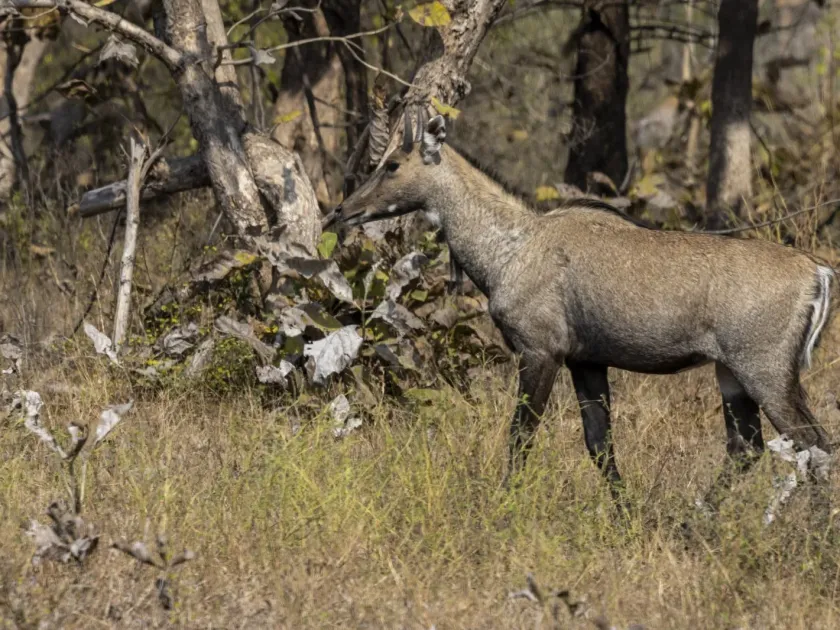
The Nilgai, scientifically known as Boselaphus tragocamelus, is the largest Asian antelope within the Bovidae family and the Artiodactyla order. Adult males possess a thick, bluish-grey coat and small, pointed horns, while females exhibit a lighter, tawny-brown coloration and are hornless.
These animals are physically robust and possess high adaptability to different environments. Their large stature and tendency to live in small family groups allow them to occupy large agricultural areas, posing a significant threat to vegetation throughout the growing season.
What it damages
The Nilgai is primarily herbivorous and shows a strong preference for tender agricultural crops. They frequently graze on cereal fields and legumes, causing both direct consumption of biomass and indirect harm through trampling the surrounding vegetation.
The damage caused by Nilgai includes the consumption of young leaves, stalks, and grains during critical developmental stages. Their intensive grazing behavior can lead to stunted growth, reduced plant vigor, and, in severe cases, the complete destruction of crops on specific field sections.
Signs of infestation
Identifying a Nilgai infestation begins with spotting their large, distinct hoof prints left on the field's soil. These imprints are usually deep and clearly visible, especially after rainfall or irrigation cycles when the soil is soft and receptive to marking.
Other signs include irregular grazing patterns, such as frayed or ragged edges on damaged plant stems. Farmers may also notice flattened paths throughout the field, which serve as trails for the animals, and localized areas where crops have been trampled down during their transit or resting periods.
Control measures
Mechanical exclusion using high, reinforced wire fencing is the most effective approach for large-scale crop protection. Due to the physical capabilities of Nilgai, fences must be tall and well-maintained to prevent them from jumping or forcing their way through the perimeter.
Integrated pest management strategies often involve a combination of non-lethal deterrents such as motion-activated light projectors and high-frequency acoustic devices. These tools disrupt the animals' confidence and discourage them from frequenting the agricultural area during nighttime feeding hours.
Taxonomy
- Latin name
- Boselaphus tragocamelus
- Family
- Bovidae
- EPPO code
- BOSETR
Discussion
No discussions yet — be the first.