
Nilgai
Boselaphus
Description
How to identify
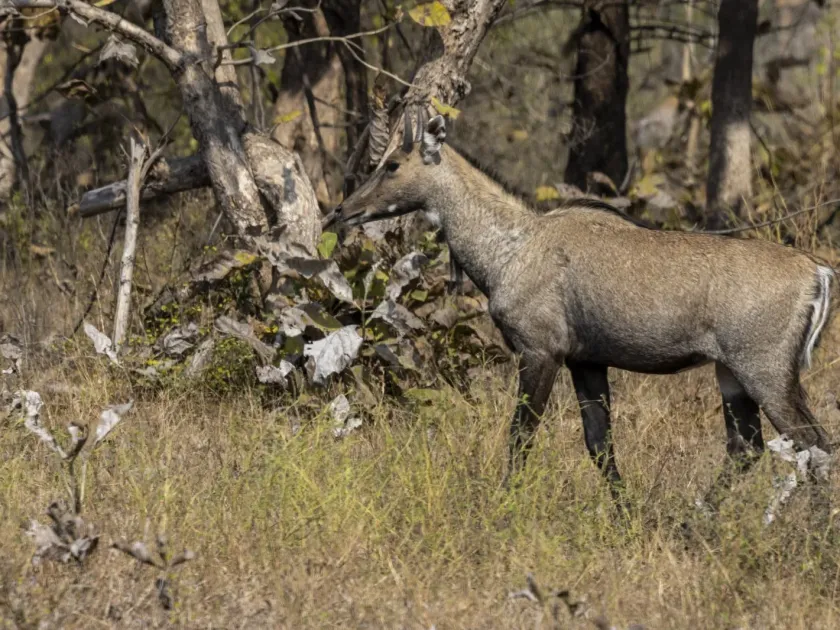
The nilgai (Boselaphus tragocamelus) is a large antelope belonging to the family Bovidae, order Artiodactyla. Adult males possess a distinctive blue-grey coat, whereas females exhibit a sandy-brown coloration that provides excellent camouflage.
These animals have a robust build with males featuring relatively short, conical horns. Standing up to 1.5 meters tall at the shoulder and weighing up to 300 kilograms, they are among the largest antelopes, making them formidable inhabitants of agricultural areas.
Nilgai are highly adaptable to various habitats, including dry woodlands and agricultural landscapes. Their social structure, which involves living in herds, allows them to efficiently exploit resources in farming regions.
Reproduction occurs year-round, which contributes to rapid population growth in areas where natural predators are scarce. This biological advantage makes them a persistent challenge for land managers.
They are active both during the day and at twilight, which allows them to frequent fields at various times. Their agility enables them to navigate through crops with minimal effort, often causing significant disturbance to standing vegetation.
What it damages
Nilgai pose a serious threat to agriculture by feeding on diverse crops, including cereals such as wheat, corn, and sorghum. They cause damage by consuming the leaves, stems, and ripening grains of these plants.
Leguminous and vegetable crops are also frequent targets for these antelopes. Their tendency to graze in groups leads to total destruction of small plots and significant yield reductions in larger farming operations.
Beyond feeding, the physical weight of nilgai causes severe soil compaction. This trampling effect damages the root systems of young plants, making them unable to recover even after the herd has left the field.
Orchards and vineyards are frequently damaged as nilgai browse on young tree bark and shoots. This structural damage can stunt the growth of trees, leading to long-term economic losses for fruit producers.
In high-density populations, nilgai can cause crop losses ranging from 30% to 50%. This level of damage often necessitates expensive protective measures or can even lead to the abandonment of certain crops in affected areas.
When it appears
Nilgai are active year-round, but they become particularly destructive when agricultural crops reach stages of high nutritional value. This synchronization between crop growth and feeding pressure is critical for farmers.
During autumn and winter, when natural vegetation in forests and rangelands becomes dry or scarce, nilgai shift their diet towards winter crops. This makes these fields primary food sources during the colder months.
Summer months also see increased activity near irrigated fields, where the contrast between dry surrounding terrain and lush, watered crops attracts the antelopes looking for succulent forage.
The timing of calving can also influence feeding behavior, as females seek high-protein fodder to support their nutritional needs. This increases the frequency of raids on nutrient-rich fields.
Constant monitoring is essential because nilgai migration patterns shift based on local environmental conditions and the availability of water, meaning no field is completely immune to potential visits.
Signs of infestation
The presence of nilgai is easily identified by their large, pointed hoof prints. These tracks are significantly larger than those of domestic livestock and are distinct in their shape and depth.
Areas of flattened or chewed vegetation often reveal where a herd has rested or grazed. The stems of crops show signs of being broken or frayed, characteristic of an animal that pulls plants while feeding.
Excrement in the form of oval, dark pellets is a common indicator of nilgai activity. These droppings are often found in clusters along natural corridors or entry points into the field.
Striped bark on young trees and shrubs along the edge of a field indicates that nilgai have been foraging in the area, usually when other sources of food are limited.
Broken fences and flattened segments of wire mesh signify that the herd has forced its way into the field. These damaged sections are telltale signs of their regular entry routes.
Control measures
Installing high-tensile, tall fencing is the most reliable physical barrier against nilgai. Because these animals are capable jumpers, fences should be at least two meters high to be fully effective.
The use of motion-activated light and sound deterrents can discourage nilgai from entering fields at night. However, these systems should be rotated frequently to prevent the animals from becoming habituated.
Biological strategies, such as managing natural vegetation around fields to make them less attractive to wildlife, can help reduce the frequency of browsing incidents.
Chemical repellents applied to the borders of fields can create an olfactory barrier, though their efficacy is limited by rainfall and the need for frequent reapplication throughout the season.
Population management, including legal and strictly regulated hunting, is often the most effective method for long-term reduction of agricultural damage in regions where nilgai populations have become overabundant.
Taxonomy
- Latin name
- Boselaphus
- Family
- Bovidae
- EPPO code
- BOSESP
Discussion
No discussions yet — be the first.