
Cattle
Bos taurus
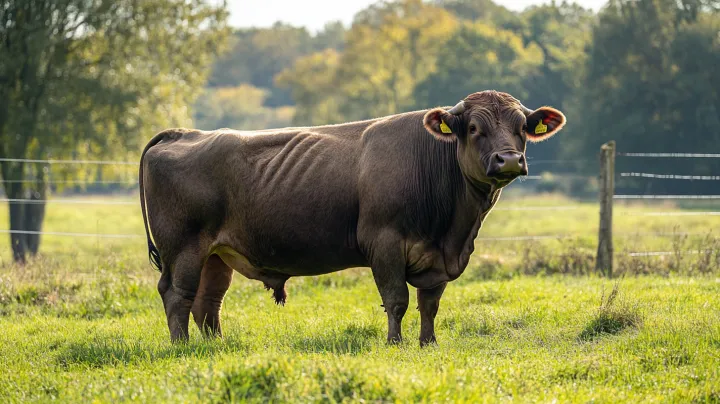
Description
How to identify
Cattle (Bos taurus) belong to the order Artiodactyla and the family Bovidae. These large mammals, when allowed to roam freely, act as major pests in modern agriculture.
Adult animals can weigh over 800 kg, possessing heavy hooves that cause mechanical damage to plants and severe compaction of the agricultural topsoil.
They are social animals that move in herds, which significantly increases the scale of destruction if they gain access to a planted field.
Cattle have a high metabolic requirement for forage, driving them to graze actively on both wild vegetation and intentionally planted crops.
Their size and mobility make it difficult for single-handed deterrents to work, requiring robust physical barriers to protect high-value agricultural areas.
What it damages
Cattle cause significant damage to cereals, maize, sunflowers, and vegetable crops by grazing on foliage, stems, and immature grains.
Soil compaction caused by their hooves disrupts the aeration and drainage of the soil, which stunts root development and reduces crop yield significantly.
The total destruction of young seedlings often forces farmers to re-sow entire sections of their land, leading to substantial financial losses and delayed harvest.
Trampling leads to broken stems and physical uprooting, which prevents the plants from reaching maturity and complicates mechanical harvesting procedures.
Grazing activity also facilitates the spread of weeds by disturbing the topsoil and creating gaps in the crop cover, allowing opportunistic weed species to colonize.
When it appears
Cattle-related crop damage is most frequent during the entire growing season, from early spring to late autumn, when fields are most active.
Spring presents the highest risk to winter crops and early spring plantings, which are highly succulent and attractive to hungry cattle emerging from winter.
During the summer drought, cattle are prone to wandering into fields of irrigated maize or vegetables to seek shade and high-quality food sources.
Late autumn grazing on stubble fields can lead to accidental trampling of newly emerged winter cover crops or early-sown winter wheat.
Livestock are opportunistic grazers, meaning they can appear in fields at any time if grazing management on neighboring farms is insufficient.
Signs of infestation
Clear signs of cattle presence include distinctive, deep hoof prints in the soil, often arranged in trails running through the crop rows.
Uneven, jagged edges on leaves and missing stems indicate grazing, as cattle lack upper incisors and pull rather than cut vegetation.
The presence of manure patches on the field is a definitive indicator of an incursion by a herd into the area.
Extensive patches of flattened or uprooted plants are common, particularly near field entrances, water sources, or access roads.
- Deep indentations in the topsoil.
- Grazed patches in the middle of fields.
- Broken stalks in corn or sunflower rows.
- Well-defined pathways crossing the field.
Control measures
Fencing is the primary and most effective method for crop protection, utilizing wire mesh or wood for long-term field security.
The use of electric fencing systems (portable or fixed) is widely recommended as a cost-effective deterrent for both cattle and other livestock.
Proper grazing management, including the mandatory supervision of herds, is essential to prevent animals from wandering into neighboring cultivated land.
Creating buffer zones between pasture land and sensitive crop fields helps minimize the risk of accidental incursion by wandering cattle.
Legal measures and the implementation of liability for livestock owners are crucial for resolving disputes regarding crop loss and field damage.
Taxonomy
- Latin name
- Bos taurus
- Family
- Bovidae
- EPPO code
- BOVSTA
Discussion
No discussions yet — be the first.