
Bog fritillary
Boloria aquilonaris
Description
How to identify
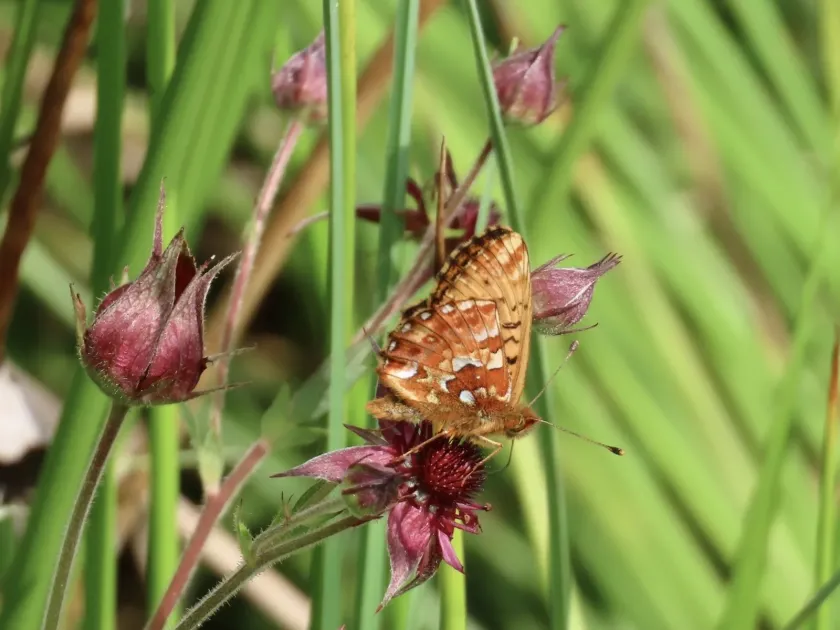
The bog fritillary (Boloria aquilonaris) is a butterfly belonging to the Nymphalidae family. It is typically found in high-moor habitats throughout Europe and Asia.
Adult butterflies have a wingspan of approximately 35–45 mm. The upper side of the wings is orange-brown with distinct black markings and a complex network of spots.
The underside of the hindwings features a characteristic pearly-metallic sheen, providing excellent camouflage against marshy vegetation.
Larvae (caterpillars) are dark brown or blackish with pale longitudinal stripes and covered with small, prickly spines for defense.
The pupae are suspended from the host plant, appearing light brown with a subtle metallic finish that mimics dry plant material.
What it damages
The primary host plant for Boloria aquilonaris is cranberry (Oxycoccus palustris). In specialized cranberry farming, this insect can act as a minor pest.
Caterpillars feed on the leaves and young shoots of the plant, significantly reducing the surface area available for photosynthesis.
Heavy feeding pressure can weaken the cranberry bushes, leading to reduced flower bud initiation and lower overall berry yield for the season.
The damaged plant tissue often becomes more susceptible to secondary fungal pathogens, which further compounds the stress on the vegetation.
While usually considered a native insect, high population density in cultivated areas warrants concern from growers to protect crop health.
When it appears
This species is univoltine, meaning it completes only one generation per year. Adult butterflies are typically seen from late June through August.
Eggs are laid individually on the host plant, ensuring that larvae have an immediate food source once they hatch in the late summer.
The species overwinters at the larval stage, hiding deep within the moss layers or plant debris to survive cold winter temperatures.
As temperatures rise in the spring, the caterpillars resume feeding and undergo rapid growth, preparing for the pupal stage.
The pupal stage lasts several weeks before the emergence of the new generation of adults, completing the annual biological cycle.
Signs of infestation
Signs of infestation include irregular holes in the cranberry leaves or partially consumed foliage, often leaving only the midribs behind.
- Dark, granular frass (insect excrement) found on the leaves or the surface below the plants.
- Young leaves may appear twisted or curled as caterpillars shelter inside or near them.
- Evidence of pupation sites on the stems of cranberry plants.
- Active presence of orange-brown butterflies fluttering low over the cultivation area.
Close inspection during the early summer months is the most effective way to identify the presence of these larvae on a crop.
Control measures
Integrated pest management strategies focusing on early detection are essential for controlling the bog fritillary on agricultural lands.
Biological control using Bacillus thuringiensis sprays is highly effective and safe for managing lepidopteran larvae in berry crops.
Maintaining clean farm borders by removing weeds and excessive vegetation helps minimize the natural breeding grounds for this butterfly.
In cases of severe infestation, targeted insecticide applications may be necessary, provided they are approved for use on cranberry cultivars.
Always adhere to local agricultural regulations and pre-harvest intervals to ensure that the produce remains safe for consumer consumption.
Taxonomy
- Latin name
- Boloria aquilonaris
- Order
- Lepidoptera (butterflies)
- Family
- Nymphalidae
- EPPO code
- BOLOAQ
Discussion
No discussions yet — be the first.