
Tea looper
Boarmia theae
Description
How to identify
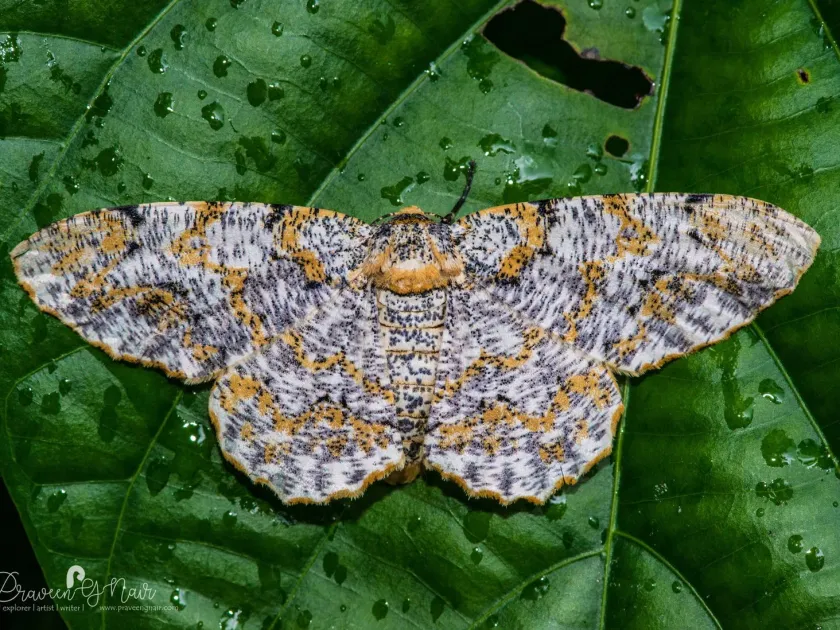
The tea looper, scientifically known as Boarmia theae, is a member of the Geometridae family within the order Lepidoptera. Adults are moths with a wingspan typically ranging from 40 to 50 mm, featuring cryptic coloration that provides camouflage against tree bark.
The caterpillars are characteristic "loopers," possessing reduced prolegs which force them to arch their bodies when moving. Their skin color often matches the green or brown shades of tea stems, making them very difficult to detect visually.
Pupation usually occurs within the topsoil or organic leaf litter beneath the tea bushes. During this stage, the insect remains dormant, protected by a dark, hard chrysalis from environmental stressors and predators.
Eggs are typically laid in small clusters on the undersides of leaves or along succulent stems. The life cycle length varies significantly depending on local humidity and ambient temperatures, with several generations per year.
Identification is best achieved during early morning hours, when the larvae are more active in their feeding patterns. Entomologists use the specific looping movement as a primary morphological key for identification.
What it damages
The larvae are specialized pests that feed primarily on the young, tender leaves of the tea plant Camellia sinensis. They rapidly consume leaf tissue, which is the most valuable part of the plant for tea production.
In cases of severe infestation, caterpillars may consume the bark of young shoots. This feeding behavior physically weakens the branch, leading to stunted growth and a significant loss in annual crop yield.
Wounds left by the caterpillars serve as entry points for various pathogens, including fungi and bacteria. This secondary infection often causes more damage to the health of the tea bush than the feeding itself.
Continuous defoliation depletes the plant's carbohydrate reserves stored in the roots, leading to a general decline in bush vitality. This makes the affected plants more susceptible to climatic stress, such as drought.
While tea is the primary host, the tea looper is a polyphagous insect that can damage adjacent shade trees or cover crops, which can serve as a bridge for infestations between tea fields.
When it appears
The seasonal emergence of the tea looper is highly temperature-dependent. Springtime warmth triggers the emergence of adults, beginning the cycle of mating and oviposition for the first generation of the year.
Peak larval activity occurs during the warmer summer months, which coincide with the primary tea harvesting flushes. This creates a conflict where the pest is most active when the crop is most vulnerable.
As temperatures drop in autumn, the life cycle slows down. The final generation enters a dormant pupal phase, overwintering in the soil until the environmental triggers of the next spring stimulate adult emergence.
Humidity plays a critical role in the insect's population dynamics. Excessive rain can sometimes disrupt the survival of young caterpillars, while moderate humidity levels favor rapid development and multiple generations.
Agricultural monitoring stations use light traps and pheromone dispensers to detect the arrival of the first generation, allowing farmers to implement protective measures before the pest population explodes.
Signs of infestation
The most distinct sign of an infestation is the presence of irregular, notched feeding patterns along the leaf edges. The caterpillars often leave the midrib intact, creating a skeletonized leaf appearance.
The presence of fecal pellets, known as frass, on the leaves is a clear diagnostic indicator of an active larval population. These small, dark grains are easily visible against the green background.
When disturbed, caterpillars often enter a state of tonic immobility, extending their bodies rigid like a twig. Detecting these "twigs" among the foliage is a primary method for scouting the population size.
Wilting of the terminal buds without signs of fungal or bacterial rot can indicate stem damage caused by larval feeding, which disrupts the transport of nutrients and water within the young shoot.
Some populations build silken webs to bind leaves together. This serves as a nursery for the larvae and is a high-level sign of infestation that requires immediate attention and control action.
Control measures
Integrated pest management starts with good field sanitation. Regular weeding and maintaining clean rows help eliminate alternative hosts for the looper and remove pupation sites from the field environment.
Biological control using Bacillus thuringiensis (Bt) is highly effective and safe for the end-consumer of the tea. This approach targets only the larvae and preserves beneficial predator populations.
Chemical control should be employed only as a last resort and must follow strict residue limits. Targeted applications of selective insecticides are necessary to avoid killing parasitic wasps and other natural enemies.
Encouraging biodiversity in the tea landscape is essential. Maintaining hedgerows of native plants provides a habitat for insect predators and birds that naturally keep the tea looper populations under control.
- Manual removal of infested terminal buds in small-scale gardens.
- Deployment of pheromone-baited traps for monitoring and mass trapping.
- Soil cultivation to disturb pupae during the dormant season.
Taxonomy
- Latin name
- Boarmia theae
- Order
- Lepidoptera (butterflies)
- Family
- Geometridae
- EPPO code
- BOARTH
Discussion
No discussions yet — be the first.