
Spruce beauty
Boarmia ribeata
Description
How to identify
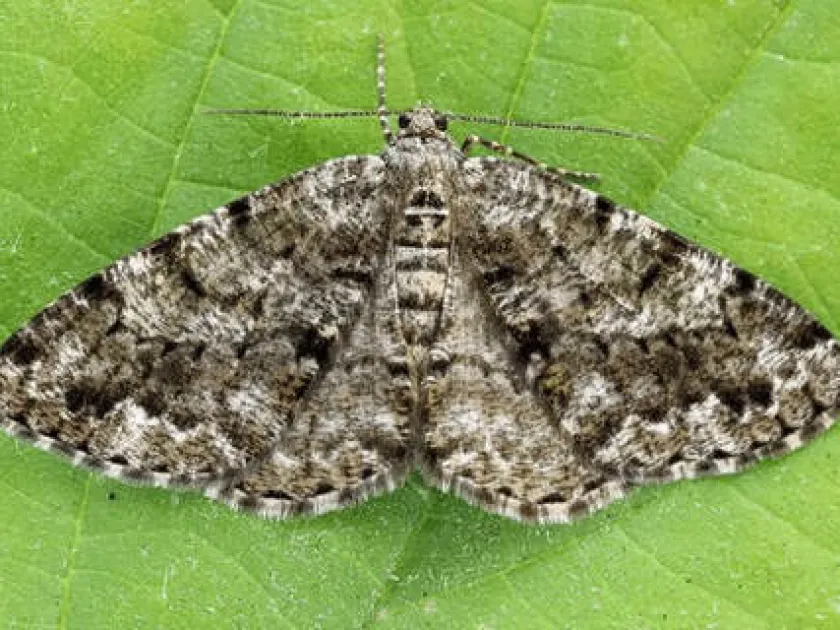
The spruce beauty (Boarmia ribeata) is a moth belonging to the family Geometridae and the order Lepidoptera. Adult moths typically have a wingspan ranging from 35 to 45 mm.
Their forewings exhibit a grayish-brown pattern with intricate dark wavy lines, providing excellent camouflage against tree bark, while hindwings are lighter in color.
Larvae, or caterpillars, reach up to 40 mm in length. They display the characteristic looping movement of the looper moth family, due to the specific arrangement of their prolegs.
Caterpillar coloration varies between brownish and greenish tones, which perfectly mimics the texture and appearance of spruce needles and twigs, making them difficult to spot.
The pupae are dark and shiny, typically overwintering in the soil, leaf litter, or deep crevices of the host tree's bark to survive the colder winter months.
What it damages
The spruce beauty primarily feeds on various coniferous tree species, with the Norway spruce (Picea abies) being a preferred host, alongside fir and occasionally pine.
The damage is caused by larvae that aggressively consume needles. This defoliation stresses the tree, disrupting photosynthesis and reducing its overall vitality.
Outbreaks of this moth can lead to significant needle loss, which increases the tree's susceptibility to secondary pests like bark beetles and various fungal pathogens.
Young trees are at the highest risk, as severe defoliation over several consecutive seasons can lead to stunted growth and the eventual death of the affected specimen.
In forestry, large infestations reduce wood quality and annual growth increments, potentially causing substantial economic losses in timber production areas.
When it appears
The species completes one generation per year. The adult flight period occurs during the summer, typically peaking between late June and August in temperate climates.
After mating, females lay eggs individually or in small clusters on the host tree's needles or twigs. The egg stage usually lasts about two weeks.
Larvae hatch in the second half of summer and feed actively through the autumn, gradually increasing in size before entering a period of diapause for winter.
Overwintering occurs at an early or middle larval stage, with the caterpillars hiding in leaf litter or bark cracks to stay protected from extreme cold.
In spring, as temperatures rise, the overwintered larvae resume feeding on the new, tender needle growth before pupating in late spring or early summer.
Signs of infestation
A primary indicator of infestation is the presence of partially eaten or "gnawed" needles, leaving twigs looking bare or unevenly stripped of their foliage.
Scattered dark, granular frass (caterpillar droppings) accumulating on the ground or on lower branches is a strong sign of active feeding in the canopy above.
Direct visual inspection reveals larvae that often adopt a static, stick-like posture, attaching themselves to branches to blend in perfectly with the wood.
Severe infestations often cause the tree crown to take on a yellowish or brownish hue due to the mass drying of damaged needles that remain on the branches.
Monitoring using light traps during the adult flight season is a standard practice used by foresters to assess population levels and identify potential outbreak risks.
Control measures
Biological control is highly encouraged, focusing on promoting natural predators such as insectivorous birds and utilizing parasitic wasps like Trichogramma.
Microbial insecticides based on Bacillus thuringiensis are effective against young caterpillars and provide an environmentally sound alternative to traditional chemicals.
Chemical control should be reserved for extreme cases of mass outbreak in high-value trees, utilizing targeted insecticides applied by qualified professionals.
Silvicultural management, such as increasing forest diversity and removing dead or dying timber, helps maintain a healthy balance that prevents pest explosions.
Regular monitoring and prompt identification of localized outbreaks allow for targeted intervention, minimizing the need for broad-scale chemical applications.
Taxonomy
- Latin name
- Boarmia ribeata
- Order
- Lepidoptera (butterflies)
- Family
- Geometridae
- EPPO code
- BOARRI
Discussion
No discussions yet — be the first.