

Pest · Coleoptera (beetles) · affects Winter barley, Winter wheat, Apple
Especially harmful
Hemp flea beetle
Psylliodes attenuata
Description
How to identify
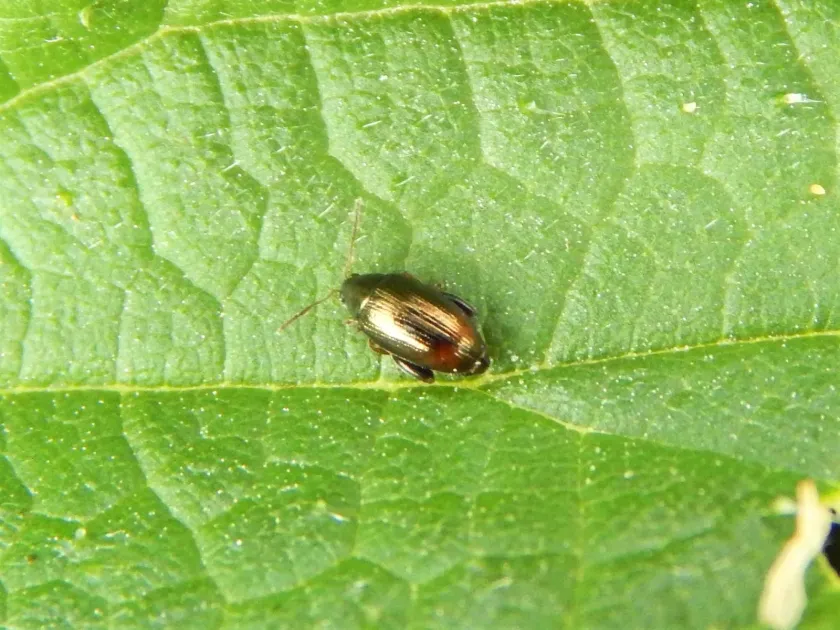
The hemp flea beetle (Latin: Psylliodes attenuata) belongs to the order Coleoptera and the family Chrysomelidae. Adult beetles are small, measuring 2–3 mm in length, and possess specialized hind legs that allow them to jump significant distances when disturbed.
The body color ranges from bronze to metallic green. The surface of the elytra is covered with fine punctures. The larvae are worm-like, pale white in color with a brown head, and can reach a length of up to 5 mm during their final developmental stage.
These insects overwinter as adults in the soil, under plant residues, or in protected areas near fields where forage crops were grown. As spring temperatures rise, the beetles emerge to feed on young seedlings.
Mating occurs in spring, and females deposit eggs in the soil near the roots of host plants. A single female can produce several hundred eggs during the season, enabling rapid population growth in favorable conditions.
The life cycle is complete, consisting of egg, larva, pupa, and adult stages. Depending on regional climate, the hemp flea beetle may produce one or several generations annually, posing a persistent threat to crops.
What it damages
This pest is a polyphage, meaning it infests a wide range of plants. Key host crops include hemp (Cannabis sativa), fodder beet, winter rapeseed, cabbage, sunflower, winter barley, apple trees, and alfalfa.
Adult beetles cause the most significant damage by chewing small, circular holes in cotyledons and the first true leaves. High infestations can destroy entire stands of seedlings, particularly if the growing point is consumed.
Larvae primarily damage the root system, which impairs the plant's ability to absorb water and nutrients. This damage is particularly devastating during drought conditions, leading to wilting and reduced vigor in affected crops.
The most susceptible stage is the seedling phase. Damage at this early stage often leads to stunted growth, lower harvest yields, and increased susceptibility to secondary fungal or bacterial infections.
Economic losses can be substantial if the infestation goes unchecked. Proper monitoring of field edges during the emergence of seedlings is essential to determine if chemical control measures are required.
Signs of infestation
The primary symptom of infestation is the characteristic "shot-hole" pattern on leaves. If you observe numerous small circular perforations on seedlings, the hemp flea beetle is likely present in the field.
Beetles can be visually spotted in the morning or evening when they are most active. A key behavioral sign is their sudden jumping activity when they are approached, which is a hallmark of this flea beetle species.
Stunted growth or wilting during the day, even with sufficient soil moisture, indicates potential root damage caused by larvae. Carefully excavating a sample plant can reveal the presence of larvae or feeding scars on the roots.
Destruction of the apical bud (growth point) leads to the cessation of development. If the plant stops producing new leaves or the seedling dies shortly after emergence, immediate inspection of the field is necessary.
Monitoring the undersides of leaves and the base of the stems is the most effective way to identify the population density of Psylliodes attenuata before it reaches critical levels.
Control measures
Effective management of the hemp flea beetle requires an integrated approach. Crop rotation is the most critical cultural practice, as it disrupts the life cycle and prevents the buildup of pest populations in a specific area.
Deep plowing in late autumn or early winter helps expose overwintering adults to adverse weather conditions, significantly reducing their survival rate. Weed control is also vital, as many cruciferous weeds provide alternative food sources for the beetle.
Seed treatment with systemic insecticides is the standard practice to protect seedlings during the highly vulnerable germination stage, ensuring systemic protection against both foliage and root feeding.
Foliar application of insecticides may be necessary during the growing season if monitoring indicates that the economic injury threshold has been exceeded. Products should be applied according to local agricultural regulations.
Maintaining proper distance between host crop fields and keeping fields clean of plant debris are key preventative strategies to minimize the risk of mass migration of beetles in the spring.
In brief
20
Damages crops
Content graph
Damages crops · 20
Content graph
Connections · Hemp flea beetle
Most often together:
Marketplace
Products · 6


Biology
Taxonomy
- Latin name
- Psylliodes attenuata
- Order
- Coleoptera (beetles)
- Family
- Chrysomelidae
- EPPO code
- PSYIAT
Community
Discussion
No discussions yet — be the first.