
Western chinch bug
Blissus occiduus
Description
How to identify
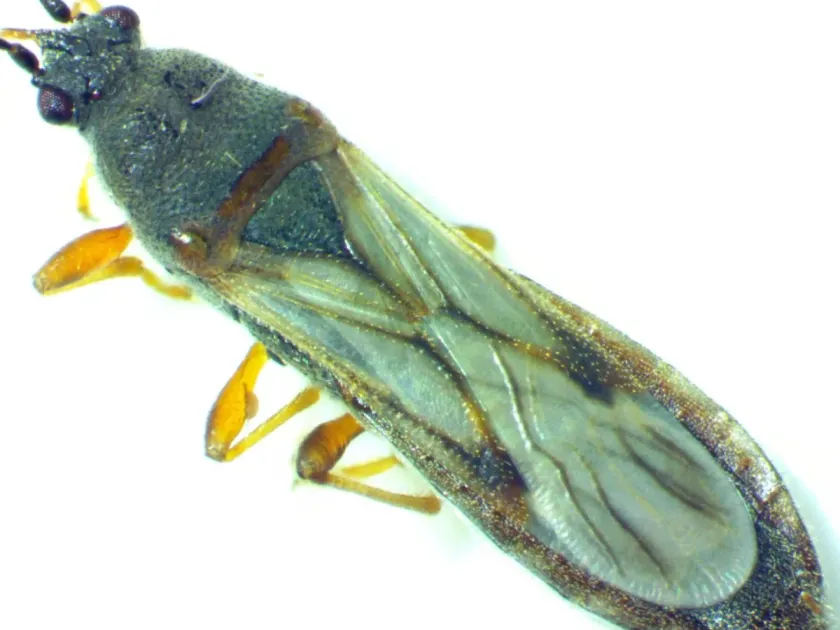
The Western chinch bug (Blissus occiduus) is a member of the Blissidae family within the order Hemiptera. Adults are small, measuring approximately 3-4 mm in length, with a distinct dark brown or black coloration.
A key identification feature is the presence of white wings marked with a prominent black spot on the outer margin, which makes them recognizable during field scouting.
Nymphs go through several instars and are typically bright red in early stages, gradually transitioning to a darker color with a characteristic white transverse band across the abdomen.
These insects undergo incomplete metamorphosis. Adults are highly mobile and capable of flight, allowing them to migrate rapidly between fields as local food sources dwindle.
They thrive in hot, dry climates and are most commonly found in well-drained soil areas, often colonizing the bases of grasses and cereal crops.
What it damages
The Western chinch bug targets a variety of grasses, but its primary economic impact is observed on cereal crops such as wheat, barley, sorghum, and maize.
By using their piercing-sucking mouthparts, these pests extract sap from stems, leaves, and developing heads, causing significant physiological stress to the plant.
This feeding activity disrupts the plant's vascular system, leading to stunted growth, wilting, and in severe cases, the death of young seedlings during the early stages of development.
The punctures made by the bugs serve as infection points for secondary pathogens, including various fungal and bacterial diseases that further weaken the crop.
During the grain-filling stage, damage to the stem and rachis results in shriveled kernels and significant reductions in test weight, directly impacting the final yield and market quality.
When it appears
The life cycle of the Western chinch bug is highly temperature-dependent. Adults overwinter in protected areas, such as deep plant debris, field edges, or dense bunchgrasses.
Emergence occurs in the early spring as temperatures rise. They move to young cereal crops to feed and lay eggs, starting the first generation of the season.
The population can explode during hot and dry summers, as these conditions are optimal for their reproductive rate, often resulting in multiple overlapping generations per year.
As autumn approaches and temperatures drop, the insects reduce their activity and seek shelter in soil crevices or under surface residue to enter a state of diapause for the winter.
Regular monitoring is essential throughout the growing season, particularly from the seedling stage until the soft dough stage, which is the most critical window for crop protection.
Signs of infestation
The initial signs of infestation often appear as patches of stunted, yellowing plants, typically starting along field edges adjacent to grassy habitats or overwintering sites.
Scouting involves checking the base of the stems near the soil surface, where bugs are usually found congregating in large numbers, often hidden by leaf sheaths.
Leaves of infested plants may display small discolored spots or streaks, representing the specific locations where the insects have fed on plant tissues.
In heavy infestations, large areas of the crop may wither and turn brown prematurely, a condition sometimes referred to as "whiteheads" when the heads fail to fill.
Another indicator is the presence of a distinct, pungent odor released by the insects' scent glands, which is often detectable when walking through an infested field.
Control measures
Cultural practices are the first line of defense, including the thorough removal of grassy weeds and debris from field margins that serve as overwintering reservoirs.
Crop rotation and proper soil management can significantly reduce the overwintering success of the bugs by disrupting their habitat and limiting immediate food access for emerging adults.
Chemical control involving systemic insecticides is recommended when population densities exceed the established economic threshold to prevent substantial yield losses.
It is crucial to rotate insecticide classes to manage the development of resistance and to apply products during periods of peak insect activity for maximum efficacy.
- Maintain good field sanitation to reduce overwintering sites.
- Monitor field edges closely during early spring migration.
- Use drought-tolerant varieties to minimize stress.
- Time harvest carefully to avoid prolonged exposure to late-season infestations.
Taxonomy
- Latin name
- Blissus occiduus
- Order
- Hemiptera (bugs, aphids, leafhoppers)
- Family
- Lygaeidae
- EPPO code
- BLISOC
Discussion
No discussions yet — be the first.