
Southern chinch bug
Blissus insularis
Description
How to identify
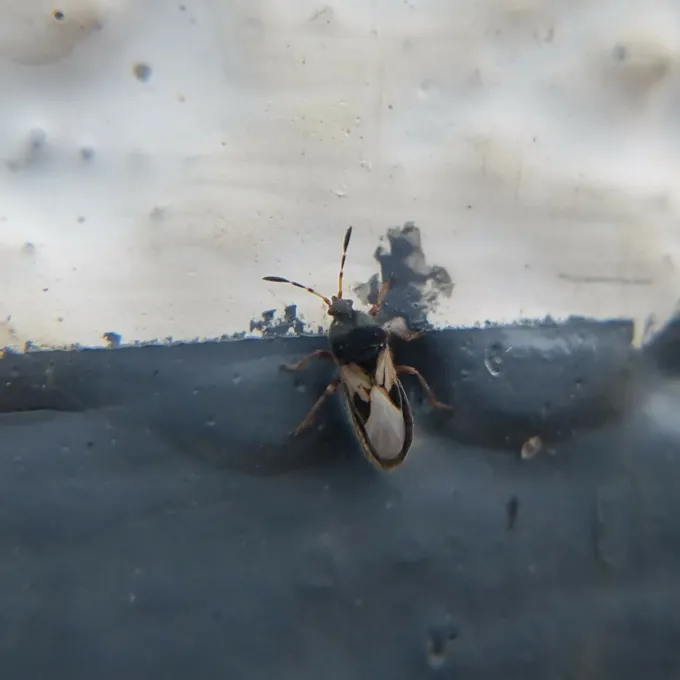
The Southern chinch bug (Blissus insularis) is a member of the Blissidae family within the order Hemiptera. Adult bugs are approximately 3–4 mm long, making them quite difficult to spot without careful inspection of the turf thatch.
Adults exhibit a distinct appearance with black bodies and white wings that feature a small black triangular patch on the outer margin. Their legs are typically brownish-yellow, providing a visual cue for identification under magnification.
Nymphs go through several developmental stages (instars). They are initially bright red with a white horizontal band across their abdomen, which fades and darkens as they mature into adults.
They prefer sheltered environments within the thatch layer where humidity is high. By staying near the base of the grass plants, they remain protected from environmental factors and surface-level pesticide treatments.
Proper identification usually involves using a flotation device or closely inspecting the crown area of the grass during the early hours of the morning when insects are most active near the soil surface.
What it damages
These pests primarily target turfgrass species such as St. Augustine grass, zoysiagrass, and various other warm-season lawn grasses. They feed by piercing the plant tissue with their stylets and sucking out the sap.
As they feed, they inject toxic enzymes into the plant, which prevents the grass from transporting water and nutrients effectively. This causes the plants to lose vigor and eventually collapse under stress.
The damage manifests as irregular patches of yellowing turf that eventually turn brown and die. These patches often expand rapidly during dry weather as the weakened grass fails to cope with water shortages.
Because the symptoms often mimic drought stress or nutrient deficiencies, many homeowners mistakenly increase watering rather than checking for the presence of chinch bugs, allowing the population to grow unchecked.
Severe infestations can lead to total lawn failure, requiring total renovation or re-sodding of the affected areas due to the depth of the damage to the grass crowns.
When it appears
The Southern chinch bug is most active during warm months when temperatures consistently exceed 20°C. In subtropical climates, these insects can remain active for almost the entire year.
Development from egg to adult takes approximately one month, allowing for several overlapping generations throughout the growing season. This rapid turnover makes them a difficult pest to control once a population explosion occurs.
Peak damage usually occurs during the hottest and driest parts of the summer, as these conditions stress the host plants and allow the chinch bugs to reproduce at their maximum potential rate.
As autumn arrives and temperatures drop, adults seek protected areas for overwintering, such as thick layers of thatch or nearby landscape debris, where they stay until the following spring.
Monitoring should begin as soon as temperatures stabilize in the spring, focusing on sunny, hot areas of the lawn where chinch bugs tend to thrive and concentrate their feeding efforts.
Signs of infestation
The most common sign is the appearance of sunken or dead areas in the lawn that do not recover despite adequate watering. These patches typically start small and grow outward over time.
Closer observation often reveals tiny, mobile black insects darting away when the grass blades are parted. They are commonly found at the periphery of the damaged area, where fresh, green grass is still available for food.
The presence of red-colored nymphs is a definitive sign of an active, breeding colony within the thatch. These nymphs are less mobile than adults and tend to cluster together around the grass crowns.
A distinctive odor can sometimes be detected when a high number of chinch bugs are crushed, which is a result of chemicals released from their scent glands as a defense mechanism.
Lawn stability is another indicator; severely infested grass pulls away easily from the soil because its roots and crown nodes have been destroyed by prolonged feeding.
Control measures
Cultural control is essential: maintain healthy turf through proper fertilization and mowing heights to ensure the grass is robust enough to withstand pest pressure. Avoid excessive nitrogen, which can attract chinch bugs.
Chemical control involves applying insecticides labeled for chinch bug management. It is crucial to penetrate the thatch layer to reach the insects, so light irrigation after application is often recommended.
- Apply insecticides when nymphs are present for the best results.
- Use a spot-treatment approach for initial infestations to limit chemical usage.
- Regular monitoring helps determine if a second application is necessary.
Biological alternatives, such as the use of beneficial nematodes or entomopathogenic fungi, can be effective in reducing population levels when integrated into a long-term pest management strategy.
Always inspect neighboring properties if your lawn is affected, as chinch bugs are highly mobile and will quickly re-infest treated areas if the source of the population is not addressed.
Taxonomy
- Latin name
- Blissus insularis
- Order
- Hemiptera (bugs, aphids, leafhoppers)
- Family
- Lygaeidae
- EPPO code
- BLISIN
Discussion
No discussions yet — be the first.