
Hairy chinch bug
Blissus hirtus
Description
How to identify
The hairy chinch bug (Blissus hirtus) is a small insect belonging to the Blissidae family within the order Hemiptera. These insects are notorious for being significant pests of turfgrass.
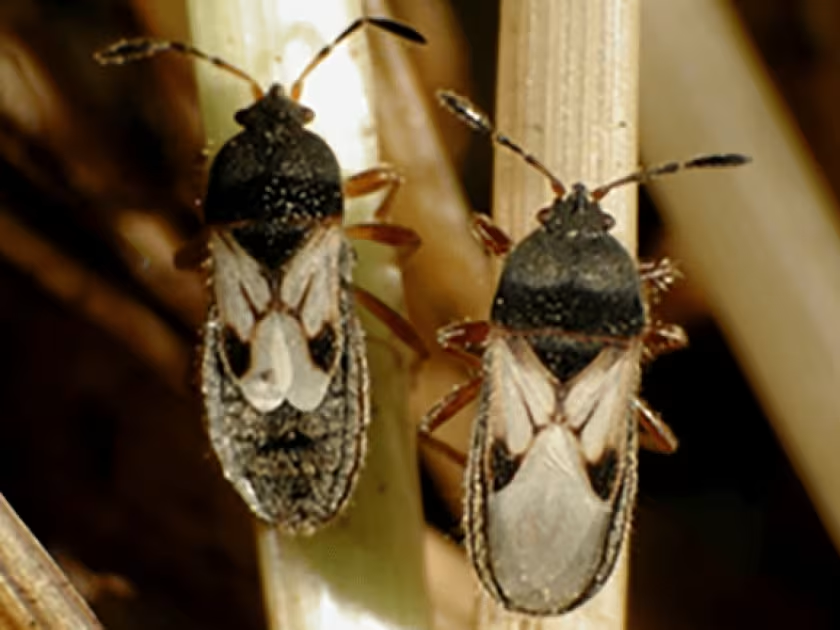
Adults are approximately 3 to 4 millimeters long, characterized by a black body with distinctive white wings featuring a small triangular black spot in the center.
Nymphs go through several instars, initially appearing bright red with a white transverse band across their abdomen, darkening as they mature into adults.
Due to their tiny size and habit of dwelling deep within the thatch layer, they are often overlooked until the damage to the lawn becomes clearly visible.
Professional monitoring involves taking soil cores or using a flotation cylinder to accurately detect and estimate the population density of these insects.
What it damages
Hairy chinch bugs are specialized feeders that attack various grass species, with a particular preference for cool-season grasses such as Kentucky bluegrass and fescue.
They feed by piercing the plant tissues and extracting sap, which introduces toxins that disrupt the plant's vascular system, leading to rapid yellowing and death.
The damage often starts in sunny, dry areas of the lawn, appearing as irregular patches that expand as the insects move outward in search of fresh food sources.
Plants weakened by chinch bug feeding are less able to survive drought stress, often resulting in permanent loss of turf cover in heavily infested areas.
In addition to cosmetic damage, the destruction of the root system and plant nodes can make the lawn more susceptible to secondary weed encroachment.
When it appears
The life cycle of the hairy chinch bug is highly temperature-dependent, with adult bugs overwintering in protected areas like plant debris or under thick thatch.
As soil temperatures rise in the spring, the overwintered adults move onto the turf to lay eggs, beginning the cycle for the new generation.
The most intense feeding occurs during the summer months, especially during periods of hot and dry weather which favor the rapid development of nymphs.
Depending on the climatic zone, the insect may complete one or two generations per year, with the highest pressure often occurring from mid-June to August.
By autumn, the bugs begin their migration to overwintering sites, making late summer the critical period for management before the population goes dormant.
Signs of infestation
Visible signs of infestation often include yellow or brown patches in the lawn that do not recover despite adequate watering or fertilization efforts.
These patches typically begin near sidewalks, driveways, or sunny borders where the heat reflects, and spread outward as the bug population increases.
Upon close inspection of the thatch layer, one can often find clusters of the tiny insects, sometimes emitting a distinct odor when disturbed.
The turf in the affected area may feel spongy, and upon pulling, the grass blades may come away easily due to the lack of a viable root connection.
Observing the margin of the damaged zone during mid-day is the most effective way to spot the insects, as they are most active when the sun is brightest.
Control measures
Effective management begins with maintaining a healthy lawn, as dense, well-watered turf is significantly less attractive to chinch bugs than stressed grass.
Cultural practices such as core aeration and dethatching reduce the habitat where chinch bugs thrive, making the lawn less hospitable for egg-laying.
Chemical control involving insecticides is effective if applied when nymphs are present; it is crucial to water the product in to reach the insects in the thatch.
Biological controls, including the use of entomopathogenic fungi or predatory insects, can help suppress populations without the need for synthetic chemicals.
- Maintain proper irrigation to reduce drought stress.
- Avoid excessive nitrogen fertilization, which can attract the bugs.
- Conduct regular scouting during early summer months.
- Apply spot treatments only in areas where population thresholds are met.
Taxonomy
- Latin name
- Blissus hirtus
- Order
- Hemiptera (bugs, aphids, leafhoppers)
- Family
- Lygaeidae
- EPPO code
- BLISHI
Discussion
No discussions yet — be the first.