
Blissus gibbus
Blissus gibbus
Description
How to identify
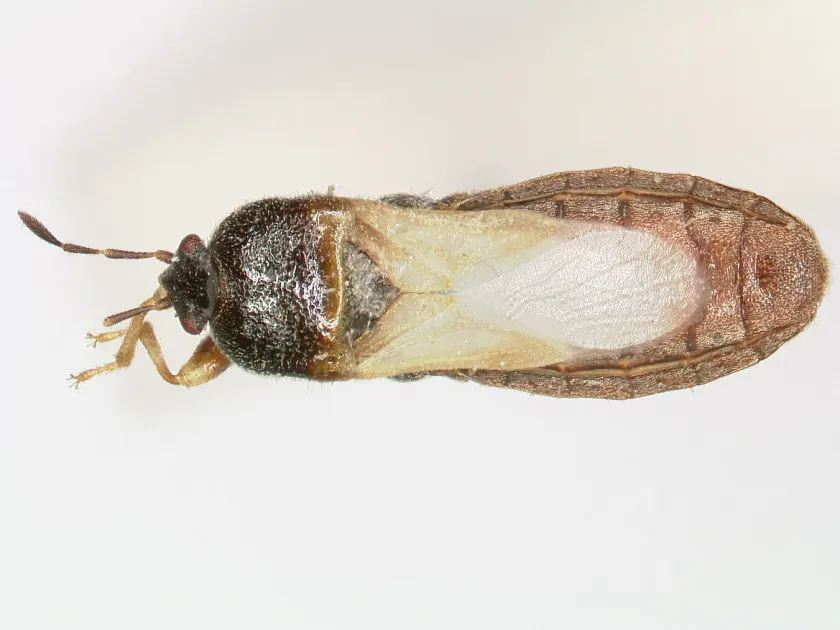
Blissus gibbus is a species of insect belonging to the family Blissidae. This small bug is characterized by a uniquely convex thoracic shield, which appears humped, serving as the primary diagnostic feature for identification.
Adult bugs typically measure between 3 to 5 millimeters in length. Their coloration ranges from dark brown to deep black, making them difficult to spot against the backdrop of soil particles and dark crop residues.
While winged, the bugs are not highly mobile in terms of long-distance flight, preferring to move within their immediate habitat. Nymphs, or immature stages, resemble adults but lack functional wings and often display lighter markings on their bodies.
Their natural habitat includes wasteland areas, field borders, and fallow lands dominated by wild grass species. These areas serve as essential reservoirs where the initial population builds up before spreading to cultivated crops.
Detecting Blissus gibbus in the field requires close observation at the plant base. During cloudy weather, they are often tucked away in leaf sheaths or just beneath the surface of the soil, necessitating careful inspection techniques.
What it damages
This pest primarily attacks cereal crops, including wheat, rye, and barley. It causes significant agricultural damage by feeding on the plant sap, which siphons vital nutrients away from the growing host.
Damage usually begins during the tillering and jointing stages. Feeding at the base of the stem compromises the plant's structural integrity and hinders the transport of water and nutrients, leading to stunted growth.
As the season progresses, bugs may move upwards to feed on the developing ears. This can result in shriveled grains or, in severe cases, complete sterility of the spike, directly impacting the final yield quantity and quality.
Wild grasses such as couch grass act as host plants. When these sources become unsuitable, the bugs migrate into adjacent fields of wheat or other cereals, creating patches of infestation that quickly expand.
Beyond direct feeding damage, the wounds created by the insect's proboscis serve as entry points for various phytopathogens. This often triggers secondary infections that further weaken the plant's immune response and productivity.
When it appears
The life cycle of Blissus gibbus is closely tied to thermal conditions. Overwintering adults emerge from dormancy in early spring once soil temperatures reach roughly 10 to 12 degrees Celsius.
Activity peaks during the late spring and early summer months. This period coincides with the reproduction phase, as eggs are laid on wild grasses, followed by the rapid development of nymphs that feed voraciously.
High temperatures and dry spells are favorable for the insect's development, often shortening the time required for a full life cycle. In warmer regions, two full generations may occur within a single growing season.
As autumn approaches and temperatures begin to drop, the bugs enter a state of preparation for winter. They migrate to protected spots under organic litter or within the upper layers of soil to survive the cold months.
Survival depends heavily on the moisture levels and the insulation provided by the winter environment. Dry, freezing winters without sufficient cover can lead to significant natural mortality in the overwintering population.
Signs of infestation
The first indicator of an infestation is a generally unthrifty appearance of the cereal crops. Leaves may show yellowing or tip-dieback, symptoms that are often mistaken for simple drought stress.
Close inspection of the base of the stems often reveals small, light-colored punctures. These sites may turn necrotic as the plant tissue dies in response to the insect's saliva and feeding activity.
Patches of stunted or wilting plants serve as a warning sign. These patches usually originate at the edges of the field near permanent vegetation and expand as the population increases throughout the season.
A simple field test involves pulling at the plants; heavily infested specimens often uproot easily due to the damage inflicted on their root systems, confirming the presence of significant bug activity.
Finding shed nymphal skins at the base of the plants or on lower leaves is a strong sign of recent population growth and suggests that an active infestation is currently present in the field.
Control measures
Effective management begins with aggressive cultural control measures. Eliminating wild grass reservoirs along field margins is crucial to reducing the size of the overwintering population that migrates into crops.
Crop rotation and the maintenance of adequate spatial separation between cereal fields and wild grasslands significantly disrupt the insect's life cycle and limit its ability to colonize new areas.
Chemical control should be implemented based on established economic thresholds. Targeted application of insecticides is most effective when directed at early-stage nymphs, before they have caused extensive damage to the crop.
Field monitoring is essential for timely intervention. Using sweep nets or yellow sticky traps in high-risk areas allows farmers to detect populations before they reach a stage that causes irreversible yield loss.
- Use of registered systemic and contact-acting insecticides.
- Strategic post-harvest deep plowing to destroy overwintering sites.
- Promotion of natural biological control agents and beneficial predatory insects.
Taxonomy
- Latin name
- Blissus gibbus
- Order
- Hemiptera (bugs, aphids, leafhoppers)
- Family
- Lygaeidae
- EPPO code
- BLISGI
Discussion
No discussions yet — be the first.