
Cereal bug
Blissus doriae
Description
How to identify
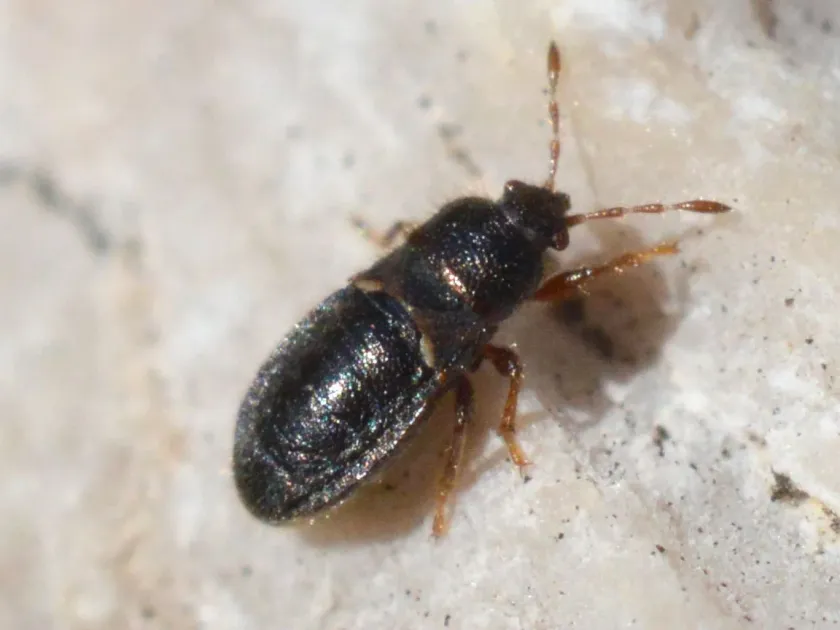
The cereal bug (Blissus doriae) is a member of the Lygaeidae family in the order Hemiptera. Adults are small, measuring approximately 3-4 mm in length, characterized by a dark body and distinctively white wings with a prominent black spot.
Nymphs undergo several developmental stages, changing color from bright red to brownish as they mature. They are flightless during these stages and tend to reside in the soil or at the base of plants, remaining well-hidden from predators and agricultural workers.
This species is highly adapted to temperate climates. Adults typically overwinter in sheltered locations such as field margins, under plant debris, or within the base of perennial grasses, emerging as temperatures rise in the spring.
The reproduction process involves egg-laying near the host plants' root systems. This placement ensures that nymphs have immediate access to food sources upon hatching, facilitating rapid colonization of the field.
Monitoring the population of Blissus doriae requires careful inspection of the stem base and soil surface. Given their cryptic nature, specialized sampling methods such as soil washing or the use of entomological nets are often necessary to estimate their density accurately.
What it damages
Blissus doriae primarily targets cereal crops, including wheat, barley, and rye. By utilizing their piercing-sucking mouthparts, both adults and nymphs extract vital sap from the stalks of these plants, which directly interferes with the plant's nutrient transport.
The impact is most severe during the early growth stages of the crop. Infected plants often show signs of wilting, stunted growth, and premature yellowing of leaves, which can lead to a significant reduction in the overall stand density.
Damage is often cumulative, as the continuous feeding by large numbers of insects creates systemic stress in the crop. This makes the plants more susceptible to environmental stressors like drought and secondary pathogen infections.
The loss of plant vitality caused by the cereal bug translates into direct yield reduction. In cases of extreme infestation, total crop failure may occur in localized areas, leading to significant economic losses for the farmer.
Furthermore, the physical damage inflicted at the stem base can cause lodging or structural weakness, making the crop harder to harvest mechanically and lowering the quality of the harvested grain due to shriveled kernels.
Control measures
Integrated pest management strategies are crucial for controlling the cereal bug. Crop rotation is one of the most effective cultural practices, as it disrupts the life cycle of the pest by removing its primary food sources from the field.
Mechanical control measures, such as deep autumn plowing, are highly recommended to destroy overwintering sites. By burying plant residues, farmers can significantly decrease the survival rate of the overwintering generation.
Chemical control should be implemented based on scouting results. Systemic insecticides are generally effective because they are absorbed by the plant tissue, protecting it from the bug's piercing-sucking feeding habits for an extended period.
Timely application is essential, targeting the early nymphal stages when they are most vulnerable. Adherence to safety protocols and the use of authorized chemicals are necessary to ensure environmental safety and compliance with agricultural regulations.
- Maintenance of field hygiene to eliminate alternative hosts.
- Monitoring population thresholds to prevent prophylactic chemical use.
- Support of beneficial insect populations to provide natural biocontrol.
Taxonomy
- Latin name
- Blissus doriae
- Order
- Hemiptera (bugs, aphids, leafhoppers)
- Family
- Lygaeidae
- EPPO code
- BLISDO
Discussion
No discussions yet — be the first.