
Biston regalis
Biston regalis
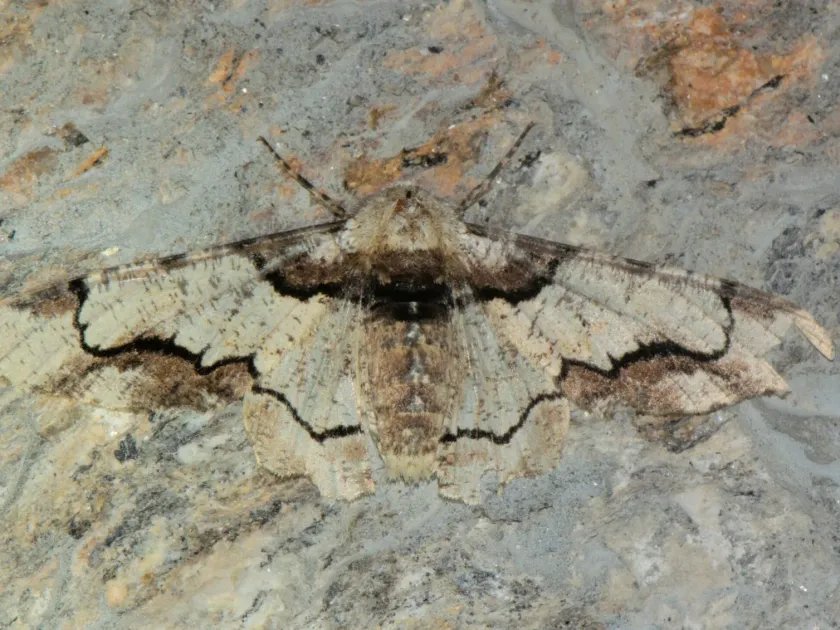
Description
How to identify
Biston regalis is a species of moth belonging to the family Geometridae. These moths are known for their distinct wing patterns, which provide effective camouflage against tree bark, making them difficult to spot during daylight hours when they remain stationary.
The larvae, commonly known as loopers, exhibit a unique method of locomotion, moving in a looping fashion due to the reduction of their abdominal prolegs. This behavior is a key indicator when identifying larvae of the Geometridae family in field settings.
The insect's life cycle consists of four distinct stages: egg, larva, pupa, and adult. The pupal stage is the primary overwintering phase, usually taking place in the soil or beneath leaf litter, providing protection from harsh winter temperatures.
Adult moths are primarily nocturnal, which often leads to underestimation of their population density. Entomologists often use light traps to monitor their presence and determine the exact timing of peak flight, which is crucial for timing control measures.
Understanding the biology of this species is essential for orchard management. By recognizing the timing of adult flight and subsequent larval hatching, growers can optimize their crop protection programs for maximum efficacy.
What it damages
Biston regalis is considered a polyphagous pest, with a preference for various deciduous tree species. In horticultural settings, it is frequently recorded as a pest on fruit-bearing trees such as apples, pears, and plums, causing significant economic loss.
The larvae are the primary cause of damage, as they feed voraciously on the leaf tissues. In cases of high infestation, the caterpillars can completely defoliate a tree, leading to severe physiological stress and reduced overall vitality.
Defoliation disrupts the tree's ability to perform photosynthesis, which is vital for fruit development and storage of reserves for the next growing season. This leads to smaller fruit size, lower yield, and overall weakness of the host plant.
Ornamental trees and urban park landscapes are also susceptible to Biston regalis, making it a pest of concern for urban forestry. Repeated defoliation can lead to twig dieback and make the tree more susceptible to opportunistic pathogens.
Early identification of feeding symptoms is crucial for minimizing damage. Even moderate levels of defoliation in young orchards can result in stunted growth and delayed maturity, emphasizing the importance of active pest surveillance.
When it appears
The activity of Biston regalis is heavily dependent on regional climate conditions and the phenology of the host plants. Adult moths typically emerge in late spring, marking the beginning of the breeding season.
Larval development coincides with the period of active leaf growth in host trees. This period is critical, as the caterpillars require high amounts of nutrients for their rapid growth and transition to the pupal stage.
The species generally follows a univoltine cycle, completing one generation per year. The timing of each life stage is highly sensitive to temperature, with warmer springs often accelerating larval growth and potentially increasing the pest's damage potential.
By late summer, the larvae complete their feeding phase and descend into the soil to pupate. This stage represents the transition into a state of diapause, allowing the species to survive the winter months until the cycle restarts.
Agricultural monitoring programs focus on the window between bud burst and full bloom. During this time, scouting for egg clusters or early-instar larvae is the most effective approach to preventing large-scale infestation.
Signs of infestation
The most prominent sign of an infestation is the presence of chewed leaf edges or entirely skeletonized foliage. Larvae typically feed from the margins inward, often leaving only the major veins behind.
Frass, or caterpillar droppings, visible on the foliage or the ground beneath the canopy, is a clear indicator of active feeding by a high number of larvae. This sign is often the first thing noticed by orchard owners.
Silken threads are frequently used by larvae to move between branches or to drop to the ground when disturbed. These fine threads are sometimes visible in early morning light and serve as an important diagnostic sign.
Egg clusters are laid in compact groups, usually on the underside of leaves or in the bark crevices. Finding these clusters during routine inspections is the most effective way to intercept the pest before it starts feeding.
- Skeletonized or irregularly eaten leaf margins.
- Accumulation of frass on leaves or the forest floor.
- Presence of fine silk threads on the foliage.
- Direct observation of looping caterpillars on leaves.
- Visible wilting or premature leaf drop in localized canopy areas.
Control measures
Effective management of Biston regalis requires an integrated approach. Cultural controls, such as soil cultivation around the base of trees in autumn, can significantly reduce the number of overwintering pupae.
Biological control, specifically using microbial insecticides based on Bacillus thuringiensis, offers a targeted solution that minimizes impact on non-target species and beneficial predators within the orchard.
Chemical control should be reserved for periods of high population density when economic thresholds are exceeded. It is important to utilize products with minimal impact on pollinators and to follow label instructions strictly.
Mechanical methods such as sticky bands applied to trunks can be effective in preventing larvae from moving between branches, especially in smaller garden settings where monitoring is easier to maintain.
Continuous monitoring and early detection remain the cornerstones of successful control. By combining these methods, growers can keep Biston regalis populations below the level that causes significant crop damage.
Taxonomy
- Latin name
- Biston regalis
- Order
- Lepidoptera (butterflies)
- Family
- Geometridae
- EPPO code
- BISTRE
Discussion
No discussions yet — be the first.