
Pepper and salt moth
Biston cognataria
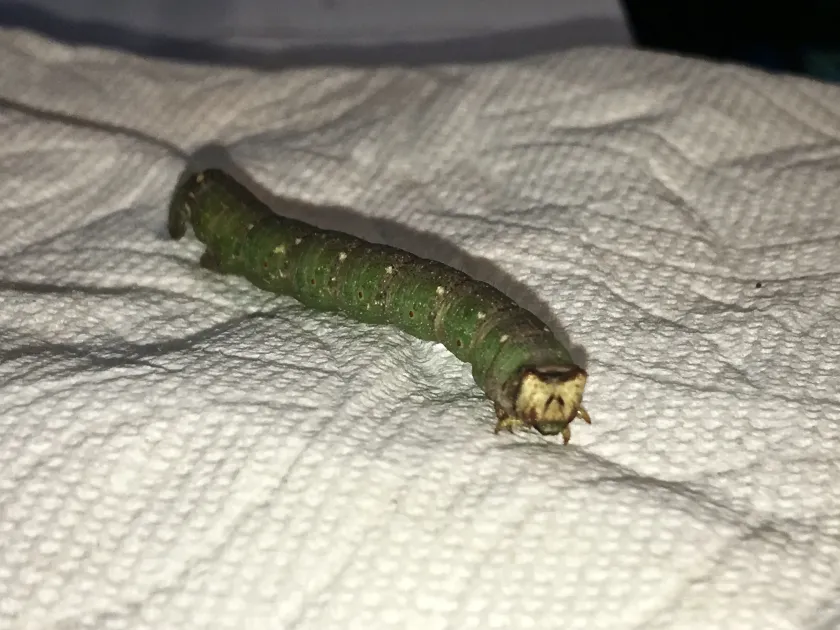
Description
How to identify
The pepper and salt moth (Biston cognataria) is a moth of the family Geometridae. Adult moths are characterized by a mottled, speckled appearance on their wings, which provides excellent camouflage against tree bark and twigs in their natural environment.
The larvae, known as loopers or inchworms, have a distinctive way of moving by drawing their hind legs up to their front legs, creating a loop with their body. They are masters of disguise, often mimicking the appearance of twigs.
The life cycle of the moth consists of four stages: egg, larva, pupa, and adult. They typically overwinter as pupae buried in the soil near the base of host plants, which protects them from extreme weather conditions.
Adult moths emerge in spring, with mating and egg-laying occurring shortly after. Because they are primarily nocturnal, they are rarely seen by gardeners during the daytime unless disturbed from their resting spots.
Understanding their lifecycle is crucial, as the population density peaks depending on the regional climate, usually following the initial bud break of the host shrubs in the garden.
What it damages
The larval stage is responsible for all damage to plants. Caterpillars feed voraciously on the foliage of currant bushes and other related fruit shrubs, leading to significant leaf loss if the population density is high.
In addition to currant and gooseberry bushes, they can affect a wide range of deciduous trees and shrubs. Extensive defoliation forces the plant to divert energy reserves, negatively impacting both current fruit set and future growth.
Weakened plants show reduced vigor and are more susceptible to secondary stressors, including prolonged drought and opportunistic diseases that target damaged leaf tissue.
Large infestations can result in the stripping of entire branches, which drastically reduces the plant's ability to undergo photosynthesis and store energy for the subsequent growing season.
This pest is particularly damaging to young, developing plants that have not yet established a strong root system, potentially causing stunted growth and poor survival rates in the following year.
Signs of infestation
The most visible sign of an infestation is the presence of irregular, ragged holes in the leaves. As the caterpillars grow, they consume more leaf material, eventually leaving only the midribs behind.
Frass, or caterpillar droppings, is a tell-tale sign of active feeding. Small, dark, pellet-like droppings on the foliage below the feeding site or on the ground indicate a presence of larvae.
Careful visual inspection of the branches is necessary, as the caterpillars often remain perfectly still during the day to mimic twigs. Look for irregularities in the branch structure that seem out of place.
Increased bird activity, specifically insectivorous birds visiting certain bushes repeatedly, can be an indicator that a caterpillar population is active on those specific plants.
The presence of fine webbing or silk trails on the leaves may sometimes accompany a severe infestation, although these moths do not create large, obvious nests like some other species.
Control measures
Cultural control is a primary method; disturbing the soil around the base of bushes in autumn helps to expose pupae to predators and freezing temperatures, effectively reducing the population for the following year.
Hand-picking caterpillars is highly effective in small-scale gardens. Searching the shrubs early in the morning, when the larvae are more active or easier to spot after gentle shaking, yields the best results.
Biological control using Bacillus thuringiensis (Bt) is a safe and effective way to manage larvae without harming beneficial insects or pollinators in the garden.
Chemical intervention should be considered a last resort. Use targeted, low-toxicity insecticides if the economic threshold is reached, always following the label guidelines to ensure safety for the environment.
- Maintaining proper spacing between plants to improve airflow.
- Encouraging natural predators like ground beetles and parasitic wasps.
- Monitoring adult moth populations using light traps to time treatments.
- Regular inspection during the peak emergence months of spring and summer.
Taxonomy
- Latin name
- Biston cognataria
- Order
- Lepidoptera (butterflies)
- Family
- Geometridae
- EPPO code
- BISTCO
Discussion
No discussions yet — be the first.