
Peppered moth
Biston betularia
Description
How to identify
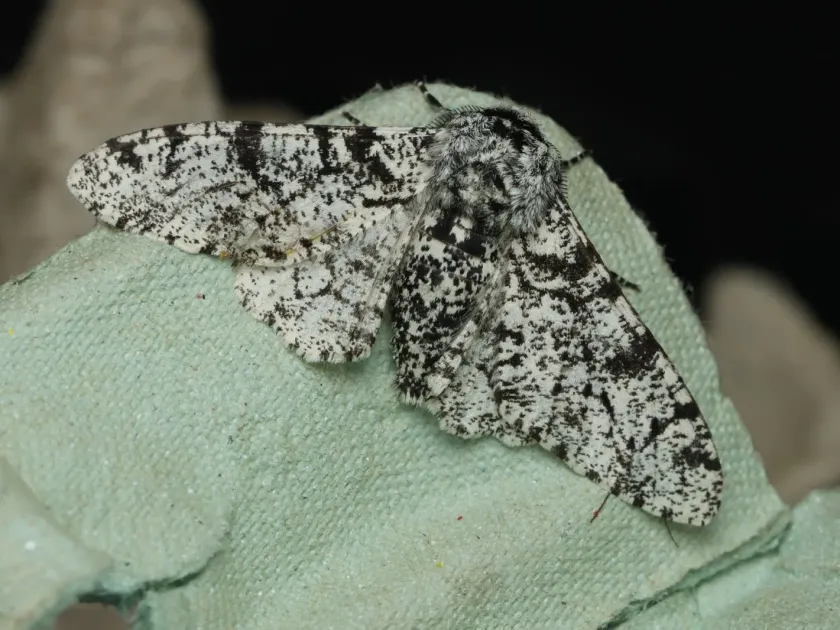
The Peppered moth (Biston betularia) is a moth of the family Geometridae. Its wingspan typically ranges from 45 to 60 mm. The species is famous for its color polymorphism, ranging from light speckled forms to melanic (black) variants.
The larvae, often called loopers, reach up to 50 mm in length. Their body color mimics the texture and appearance of tree twigs, providing excellent camouflage against potential predators such as birds.
The biological cycle involves complete metamorphosis, consisting of four stages: egg, larva, pupa, and adult. The pupal stage occurs in the soil, which is the primary overwintering method for this species.
Adult moths emerge in late spring or early summer, depending on the climatic zone. They are primarily nocturnal, spending daylight hours resting on tree trunks or branches.
Females lay eggs in small clusters within bark crevices or on foliage. The larvae hatch and begin feeding almost immediately, growing rapidly throughout the summer season.
What it damages
This species is a polyphagous pest, feeding on a wide range of deciduous trees and shrubs. Common hosts include birch, oak, lime, elm, and various fruit trees found in domestic orchards.
The larvae feed by consuming the leaf tissue, starting with small holes and progressing to total defoliation of the crown. In heavy infestations, trees may appear completely stripped of leaves.
Large-scale defoliation weakens the host plant, reducing its ability to store carbohydrates and lowering its general vigor. This makes the tree more susceptible to secondary pests and various pathogens.
Young trees are particularly at risk, as heavy feeding can inhibit terminal growth and stunt development. Repeated yearly defoliation can eventually lead to branch dieback or tree death.
Beyond physical damage, the presence of these larvae and their frass (excrement) can affect the aesthetic value of ornamental garden plants and parkland specimens.
Signs of infestation
The primary sign of a Peppered moth infestation is the presence of larvae that look like small twigs attached to branches. They are best detected by examining the leaves for feeding damage.
Leaf skeletonization or irregular circular holes are classic indicators of larvae activity. In areas with high populations, the sound of larvae feeding on foliage can even be heard in quiet settings.
Frass accumulation on lower branches or the ground underneath a tree is a reliable sign that larvae are active in the canopy above. This is often noticed during routine garden maintenance.
Visible defoliation of the canopy, especially starting from the top and moving downwards, signals an established infestation that requires intervention to protect the tree's health.
Checking trunks and branches for the presence of adult moths during the evening can help confirm the population level, though they are difficult to spot due to their perfect camouflage.
Control measures
Managing the Peppered moth requires a balanced approach, prioritizing biological and mechanical control to maintain garden health without excessive chemical intervention.
- Hand-picking larvae from small trees and shrubs in early stages.
- Applying Bacillus thuringiensis-based insecticides to target the larval stage.
- Installing bird feeders and nesting boxes to support natural avian predators.
- Tilling the soil around the base of trees in autumn to expose pupae.
- Using systemic insecticide sprays if infestation levels exceed economic thresholds.
Biological controls are highly effective when applied while the larvae are in their early instars. These products are environmentally friendly and target specific caterpillar species.
Mechanical cultivation of the soil beneath infested trees during the dormant season helps disrupt the lifecycle by exposing overwintering pupae to cold temperatures and predators.
Promoting a diverse ecosystem within the garden encourages beneficial insects such as parasitic wasps, which act as natural population suppressors for many Lepidoptera species.
Taxonomy
- Latin name
- Biston betularia
- Order
- Lepidoptera (butterflies)
- Family
- Geometridae
- EPPO code
- BISTBE
Discussion
No discussions yet — be the first.