
Biomphalaria pfeifferi
Biomphalaria pfeifferi
Description
How to identify
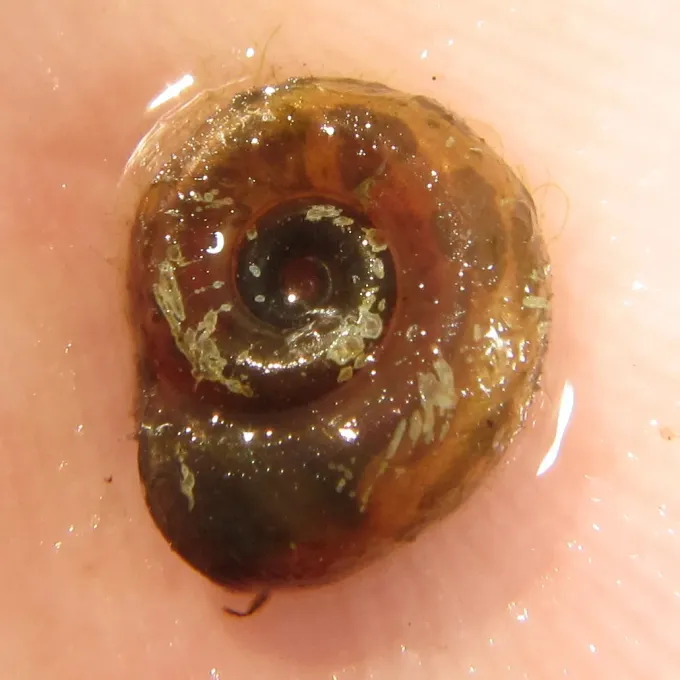
Biomphalaria pfeifferi is a freshwater gastropod mollusk belonging to the Planorbidae family, known for its flat, disc-shaped shell that spirals in a single plane.
Adult specimens typically measure between 10 to 15 millimeters in diameter, with body coloration ranging from grey to brown to help them blend into the muddy bottoms of water bodies.
This species is a simultaneous hermaphrodite, allowing for rapid reproduction cycles whenever environmental conditions, such as water temperature and organic matter content, are optimal.
These snails favor shallow, stagnant, or slow-moving waters like irrigation canals, ponds, and rice paddies, where they can easily access aquatic vegetation for feeding and egg-laying.
Beyond its agricultural impact, it is scientifically significant as an intermediate host for schistosome parasites, making hygiene and water management critical in areas where it is present.
What it damages
The primary agricultural damage caused by Biomphalaria pfeifferi involves the destruction of young seedlings in aquatic or semi-aquatic crops, such as rice fields, where they graze on tender tissues.
Mass infestations in irrigation systems lead to the accumulation of slime and waste products, which can clog channels and disrupt the necessary water flow for healthy crop cultivation.
In greenhouse settings utilizing hydroponics, these snails may attack the root systems of young plants, creating entry points for various fungal and bacterial pathogens.
The damage to leaf margins and stems often leads to stunted growth, as the plant must divert energy to repair tissue damage rather than focusing on biomass production.
Large populations contribute to poor water quality through excessive waste excretion, which increases the biological oxygen demand and stresses the cultivated plants.
When it appears
The metabolic and reproductive rates of Biomphalaria pfeifferi are highly dependent on water temperature, with the ideal range being between 22 and 28 degrees Celsius.
In tropical climates, the species remains active year-round, but population surges are most common during rainy seasons when new areas are flooded and nutrient runoff increases.
The synchronization of the snail's life cycle with the rice growing season is common, as the warming water in paddies provides a perfect environment for rapid multiplication.
Below 15 degrees Celsius, their activity levels drop significantly, and they may enter a state of estivation by burrowing into the mud during periods of drought or dry conditions.
Seasonal monitoring is essential, particularly during the early flooding stages of agricultural fields, as this is when the snail population is most likely to invade and establish itself on crops.
Signs of infestation
Characteristic signs of infestation include jagged, irregular leaf margins on young plants, caused by the rasping action of the snail’s radula while feeding.
The presence of jelly-like egg masses attached to the submerged stems of plants or the hard surfaces of irrigation infrastructure confirms that a breeding colony is present.
Visually identifiable slime trails on moist soil surfaces near the water’s edge provide strong evidence of nocturnal foraging activities by the snails.
A high density of empty shells in silt deposits or along the shoreline can indicate past population peaks or sudden changes in water quality that led to mass mortality.
Stunted plant growth coupled with visible decay at the base of the stems suggests that the snails have been damaging the plant’s structural integrity, allowing opportunistic infections.
Control measures
Effective management includes regular draining and drying of irrigation channels and rice fields, which eliminates the aquatic habitat required for the snails to survive and reproduce.
Mechanical removal of excess aquatic weeds from irrigation systems reduces both the food supply and the available substrate for egg deposition, limiting population growth.
Biological control methods involve introducing natural predators such as specific fish species that feed on mollusks, providing a sustainable way to keep numbers in check without chemicals.
Chemical molluscicides can be utilized but require extreme caution due to their potential toxicity to non-target aquatic organisms and impacts on downstream water quality.
- Periodic drying cycles for all irrigation systems.
- Installation of fine-mesh screens on water intake valves.
- Continuous monitoring of water chemistry and snail density.
Taxonomy
- Latin name
- Biomphalaria pfeifferi
- Order
- Molluscs
- Family
- Planorbidae
- EPPO code
- BIOMPP
Discussion
No discussions yet — be the first.