
Slosson's March fly
Bibio slossonae
Description
How to identify
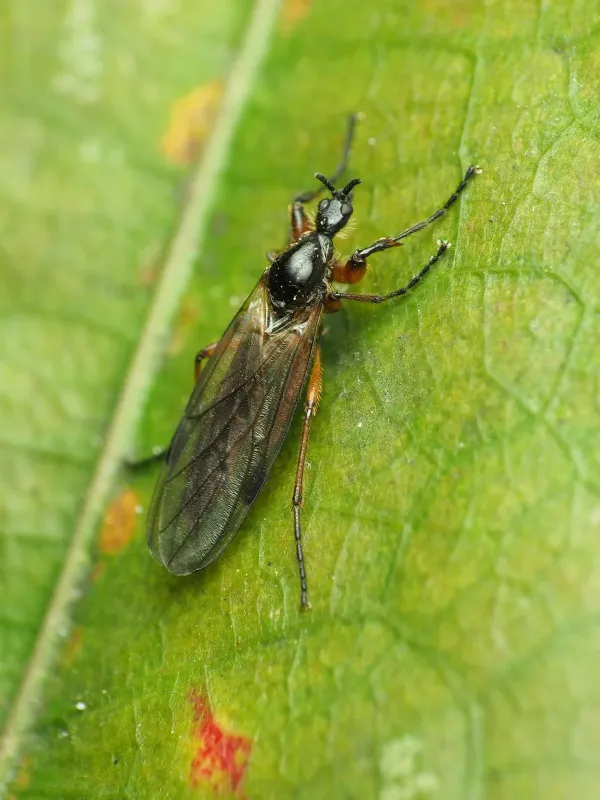
Slosson's March fly, scientifically known as Bibio slossonae, is a member of the Bibionidae family, often referred to as March flies due to their early spring emergence.
Adults are robust insects with dark bodies, characterized by their distinct flight patterns and tendency to swarm in large groups during mating seasons.
The larvae are typically soil-dwelling, cylindrical in shape, and possess a segmented body covered in small bristles that assist in movement through moist soil.
They thrive in environments rich in organic matter, making areas with heavy compost or decaying vegetation primary targets for infestation.
Identification at the larval stage is crucial for early intervention, as they are often mistaken for harmless detritivores by inexperienced observers.
What it damages
The primary economic damage is caused by the larvae, which feed on the roots, tubers, and basal stems of various vegetable and horticultural crops.
By consuming fine root hairs, they severely inhibit the plant's ability to absorb water and essential nutrients from the soil.
Seedlings are particularly vulnerable, often wilting and dying within a few days when larval populations are high enough to sever the taproot.
Damage is often cumulative, as small root wounds facilitate secondary infections by soil-borne pathogens like bacteria and fungi.
Turfgrass and ornamental beds can also suffer significant damage, resulting in yellowing patches and weakened overall root health.
When it appears
The life cycle is synchronized with early spring temperatures, with adults emerging to mate and lay eggs as soon as the ground begins to warm.
Larvae remain active in the top layers of the soil throughout the cool and damp months, making them a threat to early-season plantings.
Development speeds up as soil moisture and temperature increase, leading to a surge in feeding activity before the larvae pupate.
The emergence of adults is usually short-lived, but the impact of their preceding larval generation can last throughout the entire planting season.
Monitoring should be most intense during the transition from late winter to early spring to prevent the establishment of large larval populations.
Signs of infestation
Visible wilting of healthy-looking plants is the most common field indicator that larval feeding on roots is taking place.
The presence of gray, bristly larvae in the root zone upon digging up a symptomatic plant provides definitive proof of an infestation.
Soil surfaces may show signs of disturbance where the larvae have been feeding, often appearing loose or lacking proper structure.
A sudden decline in crop vigor in specific patches, rather than uniformly across the field, often points to a soil-dwelling pest issue.
Increased bird activity, specifically scratching at the soil surface, can be a sign that larvae are present in the upper soil layers.
Control measures
Cultural control measures, such as autumn plowing, are highly effective in exposing overwintering larvae to cold temperatures and predators.
Avoiding the use of uncomposted organic matter reduces the attractiveness of the soil for egg-laying females during the spring cycle.
Biopesticides utilizing entomopathogenic nematodes can provide a targeted and environmentally friendly way to reduce larval numbers.
Chemical intervention via soil insecticides should be considered a last resort when pest thresholds are exceeded and crop loss is imminent.
- Crop rotation management.
- Improvement of soil drainage.
- Regular field monitoring.
Taxonomy
- Latin name
- Bibio slossonae
- Order
- Diptera (flies)
- Family
- Bibionidae
- EPPO code
- BIBIGR
Discussion
No discussions yet — be the first.