
Bibio nigriventris
Bibio nigriventris
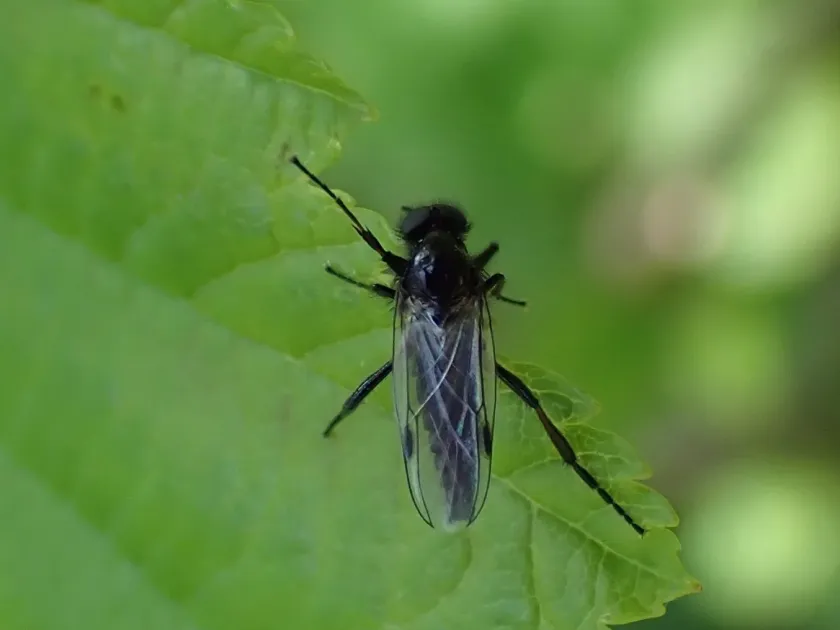
Description
How to identify
Bibio nigriventris, commonly known as a type of march fly, belongs to the family Bibionidae within the order Diptera. Adults are robust flies, often characterized by their dark, blackish bodies and relatively dense, hairy appearance.
The larvae of this species are cylindrical and typically display a dirty grey or brownish color. They have a distinct, well-developed head capsule, which facilitates their movement and feeding habits within the soil environment.
Their life cycle consists of the egg, larval, pupal, and adult stages. The adult flies emerge in spring and are primarily interested in mating, while the larvae are the life stage that poses a risk to agricultural and horticultural crops.
Larvae are typically found in the upper soil layers that are rich in organic matter. They congregate in areas where decomposing plant material or animal manure is present, which serves as both their habitat and food source.
Populations of these insects can increase rapidly in moist, fertile soils, making them a common sight in gardens, greenhouses, and agricultural fields during the early growing season.
What it damages
Larvae of Bibio nigriventris are polyphagous, meaning they feed on a wide variety of plants. They primarily target the roots of vegetable crops such as potatoes, carrots, beets, and strawberry plants.
Damage occurs when dense populations of larvae strip the fine root hairs and tunnel into the main root systems. This leads to reduced nutrient and water uptake, causing plants to become stunted or wilt during periods of stress.
Seedlings and young transplants are particularly vulnerable, as their smaller root systems cannot withstand significant damage. This often leads to poor crop establishment and gaps in the field planting pattern.
Apart from the direct consumption of plant tissue, the wounds left by larval feeding serve as entry points for secondary pathogens, such as fungi and bacteria, which can cause significant root rot.
In cases of heavy infestation, the cumulative damage can result in complete crop failure for susceptible species, particularly when soil moisture levels are high and favor larval activity.
When it appears
Adult flies typically emerge in early spring, often coinciding with the flowering of fruit trees. They are frequently observed in swarms near the soil surface where they congregate for mating and oviposition.
The larvae are most active during the late spring and early summer months. During this period, they feed aggressively on roots as the soil temperature increases and moisture availability remains stable.
The transition to the pupal stage usually occurs as the larvae finish their final instar growth. This often happens in late spring, depending on local climate conditions and soil temperature gradients.
Overwintering occurs primarily in the larval stage. They remain dormant in the deeper layers of the soil or beneath organic mulch to protect themselves from harsh winter temperatures until spring arrives.
Monitoring for adult flight activity is the most effective way to predict potential larval issues later in the season and plan necessary preventive measures.
Signs of infestation
Sudden wilting of plants that does not correlate with drought conditions is a primary sign of infestation. Affected plants may appear loose in the soil due to root damage.
Digging into the root zone will reveal the presence of greyish-brown, cylindrical larvae. They are often found in clusters near the base of the plant, especially where organic mulch is present.
Surface tunneling on vegetable crops like carrots or radishes is another clear indicator, where the larvae have gnawed away patches of the outer skin of the root crop.
Increased activity of birds, such as starlings or thrushes, on agricultural fields or gardens often indicates a high population density of larvae just below the soil surface.
A high density of march flies fluttering above the soil early in the season is a strong indicator that a significant population of larvae will be present in the coming weeks.
Control measures
The most effective control strategy is the use of proper agronomic practices. Crop rotation is essential to break the life cycle of the pest by ensuring that their preferred host plants are not consistently available.
Avoiding the use of fresh manure and ensuring that organic matter is fully composted before incorporation into the soil significantly reduces the attractiveness of the site to ovipositing females.
Deep cultivation or plowing in the autumn and spring can expose larvae to the surface, where they become susceptible to predation by birds and mortality due to environmental changes.
Chemical control should be considered a last resort and applied only when the economic threshold of damage is exceeded, using products specifically labeled for soil pest management.
- Practice consistent crop rotation.
- Use mature, well-decomposed compost.
- Ensure adequate soil drainage to prevent overly moist conditions.
- Monitor soil during planting to detect larvae early.
Taxonomy
- Latin name
- Bibio nigriventris
- Order
- Diptera (flies)
- Family
- Bibionidae
- EPPO code
- BIBINI
Discussion
No discussions yet — be the first.