
Greater Scaup
Aythya marila
Description
How to identify
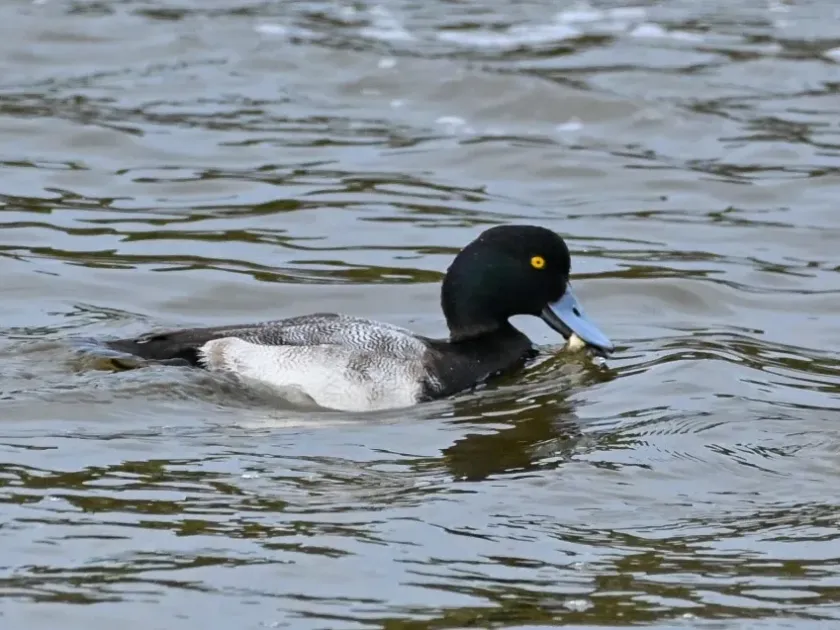
The Greater Scaup (Aythya marila) is a medium-sized diving duck, belonging to the order Anseriformes and the family Anatidae. Adult birds are known for their robust bodies and large heads.
Males in breeding plumage are characterized by a black head and neck with a distinct iridescent green sheen. They have a light grey back with fine dark vermiculation and a white belly.
Females are predominantly brown, featuring a distinct white patch at the base of the bill, which serves as a key identification mark throughout the year.
As expert divers, these birds can forage at significant depths, allowing them to exploit food resources in agricultural water bodies that other species might overlook.
While they primarily inhabit coastal regions, their migration routes often take them across agricultural landscapes, where they may interact with irrigation systems and ponds.
What it damages
The Greater Scaup poses a significant threat to rice cultivation, specifically during the sowing stage when they feed on seeds and newly emerged rice shoots.
Their movement within flooded fields causes mechanical destruction to seedlings and leads to soil compaction, resulting in reduced stand density and overall crop yield losses.
In aquaculture, these ducks are problematic as they predate on juvenile fish stocked in ponds, directly reducing the profitability of fishery operations.
Furthermore, they consume the formulated feeds provided for farmed fish, leading to an increase in operational costs and a decrease in feed conversion efficiency.
High densities of Scaup during migratory periods can rapidly deplete natural aquatic resources and cause physical damage to pond banks and infrastructure.
When it appears
The primary period of risk is during spring and autumn migration, when birds settle in stopover sites near agricultural fields and commercial fish farms.
Spring presents the greatest risk to rice paddies, as the timing of migration often aligns with the period of germination, providing high-energy food for the ducks.
Autumn activity can be persistent, with flocks remaining in the area until water bodies freeze over, extending the period of potential economic loss.
In years characterized by prolonged cool weather, the duration of stay for these migratory flocks increases, intensifying the pressure on affected agricultural plots.
Effective management requires monitoring as early as the pre-sowing period to detect the presence of scout flocks and mitigate potential damage early.
Signs of infestation
The presence of the Greater Scaup is indicated by large flocks of dark-colored birds diving in shallow agricultural waters or commercial ponds.
In rice fields, the most common sign is the appearance of bare patches where seedlings have been consumed, usually concentrated in the deeper sections of the fields.
Droppings found along embankments, combined with disturbed aquatic vegetation and muddy water tracks, clearly signal the use of the area as a feeding site.
In fish farms, a sudden decline in juvenile fish populations, coupled with skittish fish behavior, is a strong indicator of diving duck activity in the area.
Audible vocalizations and the sound of large groups of wings taking off at dawn or dusk serve as definitive proof of their presence in the vicinity.
Control measures
Visual and acoustic repellents, such as gas cannons or bioacoustic devices playing predator alarm calls, are essential tools for deterring flocks from open fields.
The use of decoy predators and reflective visual deterrents can effectively disrupt the comfort of the flocks, encouraging them to move to less sensitive areas.
For fish farms, installing overhead netting is the most reliable method for preventing access to the water, successfully eliminating predation risks entirely.
Managing water levels in irrigation systems during peak migration can help reduce the accessibility of food, forcing flocks to bypass the area.
It is vital to utilize an integrated pest management approach, rotating different repellent strategies to prevent habituation and maintain protection efficacy.
Taxonomy
- Latin name
- Aythya marila
- Family
- Anatidae
- EPPO code
- AYTHMA
Discussion
No discussions yet — be the first.