
Tufted duck
Aythya fuligula
Description
How to identify
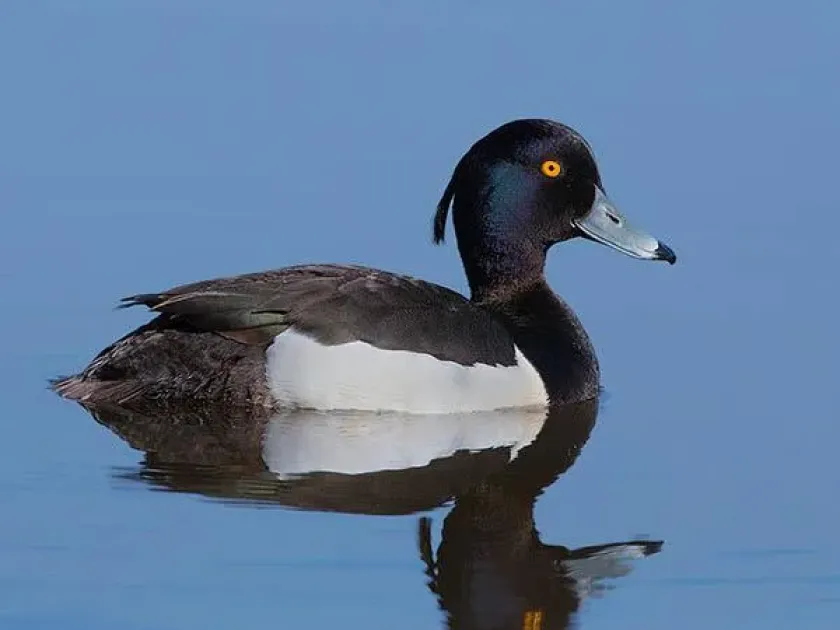
The tufted duck (Aythya fuligula) is a medium-sized diving duck belonging to the family Anatidae. It is characterized by its distinctive plumage and the small, wispy crest on the back of its head.
Adult males are striking with their black plumage showing a violet or greenish sheen, white flanks, and bright yellow eyes. Females are generally a muted dark brown, though they retain the characteristic eye color.
This species is highly adapted to aquatic environments, being an expert diver that feeds primarily on underwater vegetation and invertebrates, which often brings them into contact with flooded agricultural land.
Their behavior includes living in flocks, especially during the non-breeding season. This social structure can lead to significant localized pressure on crops if a large group discovers a suitable feeding site.
They are relatively comfortable in artificial water bodies, making irrigation systems and flooded fields attractive environments for them during their migration and wintering phases.
What it damages
The primary agricultural concern with tufted ducks involves flooded rice paddies. The ducks target the fields during the critical sowing and seedling establishment phases.
By diving to the bottom, the birds unearth and consume seeds, leading to uneven crop emergence and significant thinning of the stands. This often necessitates costly reseeding operations.
Beyond direct ingestion of grain, the ducks cause physical damage to young seedlings. Their movement through the shallow water and trampling of plants inhibits growth and weakens the root systems.
The disturbance of the substrate caused by their diving and foraging disrupts the soil-water balance, creating murky conditions that reduce sunlight penetration for submerged sprouts.
When present in large numbers, the cumulative impact can significantly reduce the overall yield of a rice crop, making them a recognized nuisance in specific agricultural zones.
When it appears
The tufted duck's impact is most severe during the spring planting season when rice fields are flooded. The timing of their arrival often coincides with the germination phase of the crop.
Peak activity occurs from April to June. During these months, migrating flocks may stop over in agricultural wetlands, treating the managed rice fields as a reliable food source.
While the threat diminishes as the rice crop grows and matures, farmers must remain vigilant throughout the initial weeks of the growing season to prevent damage during the most vulnerable period.
Annual variations in weather conditions significantly influence the arrival and departure times of the birds. A cold spring may delay migration, extending the period during which crops are at risk.
They are primarily diurnal and crepuscular feeders, with the highest levels of field activity observed during the early morning and late afternoon hours when they congregate to forage.
Signs of infestation
The most visible sign of tufted duck activity is the sudden emergence of barren patches within a rice field where seeds have been completely removed from the soil.
Discarded, floating fragments of young rice seedlings are a strong indicator that a flock has recently been feeding in the area, pointing to direct plant destruction.
The presence of water turbidity and small depressions in the mud at the bottom of the field suggests active diving and bottom-feeding behavior typical of this duck species.
Evidence of feces and feathers found along the banks or edges of the rice paddies confirms the presence of the ducks and helps identify the specific areas where they are resting and feeding.
Direct sightings of the distinctively marked ducks, especially in the early morning, provide immediate confirmation of the cause of crop damage and allow for early intervention.
Control measures
Acoustic deterrents are a primary method of control. Devices that mimic predator calls or produce loud, randomized noises are effective at keeping flocks away from valuable fields.
Visual deterrents, such as raptor decoys or reflective materials (flash tape), create a sense of danger. To be effective, these must be moved frequently to avoid bird habituation.
Managing water levels in rice paddies can discourage diving. Keeping water levels intentionally low during the most critical sowing window makes foraging more difficult for the ducks.
Active field patrols and the use of modern technology like drone monitoring can effectively disperse feeding flocks before they cause significant economic damage to the crop.
- Deploying randomized sonic devices
- Regular rotation of visual scarecrows
- Managing field hydro-regimes to deter diving
Taxonomy
- Latin name
- Aythya fuligula
- Family
- Anatidae
- EPPO code
- AYTHFU
Discussion
No discussions yet — be the first.