
Amur longhorn beetle
Asemum amurense
Description
How to identify
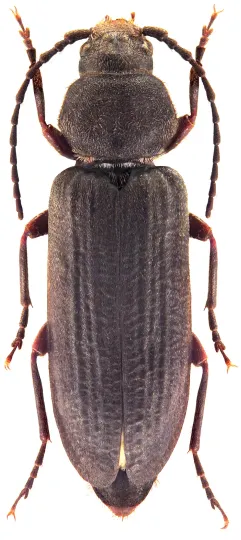
The Amur longhorn beetle (Asemum amurense) belongs to the Cerambycidae family, order Coleoptera. Adult specimens feature an elongated body typically ranging from 15 to 25 mm, usually appearing dark brown or black.
These beetles possess distinctively long antennae, a hallmark of the longhorn family. The surface of the elytra may appear matte or finely granular, which serves as a key diagnostic feature for field identification.
The larvae are legless, whitish or yellowish in color, and equipped with a robust chitinous head capsule. They are specialized in tunneling deep into woody tissues, where they spend most of their multi-year development cycle.
Development occurs entirely within the tree trunk, making early detection extremely difficult. The complete life cycle from egg to imago can span 2 to 3 years depending on local climatic conditions.
This species primarily targets coniferous trees, although high population densities may allow it to adapt to stressed or weakened trees of various types. It is mainly found in the forested regions of the Russian Far East and Eastern Siberia.
What it damages
The primary hosts for the Amur longhorn beetle are coniferous tree species, most notably spruce, fir, and larch. The pest selectively targets weakened, dying, or recently fallen timber.
Larvae cause direct damage to the wood by carving complex galleries in the subcortical layer and deep into the sapwood. This disrupts the tree's vascular system, leading to the gradual necrosis of individual branches or the entire trunk.
In a forestry context, this pest facilitates the colonization of trees by secondary pests, such as bark beetles and pathogenic fungi. Consequently, the timber loses its structural integrity and becomes unsuitable for industrial use.
Larval damage significantly reduces the forest's overall resilience against adverse weather conditions, including high winds and heavy snow loads. High population outbreaks can result in the mortality of extensive forest areas.
Young plantations and nurseries are at particular risk, as even minor infestations can compromise the survival of saplings. Monitoring tree health in these areas is crucial for effective forest management.
When it appears
The flight period for adult Amur longhorn beetles occurs during the summer months, spanning from mid-June to August. This window is when mature beetles emerge from the wood to mate and lay eggs.
Females deposit eggs in bark crevices or notches specifically gnawed into the tree surface. Optimal egg-laying site selection is vital for larval survival, which is why stressed trees are preferred hosts.
Larvae remain most active during the warmer months, feeding intensively on wood tissues. They spend the winter in diapause, sequestered deep within the galleries they have excavated inside the trunk.
The emergence and activation of the insect in spring are directly influenced by solar radiation warming the tree trunks. An early spring can accelerate the developmental cycle if temperatures remain consistently favorable.
By autumn, larvae continue to tunnel deeper into the wood, preparing chambers for pupation or wintering. This behavioral pattern is a key factor in the species' survival within harsh northern climates.
Signs of infestation
The primary visual sign of infestation is the appearance of exit holes in the bark created by emerging adults. These holes are typically oval and often accompanied by the presence of frass (boring dust).
Frass, which collects at the base of the trunk or within bark fissures, is a clear indicator of larval activity. It is a mixture of wood shavings and insect excrement.
Crown thinning, needle yellowing, and premature needle drop indicate critical damage to the tree's conductive tissues. Often, these symptoms are observed when the tree has already suffered significant, irreversible decline.
In quiet conditions, specific sounds like rustling or clicking produced by gnawing larvae can sometimes be heard. This provides evidence of severe, deep-seated infestation within the wood structure.
Another indirect indicator is increased woodpecker activity on affected trees. These birds often target trunks in search of larvae, leaving behind noticeable damage to the outer bark.
Control measures
The primary control measure is the timely removal and disposal of infested trees via sanitary felling. This strategy significantly suppresses the pest population within localized outbreaks.
Regular monitoring of forest stands using pheromone traps is essential for early detection and population control. This approach enables targeted interventions before the mass flight of adult beetles begins.
When harvesting timber, it is crucial to strictly adhere to logging site cleanup regulations. Removing woody debris eliminates ideal breeding grounds and prevents the spread of the beetle to healthy trees.
Biological control methods involve utilizing natural entomopathogens and fungi that specifically target larvae within the tree. These techniques are increasingly favored for their minimal impact on forest ecosystems.
Chemical treatments using systemic insecticides are generally reserved for nurseries and ornamental plantations. These applications aim to eliminate young larvae that begin feeding under the bark during the active beetle flight season.
Taxonomy
- Latin name
- Asemum amurense
- Order
- Coleoptera (beetles)
- Family
- Cerambycidae
- EPPO code
- ASEMAM
Discussion
No discussions yet — be the first.