
Aristobia
Aristobia
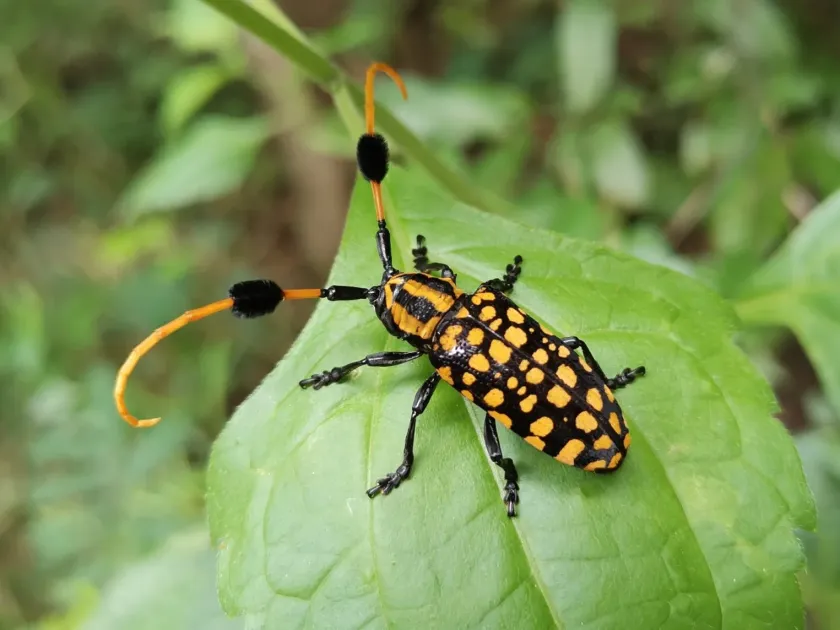
Description
How to identify
Aristobia is a genus of longhorn beetles (family Cerambycidae, order Coleoptera). These beetles are characterized by their long antennae and robust bodies, often featuring distinct color patterns that help them blend with bark.
Adult beetles are typically medium to large in size, with well-developed mouthparts designed to chew through woody plant tissues during their feeding phase.
The larvae are legless, white or yellowish grubs with a heavily sclerotized head capsule and powerful mandibles, allowing them to tunnel deep into the trunks of host trees.
The life cycle encompasses four stages: egg, larva, pupa, and adult. The larval stage is the most prolonged and destructive, often lasting for one or more years depending on environmental conditions.
Due to their internal development, these beetles are cryptic pests, often remaining undetected until the host plant exhibits severe signs of structural decay.
What it damages
The primary damage is caused by larvae tunneling into the heartwood and sapwood, which disrupts the tree's vascular system, hindering the transport of water and essential nutrients.
Host plants commonly include various fruit trees, such as citrus and other broad-leaved species, which can suffer significant growth retardation if infested.
Adults contribute to the damage by feeding on young shoots, twigs, and bark, creating entry points for secondary pathogens like fungi and bacteria that further weaken the tree.
Severe infestations frequently result in the dieback of branches, reduced fruit set, and overall structural compromise, making the trees susceptible to windthrow or breakage.
The cumulative damage often forces orchard managers to remove affected trees entirely to prevent the spread of the beetle to the rest of the plantation.
Signs of infestation
One of the most diagnostic signs of an Aristobia infestation is the presence of clean, circular to oval exit holes on the bark where mature beetles have emerged.
Accumulated frass or wood shavings around the base of the tree or caught in branch crotches are clear indicators of larval activity occurring inside the wood.
Females often leave distinct, U- or V-shaped oviposition scars on the bark surface where they have deposited their eggs, which can be spotted during routine orchard scouting.
Sap weeping or gumming on the bark surface, accompanied by premature yellowing of leaves or localized wilting, suggests that internal larval tunneling is affecting the tree's health.
In advanced cases, the tree crown may appear sparse, with significant canopy thinning as individual branches die off due to the interruption of nutrient flow.
Control measures
Integrated Pest Management (IPM) is essential for controlling this pest, starting with rigorous cultural practices that maintain tree vigor and resistance to infestation.
Sanitation is critical; all heavily infested wood should be pruned and destroyed (burned or chipped) to prevent the emergence of new adult beetles and subsequent re-infestation.
Systemic insecticides can be applied during the adult flight period to target the beetles before they successfully oviposit on the host trees.
Monitoring using pheromone traps or visual inspections during the peak flight season helps determine the exact timing for intervention, optimizing the efficacy of control measures.
Protective measures, such as bark treatments and sealing mechanical wounds on trunks, can deter females from selecting specific trees for egg-laying, reducing overall infestation risk.
Taxonomy
- Latin name
- Aristobia
- Order
- Coleoptera (beetles)
- Family
- Cerambycidae
- EPPO code
- ARIBSP
Discussion
No discussions yet — be the first.