
Spanish slug
Arion vulgaris
Description
How to identify
The Spanish slug (Arion vulgaris) belongs to the phylum Mollusca, class Gastropoda, and the family Arionidae. It is a highly invasive species known for its rapid expansion across Europe.
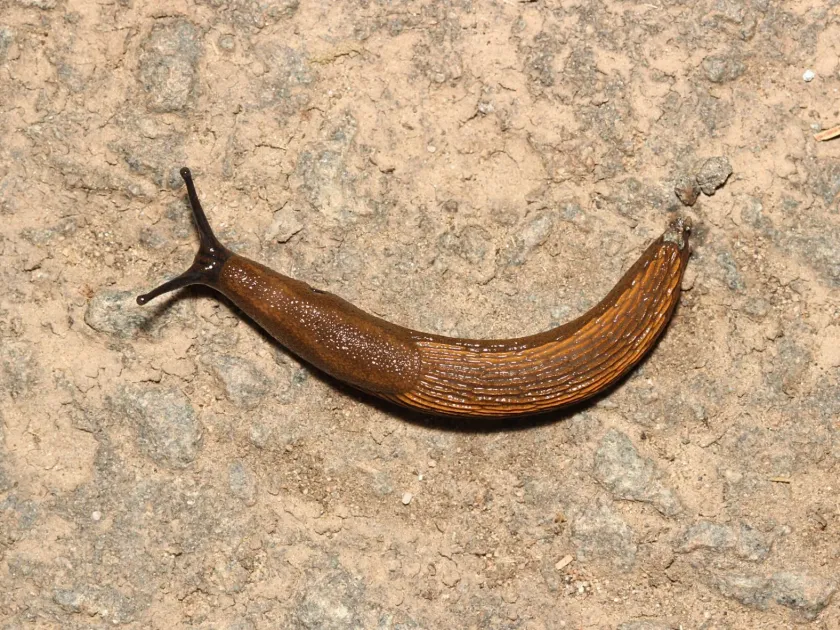
Adult slugs typically range in length from 7 to 15 cm and display colors from reddish-brown to orange, though darker or almost black variations also exist.
The body is covered in a thick, viscous mucus that serves as a protective layer, making the slug resistant to desiccation and unappealing to many potential predators.
The breathing pore is situated in the anterior portion of the mantle, and the sole is usually light in color. This slug's success as a pest is driven by its high reproductive capacity and ability to adapt to diverse environments.
Because it lacks a shell, the Spanish slug can squeeze into narrow soil crevices and dense vegetation, making it difficult to detect during daylight hours.
What it damages
This mollusk is a voracious polyphage, consuming almost all varieties of garden vegetables, soft fruits, ornamental plants, and even agricultural crops.
High-value crops like lettuce, cabbage, strawberries, potatoes, and young seedlings are particularly susceptible and can be devastated in a single night.
Slugs feed by using their radula to scrape away plant tissue, resulting in large, irregular holes that severely reduce the marketability of the harvest.
Beyond physical consumption, their trails of slime and feces contaminate produce, often introducing secondary fungal infections and bacterial rots.
In addition to agricultural damage, the presence of these slugs can lead to total crop loss, especially in moist years where populations explode due to favorable weather.
When it appears
Activity begins in early spring as soon as soil temperatures exceed 5°C and continues through the moist conditions of late autumn until the first frosts.
They are nocturnal animals that become active in the cool, humid conditions of the evening or following rainfall, which facilitates their movement across garden surfaces.
The reproductive phase occurs during summer and autumn, with each adult capable of laying hundreds of eggs in damp, sheltered areas such as compost piles or soil crevices.
The species survives the winter mainly as eggs or young juveniles, which emerge to continue the lifecycle as soon as conditions improve in the following year.
Peak damage is most frequently observed from mid-summer through early autumn, corresponding with the ripening of many garden crops and high humidity levels.
Signs of infestation
The most prominent sign is the presence of large, uneven holes in leaves, often leading to the complete destruction of tender foliage in nursery beds.
Silvery, glistening trails of dried mucus left on soil, plant stems, and walkways are definitive evidence of slug activity within the area.
Deep, gouged-out cavities in maturing fruits such as tomatoes, strawberries, or squash indicate that slugs have been feeding on the produce.
Monitoring boards or wet fabric traps placed on the soil surface during the evening are effective for identifying the presence and density of the slug population.
Stunted growth or sudden wilting of young seedlings, often caused by the slug feeding on the root collar, is a common indicator of a severe infestation.
Control measures
Cultural control involves systematic clearing of weeds, crop debris, and compost heaps to eliminate the moist refuges where slugs rest during the day.
Physical barriers such as copper tape, sharp grit, or wood ash spread around the base of vulnerable plants can deter slug movement into treated areas.
Biological control methods include encouraging natural predators like hedgehogs, frogs, ground beetles, and birds, or using specialized nematode products.
Chemical control is often necessary for high-density populations, utilizing bait pellets based on iron phosphate, which is safer for domestic pets than metaldehyde.
- Hand-picking slugs in the evening after rain.
- Using beer or fermented yeast traps to lure and drown adults.
- Implementing deep tillage to expose eggs to drying air and predators.
- Choosing resistant plant varieties and using drip irrigation to keep surfaces dry.
Taxonomy
- Latin name
- Arion vulgaris
- Order
- Molluscs
- Family
- Arionidae
- EPPO code
- ARIOVU
Discussion
No discussions yet — be the first.