
Dusky slug
Arion subfuscus
Description
How to identify
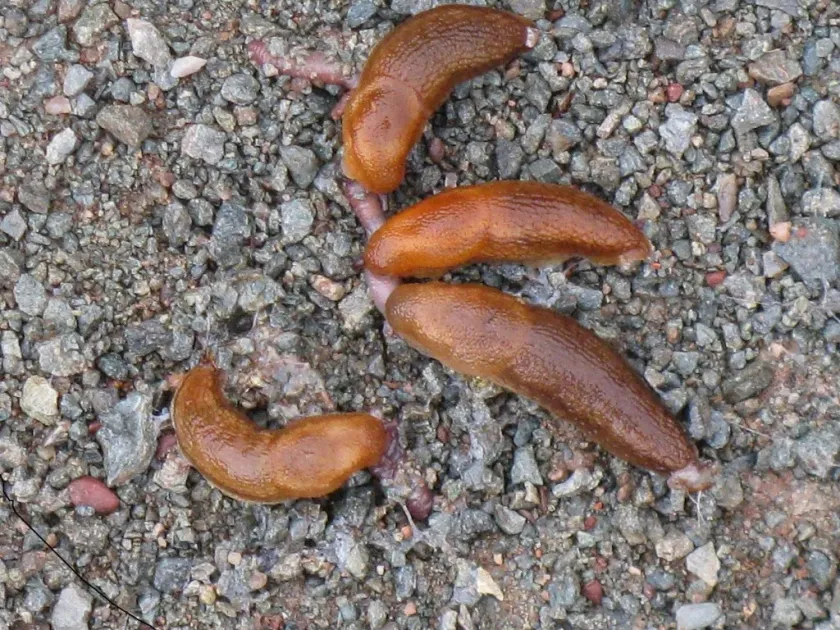
The dusky slug (Arion subfuscus) is a gastropod mollusc from the family Arionidae. It is a shell-less slug that typically reaches a length of 50 to 70 millimetres when active.
The body colour ranges from yellowish-brown to a distinct reddish-orange. A key identification feature is the presence of two darker lateral bands running along the sides of the mantle.
The sole of the foot is usually yellowish or light orange. When disturbed, the dusky slug produces a thick, sticky yellow mucus, which is a key diagnostic characteristic of this species.
This species is a hermaphrodite and has an annual life cycle. They lay eggs in clusters within moist soil, under leaf litter, or in crevices to ensure offspring survival.
The dusky slug thrives in temperate climates with high humidity, often peaking in population density during rainy seasons or in irrigated garden environments.
What it damages
The dusky slug is a generalist herbivore. It causes significant damage to various vegetable crops, including lettuce, cabbage, carrots, and potatoes, as well as strawberries.
These pests feed by scraping plant tissue, creating irregular holes in leaves, stems, and fruits. This activity can lead to complete defoliation of young seedlings.
In root crops, they often bore deep holes, which ruins the marketability of the produce and invites secondary bacterial and fungal infections, leading to rot.
High infestations can lead to substantial yield losses, especially in densely planted areas where the microclimate remains consistently damp throughout the day.
Their feeding habits are mostly nocturnal, making them invisible during the day while they cause destruction that is only noticed once the damage is extensive.
Signs of infestation
The primary sign of infestation is the presence of irregular, ragged holes in leaves, often leaving the leaf veins intact. This is a typical feeding pattern for slugs.
Shiny, silvery trails of dried mucus on leaves, stems, and the soil surface are clear indicators that slugs have been active in the area during the night.
Damaged fruits, particularly low-growing ones like strawberries or tomatoes, show scooped-out cavities that often become foci for rotting and decay.
The presence of small, jelly-like egg clusters under mulch, logs, or debris in the garden is a sign of an established breeding population.
Finding the slugs themselves under damp boards, pots, or thick ground cover during the early morning is a definitive sign of their presence on your plot.
Control measures
Cultural control involves reducing shelter sites by clearing garden debris, removing weeds, and keeping the area around the base of plants free from moist mulch.
Barrier methods are effective for small plots. Applying crushed eggshells, coarse sand, or wood ash around vulnerable plants creates a harsh surface that limits slug movement.
Manual trapping using damp cardboard, wet sacks, or wooden boards placed in the garden helps collect the slugs at night for easy morning disposal.
Chemical control options include slug pellets containing iron phosphate, which is safer for pets and wildlife, or metaldehyde-based baits for severe infestations.
Improving drainage in the garden and practicing proper irrigation timing (morning rather than evening) helps reduce the surface humidity that slugs require to survive.
Taxonomy
- Latin name
- Arion subfuscus
- Order
- Molluscs
- Family
- Arionidae
- EPPO code
- ARIOSF
Discussion
No discussions yet — be the first.